Infectious waste remediation: Safe, compliant Michigan cleanup
Infectious waste remediation: Safe, compliant Michigan cleanup
TL;DR:
- Handling infectious waste in Michigan requires strict adherence to legal and safety standards, as improper disposal can lead to heavy fines and health risks. Not all biohazardous materials can be treated on-site, and some must be routed through certified waste programs with proper documentation. Property owners must develop preparedness protocols, work with licensed remediation services, and retain thorough records to ensure compliance and protect against liabilities.
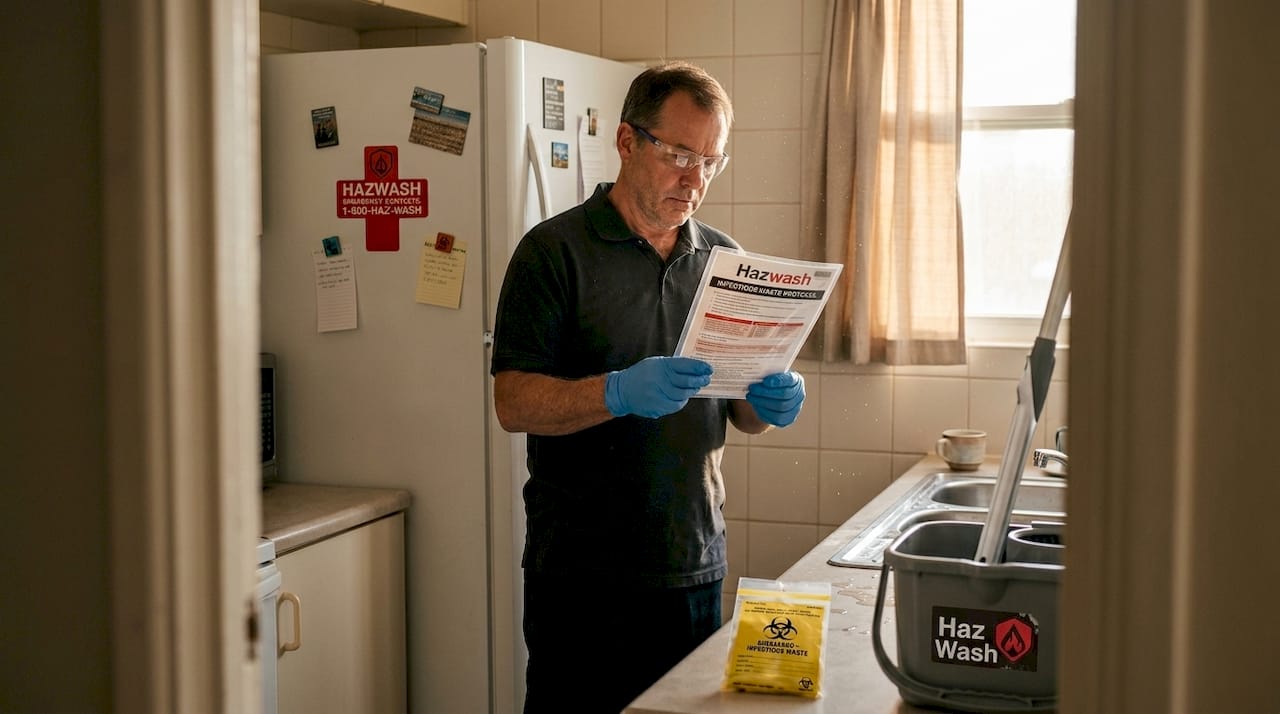
You find a vacated rental unit in Detroit with blood-soaked materials, used syringes, and containers of unknown biological fluids. Your first instinct might be to call a cleaning service or handle it yourself. That instinct could cost you thousands of dollars in fines, expose your staff to serious illness, and put you on the wrong side of Michigan law. Not all infectious waste can be treated the same way. Some of it cannot be cleaned, bagged, and trashed. Some of it requires specialized routing through certified waste programs, and the distinction matters enormously for landlords and property managers in Michigan.
Table of Contents
- Understanding infectious waste in Michigan properties
- Why some infectious waste cannot be treated on-site
- Legal and health risks of improper infectious waste handling
- Step-by-step guide to safe infectious waste remediation
- What most landlords miss: Hidden pitfalls and real-world solutions
- Connect with certified infectious waste remediation services
- Frequently asked questions
Key Takeaways
| Point | Details |
|---|---|
| Know the rules | Michigan landlords must identify which infectious wastes cannot be treated on-site and require special disposal routes. |
| Safety first | Improper handling of infectious waste exposes tenants and staff to health risks and legal penalties. |
| Compliance steps | A step-by-step remediation checklist ensures safe, legal cleanup every time. |
| When to seek help | Certified biohazard specialists are crucial for handling complex waste scenarios that go beyond routine cleanup. |
Understanding infectious waste in Michigan properties
Infectious waste is not just “gross stuff.” It has a specific legal and regulatory definition, and understanding that definition is the foundation of every compliant cleanup decision you make.
In Michigan, infectious waste includes materials that contain or are contaminated with pathogens capable of causing disease in humans. Common examples found in rental properties include:
- Blood and blood products, including saturated materials like mattresses, clothing, or flooring
- Sharps such as needles, syringes, scalpels, and lancets
- Human tissue and body fluid waste
- Microbiological materials, including cultures and laboratory waste from on-site drug manufacturing
- Contaminated personal protective equipment (PPE) used during a prior cleanup
What separates infectious waste from ordinary trash is the biological risk it carries. A bloody bandage is not the same as a used latex glove. A container of pooled blood is not comparable to a stained floor mat. The concentration of pathogens, the nature of the material, and its potential for disease transmission all define whether waste is biohazardous. You can review the full classification framework in our Michigan biohazard disposal guide to confirm where your specific situation falls.
Michigan law follows federal frameworks under OSHA’s Bloodborne Pathogens Standard (29 CFR 1910.1030) and the EPA’s regulations for hazardous waste under RCRA (Resource Conservation and Recovery Act). State-specific rules apply through the Michigan Department of Environment, Great Lakes, and Energy (EGLE). Landlords are not exempt from these obligations simply because they are not healthcare providers.
“Some biohazardous wastes cannot be decontaminated on-site by autoclave or chemical treatment and therefore must be routed through the appropriate waste program and handling method, not handled as ordinary trash.” — MSU Environmental Health and Safety
This matters for property managers because the instinct to “just clean it up” can apply the wrong method to the wrong material. Our guide on biohazard risk indicators for Michigan property owners walks you through recognizing which materials require escalated responses before you touch anything.
Why some infectious waste cannot be treated on-site
Here is where most landlords run into trouble. They assume that if they use enough bleach, everything is sanitized. Or they assume that autoclaving (heat sterilization) handles everything. Neither assumption is correct.
Autoclaving uses pressurized steam to kill pathogens and is an accepted on-site treatment method for many types of biohazardous waste. Chemical treatment using EPA-approved disinfectants is another option. But these methods do not work for every category of infectious waste.
| Waste type | On-site treatment method | Compliant? |
|---|---|---|
| Blood-saturated soft materials | Chemical disinfection, bagging | Sometimes (depends on volume) |
| Blood tubes (glass/plastic vials) | Cannot be autoclaved on-site by landlords | Must route through certified waste program |
| Sharps (needles, syringes) | Sharps containers, certified hauler required | Never dispose in regular trash |
| Microbiological cultures | Autoclave or chemical if certified equipment available | Must verify equipment certification |
| Contaminated PPE | Bagging with certified disposal | Requires licensed transporter |
| Human tissue or fluid containers | Cannot be treated on-site by non-licensed parties | Certified waste handler required |
As MSU’s EHS guidance confirms, certain biohazardous wastes must be routed through the appropriate waste program entirely. No amount of bleach changes that legal obligation.
Blood tubes are a practical example. If a deceased tenant had medical supplies in their home, you might find glass vials containing blood. You cannot autoclave those yourself. You cannot bag them and put them in the dumpster. They must go to a certified infectious waste hauler or medical waste disposal program.
When you encounter restricted items in a Michigan rental property, here is how to respond:
- Stop all cleanup activity immediately. Do not move, bag, or disturb the items further.
- Secure the area. Keep tenants, maintenance staff, and unauthorized individuals out.
- Photograph and document what you found for your records and potential insurance claims.
- Contact a certified biohazard remediation company that holds the necessary DOT and state permits.
- Request a waste manifest. This is a legal document tracking where your waste goes and confirming compliant disposal.
- Retain all documentation for at least three years.
Pro Tip: Before you ever have an incident, call your county health department and ask specifically what infectious waste categories require certified transporter routing in your jurisdiction. Different counties in Michigan may apply additional rules beyond the state baseline, especially in Wayne, Oakland, and Macomb counties.
Our biohazard cleanup guide for Detroit rental landlords outlines how to prepare before an incident, and our Detroit cleanup protocols page breaks down exactly what certified teams should document during each remediation.
Legal and health risks of improper infectious waste handling
The consequences of getting this wrong are not abstract. Michigan landlords face real penalties, real liability, and real health outcomes when infectious waste is mishandled.
Legal and financial risks include:
- Fines from EGLE (Michigan Department of Environment, Great Lakes, and Energy) for improper disposal. Civil penalties can reach $10,000 per day per violation under Michigan’s Natural Resources and Environmental Protection Act (NREPA).
- Federal OSHA penalties for violations of the Bloodborne Pathogens Standard, which can exceed $15,625 per willful violation as of 2026.
- Civil liability if a tenant, maintenance worker, or subsequent occupant contracts a disease linked to improperly remediated waste on your property.
- Loss of rental license in cities like Detroit, where local ordinances require properties to meet habitability standards before re-occupancy.
- Voided insurance coverage. Many commercial property policies exclude coverage for losses caused by the landlord’s failure to follow applicable law.
Health risks are equally serious. Bloodborne pathogens, including hepatitis B, hepatitis C, and HIV, can survive outside the body for hours to days in certain conditions. Improper handling exposes maintenance workers, future tenants, and even neighboring units to infection risk. Mold and bacterial growth in improperly treated areas can also cause long-term respiratory harm.
As MSU’s EHS guidance makes clear, treating biohazardous waste as ordinary trash is not a minor oversight. It is a violation of state and federal handling standards.
You can review the full scope of applicable Michigan law in our hazardous waste rules guide for property managers, and our Detroit waste disposal guide covers city-specific requirements that apply on top of state law.
Step-by-step guide to safe infectious waste remediation
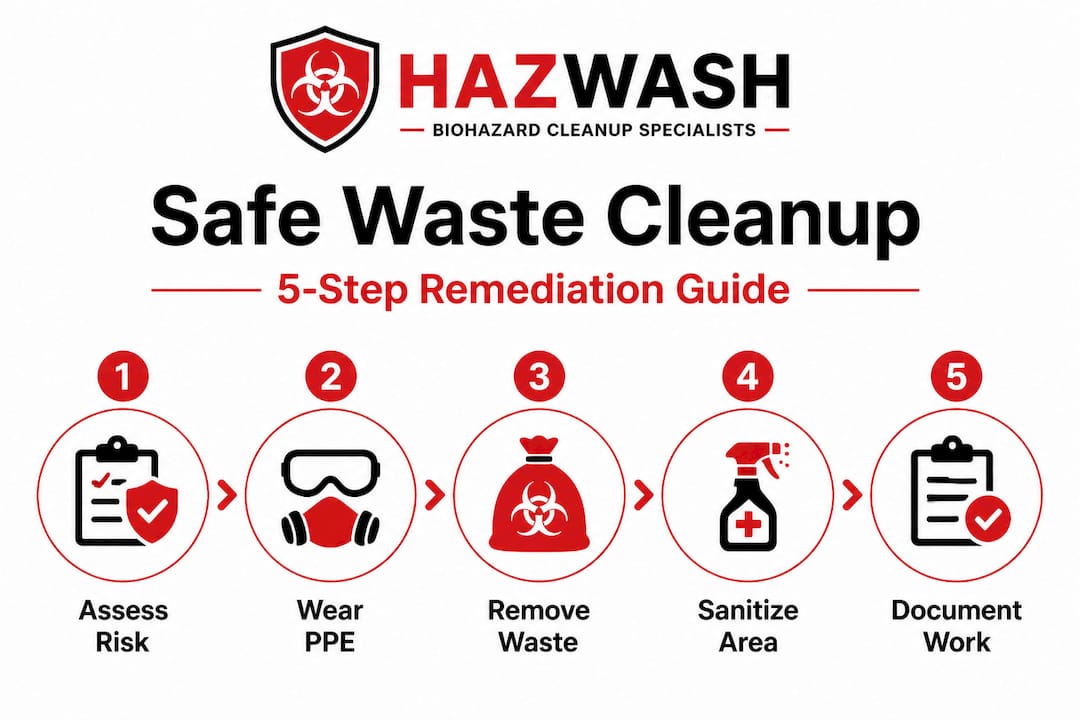
Preparation and process are your two strongest tools. Here is a practical, compliance-focused framework for handling infectious waste remediation in a Michigan rental property.
- Assess before you act. Do not touch anything until you have identified what you are dealing with. Use visual inspection from a safe distance and document what you see.
- Wear appropriate PPE. At minimum, this means nitrile gloves, eye protection, and a fluid-resistant gown. Never use single-layer latex gloves or household cleaning gloves for biohazard work.
- Classify the waste. Determine whether the material falls into a category that can be chemically treated on-site or must be routed to a certified waste program. When in doubt, treat it as restricted.
- Isolate and contain. Use certified biohazard bags (red or orange, UN-rated) for soft materials. Use puncture-resistant sharps containers for all needles and blades. Never compress or overfill containers.
- Decontaminate eligible surfaces. For surfaces that can be chemically treated, use an EPA-registered disinfectant with demonstrated effectiveness against bloodborne pathogens. Follow label contact time requirements exactly.
- Contact a licensed waste hauler. For restricted materials, arrange pickup by a certified infectious waste transporter. Request a waste manifest before they leave the property.
- Verify and document everything. Keep copies of waste manifests, disposal certificates, and vendor credentials on file.
- Clear the space for re-occupancy only after a certified inspection. Do not rush this step.
| Scenario | Recommended action | Compliance tool |
|---|---|---|
| Blood-saturated mattress | Chemical treatment, certified disposal | EPA-registered disinfectant, waste manifest |
| Found sharps/needles | Sharps container, certified hauler | Sharps container, transporter permit |
| Blood tubes or vials | Do not treat on-site | Route to certified waste program |
| Suspected drug lab contamination | Full property assessment first | HAZMAT-certified company required |
| Deceased occupant scene | Full trauma scene remediation | IICRC-certified technicians, all waste documented |
Pro Tip: Never re-occupy a unit until you have written documentation showing the space was cleaned to applicable standards by a certified company. Verbal assurances from cleaning crews do not protect you in a legal dispute or insurance claim.
Our step-by-step cleaning guide provides detailed instructions for common scenarios, and our resource on medical waste risks explains why even seemingly minor leftover materials pose real hazards.
What most landlords miss: Hidden pitfalls and real-world solutions
We have worked alongside Michigan landlords in enough real situations to say this plainly: the most dangerous assumption in infectious waste remediation is that it is simpler than it looks.
The “cleanup is easy” myth costs landlords money and sometimes their rental licenses. A tenant vacates, a property manager sends in a maintenance worker with bleach and trash bags, and by the time a future tenant or health inspector identifies the problem, the liability trail leads directly back to the property owner. We have seen this happen with blood spills treated as ordinary stains, with sharps buried in walls or under flooring, and with biological materials left inside HVAC systems.
Here is the contrarian truth: the properties that face the highest cleanup costs are usually not the worst-looking ones. They are the ones where a partial, unqualified cleanup created hidden contamination that required far more remediation later. A professional team that does the job correctly in 48 hours is almost always cheaper than two rounds of remediation plus legal fees.
The edge cases are where landlords most consistently get tripped up. Restricted wastes like blood vials, liquid biological materials, and microbiological cultures often appear alongside ordinary biohazardous materials. If your remediation team is not certified to identify and classify these, they will either mishandle them or leave them behind. As MSU’s EHS guidance confirms, those items must be routed correctly, not treated as trash.
Our resource on hoarding biohazard impacts illustrates how mixed waste situations, which are common after hoarding-related evictions, produce exactly this kind of classification challenge.
The practical solution is to develop an emergency response protocol before you need it. Know the name of your certified remediation vendor. Know where your PPE is stored. Know which county agency to call. Landlords who have this in place before an incident recover faster, document better, and face far lower liability exposure than those who scramble in real time.
Connect with certified infectious waste remediation services
Michigan landlords and property managers need more than a cleaning crew when infectious waste is involved. You need certified specialists who hold OSHA HAZWOPER credentials, IICRC certification, and DOT permits to legally transport and document the waste your property generates.
HazWash LLC provides 24/7 emergency biohazard remediation across Detroit and the surrounding Michigan area. Our teams handle every step from initial waste classification to certified disposal and final documentation. We work discreetly, efficiently, and in full compliance with state and federal requirements. Whether you are dealing with a trauma scene, a death on property, a drug lab, or accumulated biological waste, we give you the documentation you need to protect your investment and your liability exposure. Review our federal hazardous compliance guide, understand your biohazard risk guidance before the next incident, and contact HazWash LLC today to get certified help fast.
Frequently asked questions
What types of infectious waste require specialized disposal in Michigan?
Solid items like blood tubes, sharps, liquid biological materials, and certain contaminated equipment must be routed through a licensed hazardous waste program and cannot be treated as ordinary trash, as confirmed by MSU’s EHS standards.
Can landlords decontaminate infectious waste themselves?
Some infectious waste, including certain blood-saturated soft materials, can be chemically treated on-site using EPA-registered disinfectants, but restricted waste categories must always go to a certified waste handler for safety and legal compliance.
What are the legal consequences of improper infectious waste disposal?
Michigan landlords may face civil penalties up to $10,000 per day per violation under NREPA, plus federal OSHA fines, civil liability for health outcomes, and voided insurance coverage if infectious waste is handled outside legal requirements.
How can property managers ensure compliance with Michigan infectious waste laws?
Following MSU EHS classification guidelines, maintaining waste manifests, using certified remediation vendors with OSHA HAZWOPER and DOT credentials, and retaining all documentation for at least three years ensures compliant waste handling under Michigan and federal law.