OSHA-Compliant Cleanup Guide for Michigan Homes
OSHA-Compliant Cleanup Guide for Michigan Homes
TL;DR:
- Proper licensed cleanup is essential to avoid OSHA fines, legal liabilities, and insurance denials.
- Regulations require full documentation, proper waste handling, and compliance verification before re-occupancy.
- DIY biohazard cleanup poses health risks and often leads to higher long-term costs and legal issues.
A biohazard incident on your Michigan property is already overwhelming. Now add this: if cleanup isn’t handled correctly, you could face OSHA violations, insurance denials, and fines that cost far more than the cleanup itself. Michigan has strict legal requirements under both federal OSHA standards and the state’s own Medical Waste Regulatory Act. Homeowners and property managers who try to manage these situations without licensed help almost always miss critical steps. This guide walks you through everything you need to know, from understanding the law to verifying final compliance, so you protect your family, tenants, and property.
Table of Contents
- Understanding OSHA and Michigan regulations for biohazard cleanup
- What you need before starting a cleanup
- Step-by-step: How OSHA-compliant cleanups are performed
- Aftermath: Verifying legal compliance and safe re-occupancy
- The uncomfortable truth: Why DIY biohazard cleanup is a costly mistake
- Let HazWash handle your OSHA-compliant cleanup needs
- Frequently asked questions
Key Takeaways
| Point | Details |
|---|---|
| Follow Michigan regulations | Adhering to state and OSHA cleanup laws keeps you safe and avoids fines. |
| Always hire trained professionals | DIY cleanup is dangerous and often illegal—use licensed, certified experts. |
| Document everything | Proper paperwork protects your insurance, property value, and legal standing. |
| Verify proper disposal | Ensure all biohazard waste is removed and destroyed by qualified providers within legal limits. |
Understanding OSHA and Michigan regulations for biohazard cleanup
With the stakes clear, let’s look at exactly what Michigan and OSHA demand for safe, legal cleanups.
OSHA’s Bloodborne Pathogen Standard applies whenever someone is potentially exposed to blood or other infectious materials. It sets strict rules on PPE (personal protective equipment), containment, decontamination, and waste disposal. OSHA fines for violations can reach $16,131 per willful violation, and repeat violations can exceed $161,323. These aren’t hypothetical penalties. Regulators enforce them.
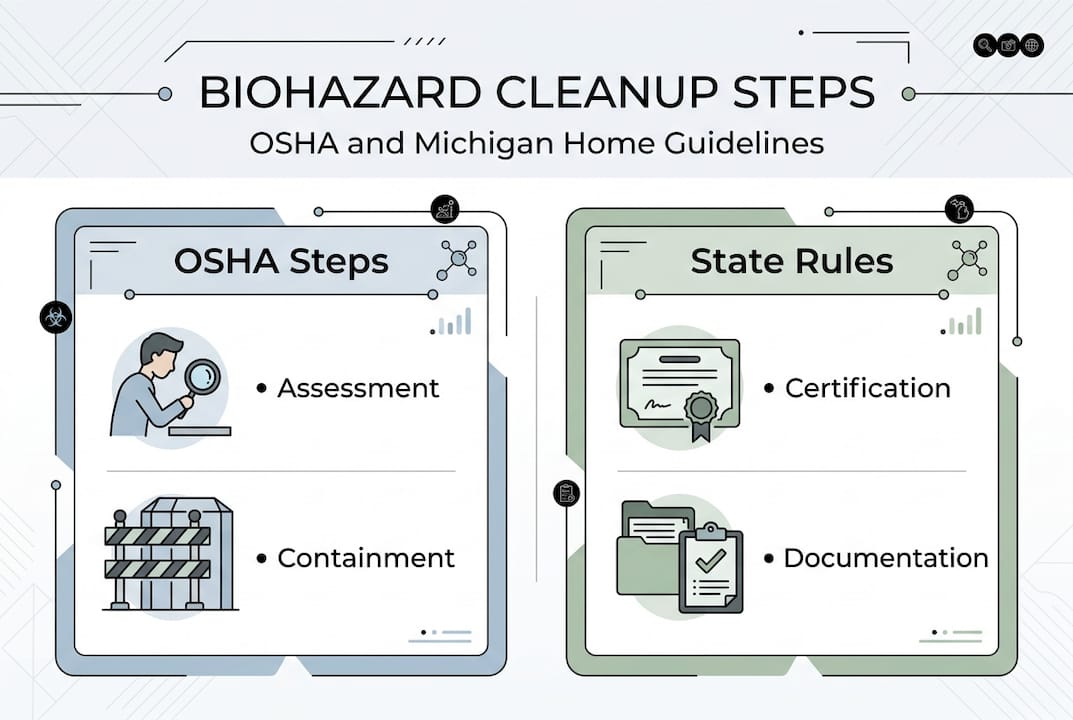
At the state level, Michigan’s Medical Waste Regulatory Act)/documents/mcl/pdf/mcl-368-1978-12-138.pdf) (Part 138, MCL 333.13801 et seq.) adds another layer of legal responsibility. Even private property owners can be held accountable for improper handling, storage, or disposal of medical or biohazardous waste generated on their premises.
Understanding biohazard risk indicators in Michigan properties helps you recognize when these laws apply. Any incident involving blood, bodily fluids, sharps, or decomposition-related materials likely falls under regulated medical waste.
Key legal requirements under Michigan and OSHA rules:
- Facilities and affected property owners must register when generating regulated medical waste
- All waste must be stored in leak-proof, labeled containers
- Medical waste must not be mixed with regular garbage or compacted
- Waste must be removed by a licensed transporter and sent to a licensed disposal facility
- Storage must not exceed 90 days before proper disposal
- Full documentation must be maintained throughout the process
| Regulation | Governing Body | Who It Affects |
|---|---|---|
| Bloodborne Pathogen Standard | OSHA (Federal) | Any person exposed to biohazards |
| Medical Waste Regulatory Act | Michigan EGLE | Property owners and generators |
| EPA Hazardous Waste Rules | Federal/State EPA | Disposal and transportation |
Important: Ignorance of these laws does not protect you from liability. Michigan courts have held property owners responsible for cleanup failures even when they were unaware of the rules.
These regulations exist for good reason. Understanding the full range of types of hazardous incidents helps clarify when professional intervention is not optional but legally required.
What you need before starting a cleanup
Now that you know the legal landscape, gather what’s needed before anyone steps on site.
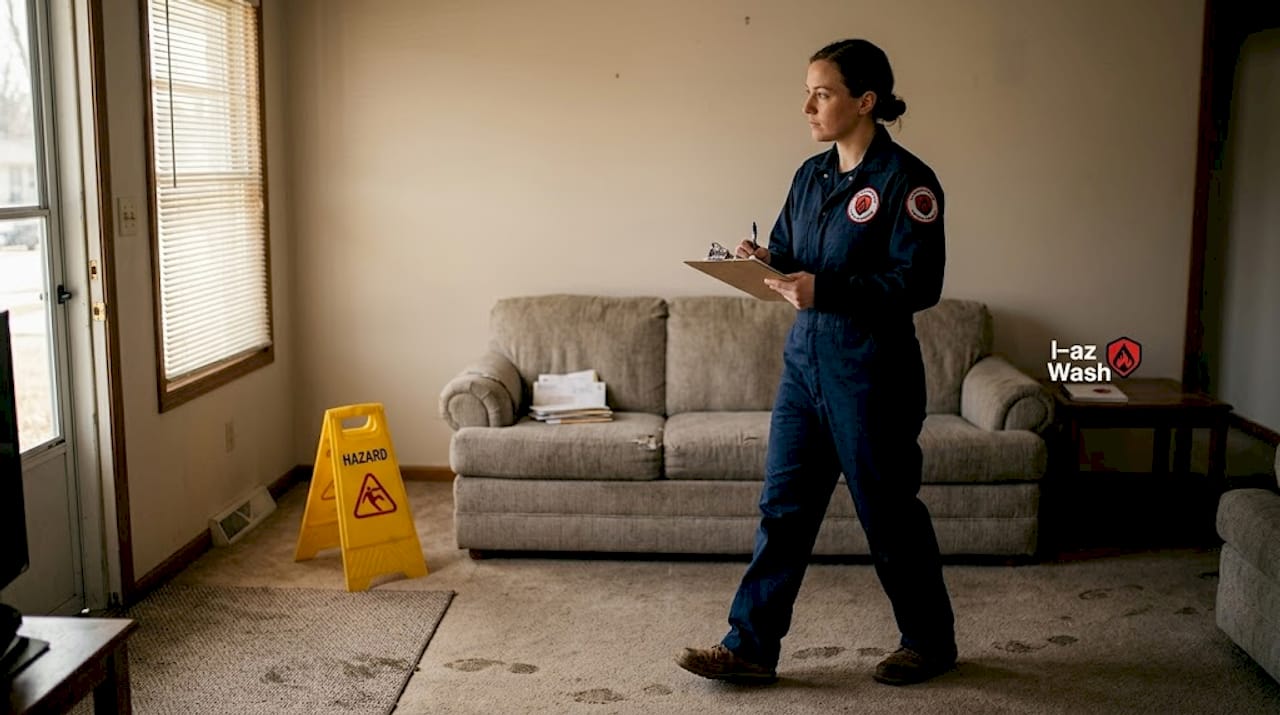
The first thing to accept is that homeowners and property managers should never attempt biohazard cleanup without proper training, licensing, and equipment. This isn’t about caution. It’s about law and liability.
Before a licensed cleanup team arrives, your job is to document and prepare. Start with identifying hazardous contamination signs so you can accurately describe the scene to your cleanup provider.
What to document before cleanup begins:
- Photographs of all affected areas (do not disturb the scene)
- Type and approximate volume of contamination present
- Any sharps (needles, broken glass) that are visible
- Your insurance policy number and carrier contact information
- Date, time, and nature of the incident
Choosing a qualified cleanup provider:
Not every company offering cleanup services is licensed for biohazard work. Confirm these credentials before hiring anyone:
| Credential | What It Confirms |
|---|---|
| OSHA HAZWOPER Certification | Trained for hazardous waste operations |
| IICRC Certification | Industry standard for remediation |
| Michigan EPA/EGLE License | State-authorized waste handler |
| DOT Registration | Licensed to transport regulated waste |
| General Liability Insurance | Protects you if something goes wrong |
Pro Tip: Ask your provider for a copy of their waste transporter license number before they start. A legitimate firm will provide it immediately and without hesitation.
Also confirm that the provider follows the step-by-step cleanup process for landlords and keeps documentation at every stage. Proper waste segregation must begin before a single item is moved. Regular trash and regulated medical waste must never be placed together under any circumstances.
Step-by-step: How OSHA-compliant cleanups are performed
With the right team and tools in place, here’s how a compliant biohazard cleanup unfolds step by step.
Knowing what happens during a professional cleanup helps you verify that work is being done correctly. It also helps you understand why shortcuts are dangerous.
1. Inspection and risk assessment The team evaluates the full extent of contamination, identifies the type of biological material involved, and determines what containment strategy is needed. This step drives every decision that follows.
2. Site containment Affected areas are sealed off using physical barriers, negative air pressure systems, and HEPA air filtration where appropriate. This prevents cross-contamination to unaffected spaces. Review safe response steps for hazardous incidents to understand why containment matters across different incident types.
3. PPE donning and gross contamination removal Certified technicians suit up in full PPE before touching anything. Bulk contamination, including blood, fluids, and soiled materials, is carefully removed using industry-approved tools and placed into properly labeled, leak-proof containers.
4. Surface cleaning and disinfection All affected surfaces are treated with EPA-registered disinfectants. This includes porous materials that may have absorbed contamination. Dangers of leftover contamination are real. Hidden residue can cause illness long after visible cleanup appears complete.
5. Odor treatment Odor removal is not cosmetic. Biological odors indicate remaining organic matter. Proper treatment addresses the source. Learn more about managing odors post-cleanup and why it’s a required step, not an optional one.
6. Waste packaging and transport All regulated medical waste is sealed, labeled, and transported by a licensed DOT carrier to a licensed destruction facility. Approximately 385,000 sharps injuries occur in U.S. hospitals each year, and improper sharps handling carries serious infection risk, including pre-vaccine hepatitis B (HBV) transmission rates as high as 30%.
7. Documentation The provider issues chain of custody records, waste manifests, and a certificate of completion. These documents are critical for insurance claims and occupancy verification.
Pro Tip: Request a copy of every document generated during cleanup before the team leaves your property. Replacing lost records later is difficult and sometimes impossible.
Aftermath: Verifying legal compliance and safe re-occupancy
After cleanup, don’t just assume the job is done. Here’s how to ensure your property is safe and all boxes are checked.
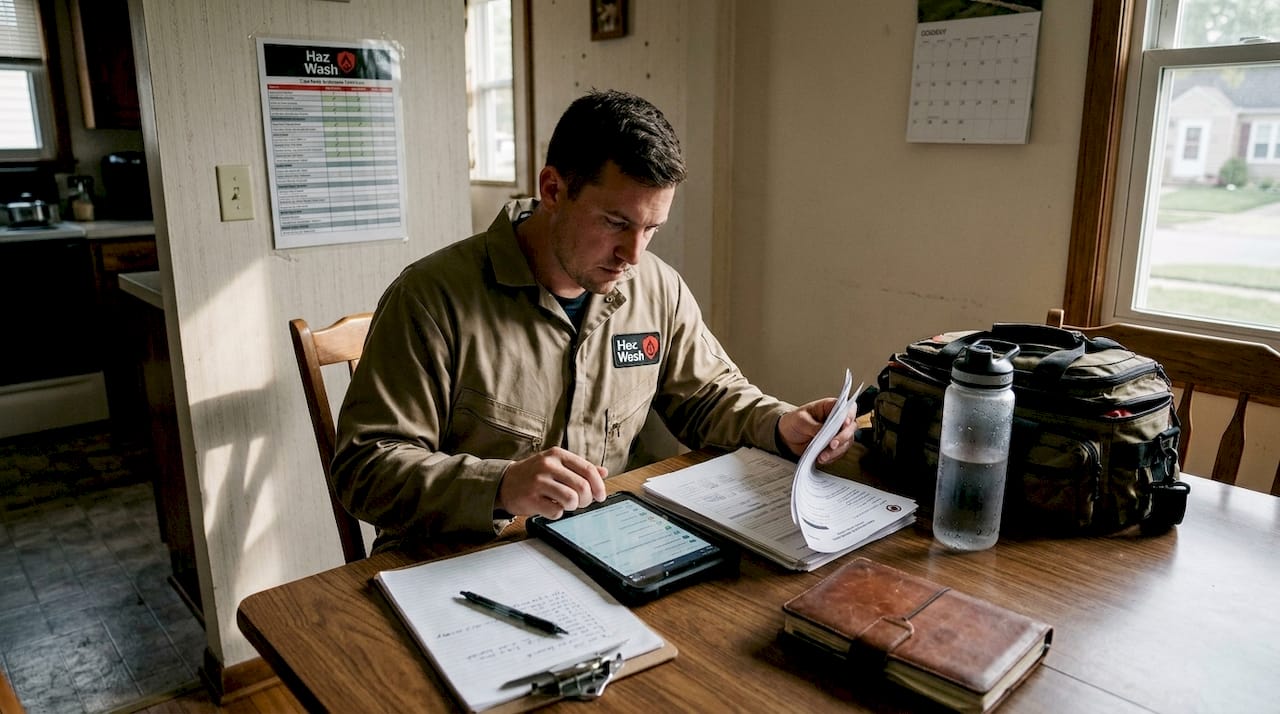
A completed cleanup is only as good as the documentation that backs it. Before allowing anyone to re-occupy the space, walk through this verification process.
Key paperwork to confirm you have:
- Chain of custody records for all waste removed
- Waste disposal receipts from a licensed destruction facility
- Copies of provider certifications and state licenses
- Certificate of completion or clearance letter
- Any air quality or surface testing results if applicable
Licensed biohazard professionals provide cleanup documentation that satisfies both insurance carriers and local regulatory bodies. If your provider cannot supply these documents, that is a serious red flag.
What to check during final walkthrough:
- No visible staining, residue, or biological material remains
- No hazardous or chemical odors are detectable
- All containment barriers and materials have been removed
- All regulatory paperwork is signed and dated
| Verification Step | Who Handles It | Why It Matters |
|---|---|---|
| Waste disposal receipt | Cleanup provider | Proves compliant disposal |
| Provider license check | You or your attorney | Confirms legal authority |
| Insurance notification | You | Activates coverage if applicable |
| Final walkthrough | You and provider | Confirms visible clearance |
If you have any doubt about whether cleanup was completed properly, contact Michigan EGLE or a licensed industrial hygienist for an independent assessment before re-occupancy.
Also review the documented risks of leftover medical waste if anyone re-enters the space before full clearance is confirmed. The health consequences of premature re-occupancy can be severe.
Notify your insurance carrier as soon as cleanup is confirmed complete. Retain all documentation indefinitely. In liability disputes, these records are your strongest protection.
The uncomfortable truth: Why DIY biohazard cleanup is a costly mistake
Even after reading every step above, some property owners still wonder whether they can save money by handling cleanup themselves. We understand the impulse. But here’s what 15 years of biohazard remediation work teaches you: the hidden costs of DIY always exceed any upfront savings.
Most homeowners don’t realize that improper cleanup voids insurance claims. Carriers routinely deny coverage when they discover that non-licensed individuals handled the scene. That means you absorb the full financial loss.
Beyond finances, hidden biohazard risks persist in walls, subfloors, and HVAC systems long after a surface looks clean. Pathogens don’t disappear because the visible mess is gone. They linger, multiply, and cause illness weeks or months later.
Licensed professionals don’t just remove contamination. They verify it’s gone using ATP testing and other detection methods that aren’t available at a hardware store. They produce the documentation that protects your legal standing. They carry the liability so you don’t have to. That’s not a luxury. That’s the only compliant option.
Let HazWash handle your OSHA-compliant cleanup needs
If you want confidence in safety and compliance, let a trusted professional manage the process for you.
HazWash LLC is fully certified for professional biohazard cleanup across Detroit and surrounding Michigan communities. We meet every OSHA and Michigan EGLE requirement and provide complete documentation at every stage.
When a biohazard incident happens, fast and compliant response protects your property, your tenants, and your legal standing. Our team is available 24/7 for emergency response. Explore the full range of incident types HazWash handles and review key biohazard risk indicators to stay informed. When you’re ready, contact HazWash directly for a fast, discreet, and fully compliant response.
Frequently asked questions
Can I clean up biohazard waste myself in Michigan?
No. Michigan law and OSHA standards strongly advise against self-cleanup of biohazardous materials. Always use a licensed professional to stay safe and legally compliant.
What paperwork do I need after a biohazard cleanup?
You need waste disposal receipts, chain of custody records, and copies of provider credentials. Licensed professionals provide this documentation to satisfy insurance carriers and regulatory requirements.
What happens if I ignore OSHA-compliant cleanup procedures?
You risk steep OSHA fines, ongoing health hazards, insurance denial, and potential legal action. Non-compliance is treated seriously at both the state and federal level.
How quickly does medical waste need to be removed in Michigan?
Under the Michigan Medical Waste Act)/documents/mcl/pdf/mcl-368-1978-12-138.pdf), regulated medical waste must be properly stored and removed by a licensed transporter within 90 days of generation. Faster removal is always recommended.