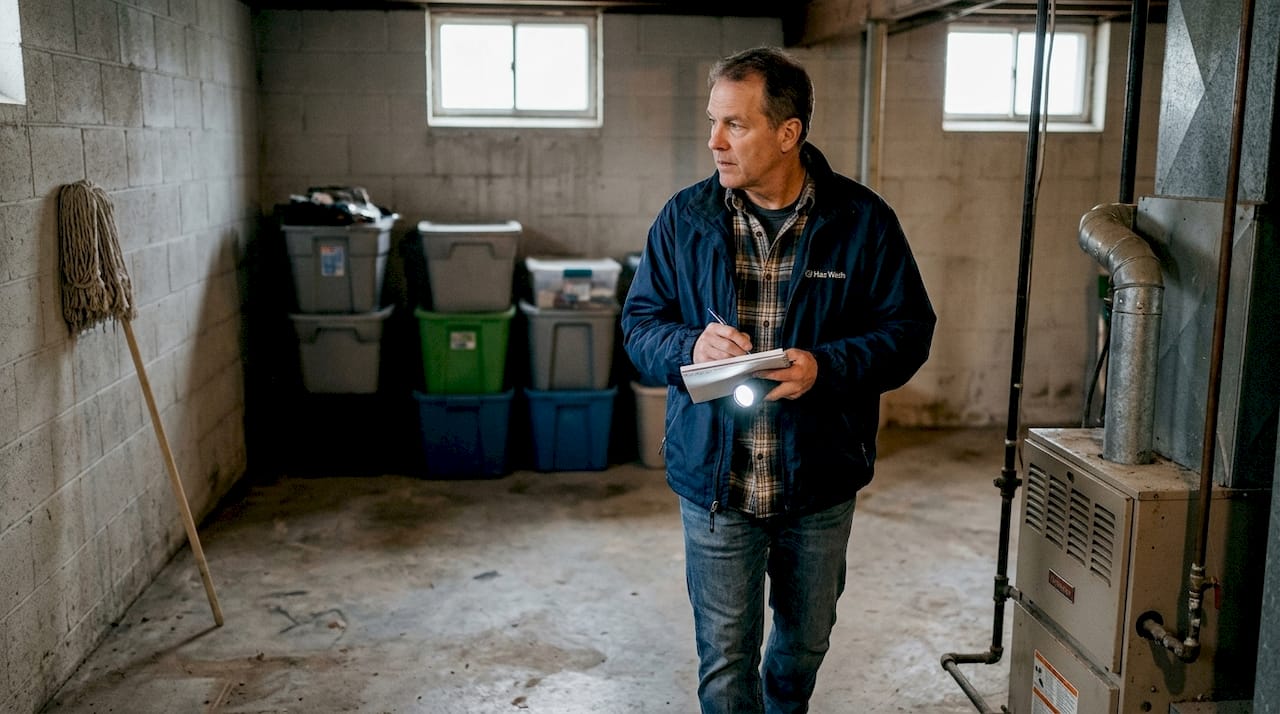
7 key indicators of biohazard risks for Michigan property owners
7 key indicators of biohazard risks for Michigan property owners
Proper labeling and immediate response are essential to comply with Michigan biohazard laws.
Seven indicators, including visible fluids and unrecognized odors, signal biohazard risks.
Engaging licensed professionals and maintaining compliance protects health and legal standing.
Missing a biohazard warning sign on your property is not just a health risk. It can expose you to serious legal liability, void your insurance coverage, and put tenants, workers, or first responders in danger. Michigan law)/documents/mcl/pdf/mcl-368-1978-12-138.pdf) defines multiple categories of biohazardous materials and sets strict labeling requirements under the Public Health Code Act 368 of 1978, Part 138. Whether you manage rental units in Detroit, respond to emergency scenes, or own commercial property, knowing what to look for is your first line of defense. This guide walks you through seven critical biohazard risk indicators, what they mean under Michigan law, and exactly how to respond.
Table of Contents
Key Takeaways
PointDetailsKnow key warning signsIdentifying blood, sharps, improper labels, and odors are critical biohazard risk indicators in Michigan.Follow Michigan compliance rulesProper labeling, storage, and notification are legal musts for all property owners and landlords.Call professionals for major risksAreas with blood on porous surfaces or large contaminated zones require immediate expert cleanup.Update your safety planReview and update your medical waste and training plan after any property changes.
What counts as a biohazard risk in Michigan?
Not every spill or mess qualifies as a biohazard. But under Michigan and federal law, the definition is broader than most property owners expect.
Michigan law defines medical waste)/documents/mcl/pdf/mcl-368-1978-12-138.pdf) as cultures, certain body fluids, sharps, and contaminated animal waste. These materials must be labeled at the point of origin. That means the moment a biohazardous item is generated or discovered on your property, your compliance obligations begin immediately.
On the federal side, OSHA’s Bloodborne Pathogens Standard mandates labeling and safe handling for all regulated waste. This applies to landlords, property managers, and first responders alike.
Here is a quick breakdown of what qualifies:
Blood and body fluids on any surface, especially porous materials like carpet or drywall
Sharps waste including needles, lancets, and broken glass contaminated with biological material
Microbiological cultures and laboratory specimens
Contaminated animal carcasses or bedding from research or hoarding situations
Pathological waste such as human tissue or organs
Any material labeled or known to carry infectious agents
For a broader look at what falls under regulated waste categories, see these examples of regulated waste that Michigan property owners commonly encounter.
Stat to know: Regulated biohazardous waste must display the universal biohazard symbol or the words “medical waste” in lettering no smaller than 1 inch. Missing labels are one of the most cited compliance violations during Michigan property inspections.
Getting the identification right protects more than your health. It protects your insurance validity and shields you from regulatory fines that can reach thousands of dollars per violation.
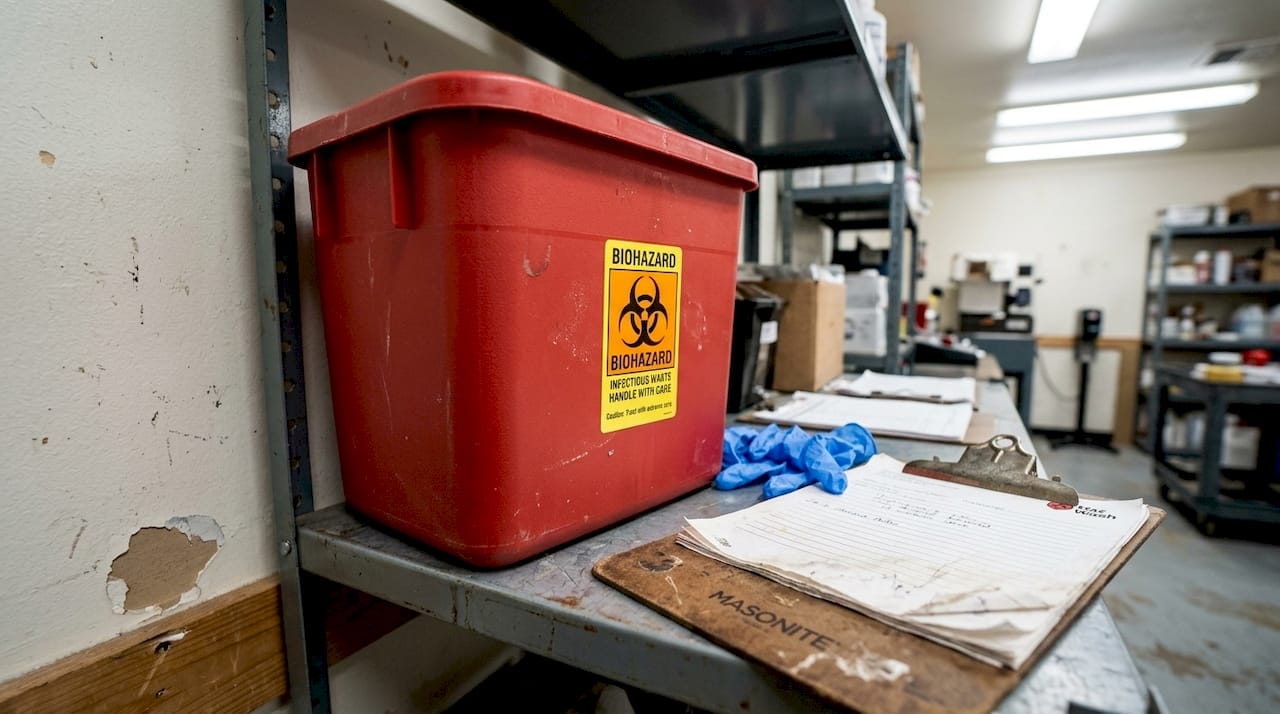
Seven warning signs: Common indicators of biohazard risks
With definitions clear, here are the seven crucial signs that indicate a biohazard risk may be present in your property.
Visible blood or body fluids. Any visible blood on carpets, walls, flooring, or furniture is a confirmed biohazard. Porous materials absorb fluids quickly, making surface cleaning insufficient and professional remediation necessary.
Needles, lancets, or broken sharps. Finding sharps on-site signals potential drug use, medical self-treatment, or improper disposal. Each item is a puncture and pathogen risk. Never handle them without proper PPE (personal protective equipment).
Unusual or strong odors. A persistent, sweet, or foul smell, especially in enclosed spaces, can indicate decomposition or bacterial activity. Odors alone are enough to warrant a professional assessment.
Improperly stored or unlabeled medical waste. Syringes in trash bags, unlabeled containers with biological material, or medical supplies mixed with regular garbage are all compliance violations and active hazards.
Reports of unattended death or infectious disease exposure. If a tenant has died without immediate discovery, or if someone with a known infectious illness occupied the space, the entire area must be treated as contaminated until assessed.
Contamination covering more than 1 square foot. Fluids on porous surfaces or contamination over 1 sq ft require a professional response. This threshold is widely recognized in remediation standards as the point where DIY cleanup becomes unsafe and legally risky.
Pest infestation linked to organic material. Flies, maggots, or rodents concentrated in one area often signal an underlying biohazard such as decomposition, food contamination with biological material, or waste accumulation.
Understanding the dangers of unaddressed biohazards in hoarding situations gives landlords a clearer picture of how quickly conditions can escalate. For a structured approach once you have confirmed a risk, the step-by-step biohazard cleaning process for Detroit landlords is a reliable starting point.
Pro Tip: If you are unsure whether a substance is a biohazard, treat it as one. Erring on the side of caution costs far less than a regulatory violation or health incident.
How to interpret and act on these indicators
Identifying the signs is half the battle. Knowing what actions to take based on what you find is the other half.
Not every indicator requires the same response. Use this table to assess severity and determine next steps:
IndicatorSeverity levelRecommended actionSmall blood spill on non-porous surfaceModeratePPE, approved disinfectant, documentBlood or fluids on carpet or drywallHighDo not clean; call licensed remediationSharps found on-siteHighSharps container, professional disposalUnusual odor, no visible sourceHighVacate area, call professional assessmentUnlabeled medical waste containersModerateIsolate, label, notify health departmentUnattended death confirmedCriticalDo not enter; contact authorities and licensed cleanupPest infestation with organic sourceHighPest control plus biohazard assessment
Porous surface contamination, known pathogen exposure, and large spills all mandate professional cleanup. This is not optional under Michigan law.
When you confirm a serious indicator, take these steps immediately:
Restrict access to the affected area to prevent exposure
Document everything with photos and written notes before any cleanup begins
Contact a licensed remediation company certified under OSHA HAZWOPER standards
Notify the local health department if infectious disease exposure is suspected
Preserve all records for insurance and legal protection
For first responders, your role includes initiating the notification chain. Refer to this guide on types of hazardous incidents for protocol guidance across different scenario types. Landlords should follow the steps for biohazard cleaning specific to Detroit-area properties to stay compliant from the start.
Michigan rules and best practices: Staying compliant
Once you know both what to look for and how to act, the last step is making sure your actions are legally and ethically sound under Michigan law.
Property owners and landlords must maintain an up-to-date medical waste plan, notify health departments when required, and contract licensed cleanup professionals for qualifying incidents. This is not a best practice. It is a legal requirement.
Additionally, Michigan’s Medical Waste Regulatory Act prohibits compaction or mixing of waste)/documents/mcl/pdf/mcl-368-1978-12-138.pdf) at the point of origin, and putrefaction of waste must be actively prevented. This means storage time and conditions matter as much as labeling.
Here is a compliance checklist for Michigan property owners:
Compliance requirementResponsible partyFrequencyMedical waste management planProperty owner/managerUpdate within 30 days of changesBiohazard labeling on containersGenerator at sourceAt point of generationStaff training on handling and PPEEmployer/property ownerAnnually at minimumLicensed disposal contractorProperty ownerPer incidentHealth department notificationProperty ownerUpon infectious exposureStorage area inspectionProperty managerRegularly, documented
Pro Tip: Schedule a biohazard walkthrough of your property at least twice per year. Many violations and risks are discovered during routine checks, not emergencies.
Common regulatory pitfalls to avoid:
Disposing of sharps in regular trash or recycling bins
Failing to label containers at the source
Mixing regulated medical waste with general waste
Delaying health department notification after a known exposure
Using unlicensed contractors for cleanup to save money
For a deeper look at what happens when medical waste is left unaddressed, the risks from leftover medical waste in residential settings are more serious than most people realize.
A Michigan expert’s take: What really matters when spotting biohazard risks
Here is the honest truth: most compliance failures we see in Michigan properties are not caused by people ignoring the law. They are caused by people not knowing what they are looking at.
A faint odor gets written off as a plumbing issue. A small stain gets painted over. An unlabeled container gets tossed in the dumpster. These are the moments that create liability, not the obvious emergencies.
Regulatory paperwork matters. But no document protects you if you cannot recognize a risk when it is right in front of you. Practical detection skills, built through training and routine inspection, are what actually keep properties safe and compliant.
We also see property owners over-rely on after-the-fact remediation while underinvesting in prevention. A twice-yearly walkthrough using the seven indicators in this guide will catch more problems than any compliance audit. Refer to real-world hazardous incident guidance to sharpen your situational awareness before an incident occurs. The goal is to never be surprised by what you find.
Need biohazard risk solutions? HazWash can help
If you have identified a potential biohazard risk on your Michigan property, or you want to make sure your current process is airtight, HazWash LLC is here to support you.
We provide licensed, OSHA HAZWOPER and IICRC-certified cleanup and compliance consulting throughout Detroit and the surrounding areas. Our specialties include professional trauma cleanup, unattended death remediation, infectious waste removal, and regulatory compliance support for landlords and property managers. We also offer free consultations to review your current risk exposure and help you build a compliant response plan. Whether you need immediate hazardous incident solutions or want to schedule a proactive property review, our biohazard cleaning services are available 24/7 with discreet, fully documented response.
Frequently asked questions
What are the legal requirements for labeling biohazard waste in Michigan?
Michigan law requires)/documents/mcl/pdf/mcl-368-1978-12-138.pdf) biohazard or medical waste containers to display the biohazard symbol or the words “medical waste” in 1-inch lettering, and waste must be separated at the source. Failure to label at the point of origin is one of the most common compliance violations cited during property inspections.
When is professional biohazard cleanup required in Michigan properties?
You must hire a licensed cleaner when there is blood or body fluid on porous materials, contamination covering more than 1 square foot, or known pathogen exposure on the property. DIY cleanup in these situations creates both health risks and legal exposure.
Who must be notified about infectious exposures on a property?
Property owners must notify the local health department and contract a licensed remediation company for confirmed or suspected infectious exposures in Michigan. Delays in notification can result in regulatory penalties.
How often must Michigan property owners update their medical waste plan?
Medical waste plans must be updated within 30 days of any relevant change in operations or procedures. Keeping your plan current is a baseline legal requirement, not an optional best practice.