Hazardous waste terms Detroit property managers must know
Hazardous waste terms Detroit property managers must know
TL;DR:
Understanding the legal definitions of hazardous waste and substances is crucial for Detroit property managers to ensure compliance and avoid liability. Proper terminology, documentation, and professional assessment help distinguish between risks that require formal regulation versus those that do not. Certified, experienced cleanup experts who use precise regulatory language can guide property owners through complex incidents safely and legally.
If you manage or own property in Detroit, you have probably used the word “hazardous” to describe something that looked dangerous or hard to clean. That instinct is understandable. But in the world of environmental compliance, the word “hazardous” carries a very specific legal meaning, and using it incorrectly in an incident report or contractor agreement can expose you to serious liability. Detroit properties face layered compliance pressures from EPA regulations, OSHA standards, and Michigan statutes all at once. This guide will cut through the confusion, define the terms professionals actually use, and show you how to apply them correctly in real situations.
Table of Contents
Core industry terms every Detroit property manager should know
Michigan-specific language: Hazardous substances, facilities, and contamination
Applying terminology: Incident reporting, compliance, and practical cleanup
Why terminology precision is your best protection: A Detroit expert’s viewpoint
Detroit’s trusted biohazard and hazardous waste cleanup experts
Understanding the basics: What counts as hazardous waste?
The term “hazardous waste” is not just a colorful description. It is a legal classification under the Resource Conservation and Recovery Act, commonly called RCRA. Before any material can be called hazardous waste, it must first qualify as a solid waste under federal rules. That might sound simple, but “solid waste” under RCRA includes liquids, semi-solids, and even some gases. The solid vs. liquid distinction you might assume does not apply here.
Once a material qualifies as a solid waste, regulators ask a second question: is it hazardous? The EPA’s hazardous waste classification process works in two stages. First, they check whether the material appears on one of four published lists. Second, if it is not listed, they test whether it shows hazardous characteristics.
The four hazardous waste lists:
F-list: Wastes from non-specific industrial sources, such as spent solvents
K-list: Wastes from specific industrial processes
P-list: Acutely hazardous discarded commercial chemical products
U-list: Toxic or otherwise hazardous discarded commercial chemical products
If a material does not appear on any list, it may still be classified as characteristically hazardous based on one or more of four testable properties:
For Detroit property managers, this framework matters immediately. Many incidents at residential or commercial properties involve materials that look dangerous but do not meet these regulatory thresholds. Knowing the difference protects you from over-reporting and from under-reporting, both of which carry risks.
Pro Tip: Before you label anything “hazardous waste” in writing, confirm with a certified professional whether it meets EPA listing or characteristic criteria. Reviewing hazardous waste examples for Detroit properties is a practical first step.
“Hazardous waste classification starts by determining if a material is a solid waste, then whether it is listed or characteristically hazardous.” — U.S. Environmental Protection Agency
Detroit’s industrial history adds another layer of complexity. Many properties, including converted warehouses and older multi-family buildings, may contain legacy materials like lead paint or asbestos that interact with these regulatory definitions in unexpected ways. Following a reliable waste disposal guide written for local property owners can help you navigate these nuances.
Core industry terms every Detroit property manager should know
Understanding the classification process is step one. But cleanup professionals and regulators use a layer of specialized vocabulary that can make contracts, incident reports, and compliance documents hard to read. These are the terms you will encounter most often.
Decontamination refers to the process of removing or neutralizing hazardous substances from personnel, equipment, or surfaces. It is distinct from simple cleaning. Decontamination follows a defined protocol, often involving specific personal protective equipment (PPE) removal sequences, chemical neutralizers, and verification testing. When a contractor tells you a space has been “decontaminated,” that is a regulated claim with documentation requirements.
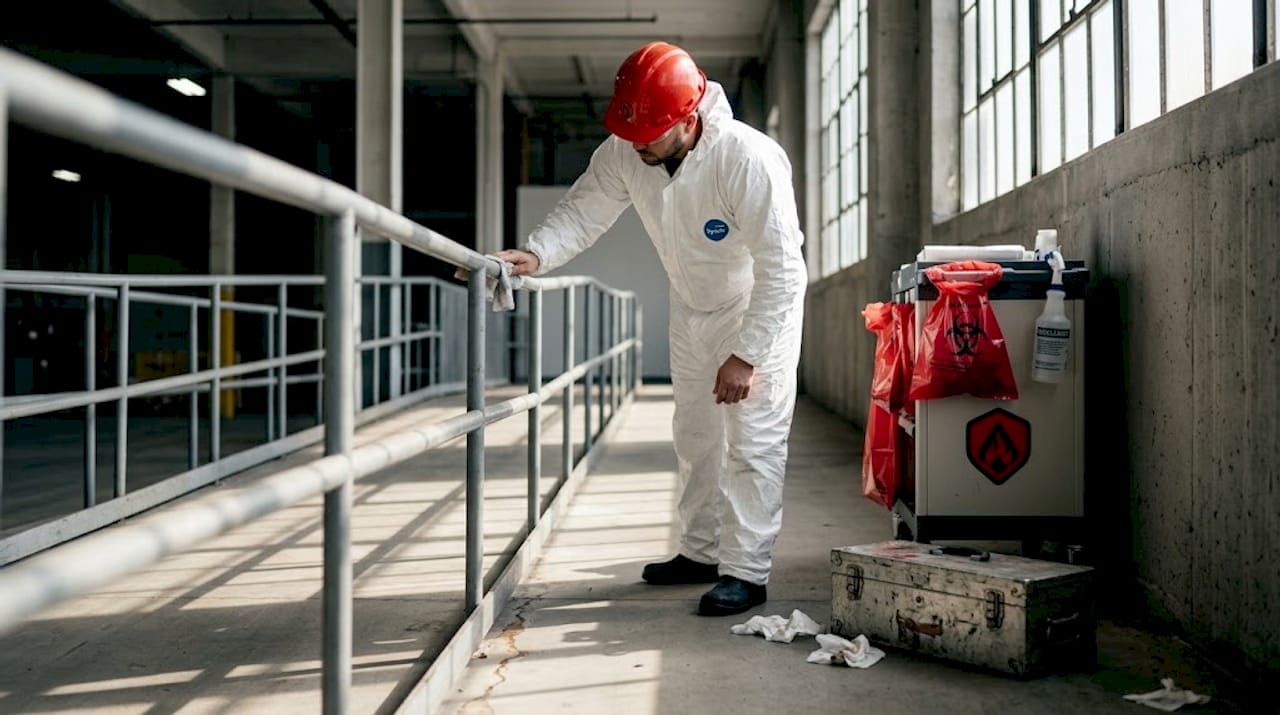
HAZWOPER stands for Hazardous Waste Operations and Emergency Response. It is OSHA’s governing standard for workers who handle hazardous waste or respond to hazardous substance emergencies. Under 29 CFR 1910.120, HAZWOPER training requirements vary based on the worker’s role. Site cleanup workers may need 40 hours of training; supervisors need an additional 8 hours. When you hire a cleanup contractor, verifying their HAZWOPER certification is not optional. It is a compliance requirement that protects you legally.
Here is a side-by-side look at other terms you will encounter:
Key terms at a glance:
Generator status can be triggered by a single cleanup event, not just ongoing industrial processes
A manifest must accompany every off-site hazardous waste shipment, even from a residential property
Hiring a contractor who uses a licensed TSDF protects you from downstream liability
Pro Tip: Keep a terminology sheet in your property documentation folder. When you review cleanup contracts, match the terms used to these regulatory definitions. If a contract uses “hazardous” loosely without tying it to RCRA or OSHA standards, ask for clarification before signing. You can also review our OSHA cleanup guide to understand what compliant cleanup looks like in Michigan residential and commercial settings.
Michigan-specific language: Hazardous substances, facilities, and contamination
Federal rules set the floor. Michigan statutes often go further. As a Detroit property owner or manager, you are subject to the Michigan Natural Resources and Environmental Protection Act, known as NREPA, which defines its own terms that carry weight in liability and insurance contexts.
Under MCL 324.101, Michigan defines a “hazardous substance” more broadly than the federal RCRA definition. The state definition includes substances that pose a threat to public health or the environment, even if they are not formally listed under federal law. This matters because a substance that does not qualify as hazardous waste under RCRA could still create liability under Michigan statutes.
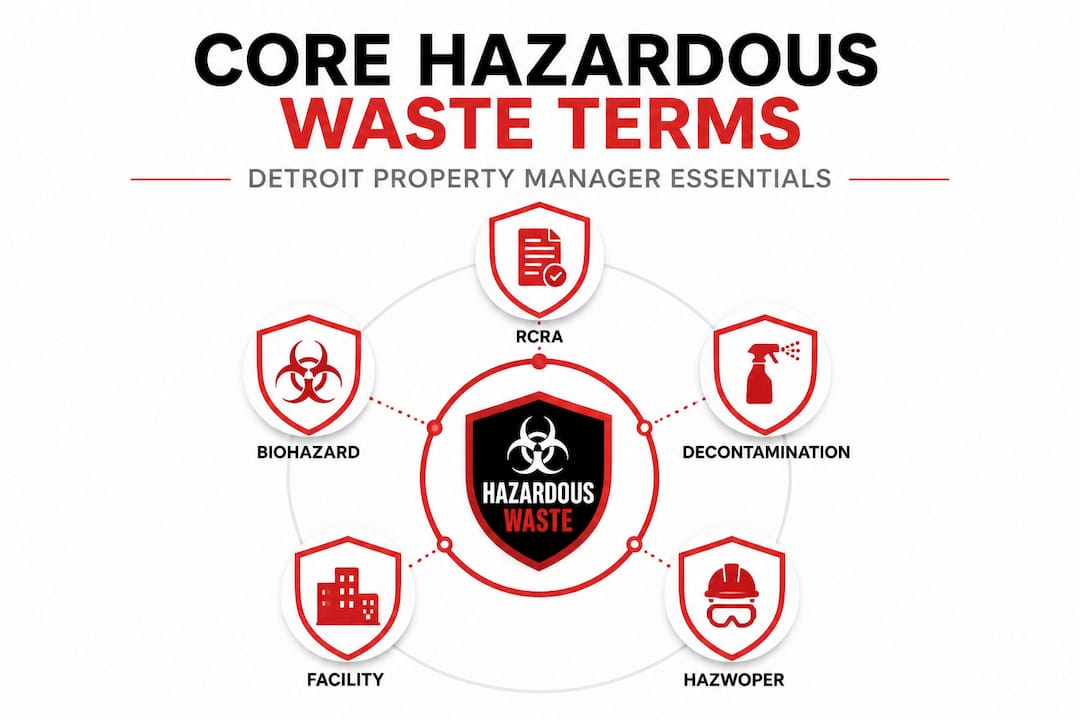
The term “facility” under Michigan law is equally important. It does not just mean a factory or industrial site. A residential property can be classified as a facility if hazardous substances are present above cleanup criteria, which are the threshold concentrations regulators use to determine whether contamination requires action.
Michigan maintains two primary sets of cleanup criteria:
Residential criteria: Applied to properties where people live or spend significant time
Unrestricted criteria: The strictest standard, allowing for all future land uses without restriction
“Michigan law defines environmental contamination relating to hazardous substances and the concept of ‘facility’ based on exposure above cleanup criteria.” — Michigan Legislature, MCL 324.101
Why this matters for Detroit property managers:
A property classified as a “facility” under Michigan law triggers mandatory reporting and cleanup obligations
Insurance claims tied to contamination events often hinge on whether the property meets the statutory definition of a facility
Risk assessments performed before a property sale or lease should reference Michigan cleanup criteria, not just federal standards
Failing to disclose known contamination that meets the facility definition can result in civil liability
Understanding these distinctions also affects how you categorize and respond to biohazard events. Blood, bodily fluids, and other biological materials do not automatically qualify as hazardous substances under Michigan law, but the conditions surrounding them might. Our guides on Michigan compliance and Michigan hazardous waste rules break down these distinctions in practical terms.
Knowing where your property falls on the contamination spectrum is also essential before selecting a cleanup method. Our resource on biohazard risk indicators for Michigan property owners helps you understand what warning signs to look for after an incident.
Applying terminology: Incident reporting, compliance, and practical cleanup
Knowing the vocabulary is one thing. Using it correctly in the real world is where most Detroit property managers run into trouble. Here is where imprecise language causes the most damage.
Common pitfalls when using hazardous waste terminology:
Labeling a biohazard event as “hazardous waste” in an incident report without confirming it meets RCRA or Michigan criteria
Signing a cleanup contract that uses “hazardous” loosely, creating undefined liability for remediation scope
Failing to identify your generator status after a cleanup event that produces regulated waste
Assuming a verbal confirmation from a contractor is sufficient without a written manifest or certificate of disposal
The EPA is clear that “hazardous waste” does not always match how the term is used in everyday language. Using it incorrectly in formal documents can create obligations you did not intend to accept or, worse, expose you to penalties for failing to comply with regulations that apply only because of how you described the material.
Steps to compliant incident reporting in Detroit:
Document the incident with factual, descriptive language first. Describe what you observe, not what you assume it is regulated as.
Contact a certified cleanup professional before submitting any formal report to a regulator or insurer.
Confirm whether the materials involved are regulated as hazardous waste under RCRA or as hazardous substances under Michigan NREPA.
Use the correct regulatory classification in all written documents, including insurance claims, contractor agreements, and internal records.
Obtain a manifest or certificate of disposal from your cleanup contractor for any regulated waste removed from the property.
File required reports with EGLE, Michigan’s Department of Environment, Great Lakes, and Energy, within mandated timeframes.
Terminology also shapes how you interact with cleanup vendors. Contractors certified under HAZWOPER are trained to use waste management language precisely because their own compliance depends on it. When you align your documentation with their language, it creates a consistent record that protects both parties.
Pro Tip: Always ask your cleanup contractor to define the regulatory standards governing the work in the contract itself. Do not rely on implied terms. Specify RCRA classification, OSHA HAZWOPER applicability, DOT manifest requirements, and Michigan NREPA criteria by name.
For detailed documentation guidance, see our cleanup documentation guide and our specialized DOT hazardous waste guide for Detroit property managers.
Why terminology precision is your best protection: A Detroit expert’s viewpoint
After years of working hazardous waste and biohazard scenes across Detroit and surrounding communities, one thing stands out clearly. The biggest compliance risks do not come from what property managers do. They come from what property managers say.
Most managers who call us after an incident are not in trouble because they failed to act quickly. They are in trouble because someone wrote “hazardous waste” on a form before confirming whether it was actually regulated as such. That single word choice can change the entire regulatory pathway for a property. It can trigger mandatory EGLE reporting. It can affect your insurance payout. It can even affect the sale price of a building.
The opposite error is equally damaging. Some managers assume that because something looks biological rather than chemical, it cannot be “real” hazardous waste. That assumption leads to under-reporting, inadequate cleanup, and potential ongoing liability if contamination is later discovered.
What we see consistently is that property managers who take time to understand the difference between descriptive language and regulatory language are significantly better protected. They ask the right questions. They get better documentation. They negotiate stronger contractor agreements. Reviewing waste disposal examples specific to Detroit properties is a tangible way to build that foundation.
Our recommendation: review every contractor contract before signing, and check that defined terms match the regulatory definitions in this guide. If a contractor cannot explain which RCRA category or Michigan criterion governs the work, that is a red flag.
Detroit’s trusted biohazard and hazardous waste cleanup experts
Navigating these regulations while managing an active incident is genuinely difficult. You should not have to decode regulatory language in the middle of a crisis.
HazWash LLC brings certified, OSHA HAZWOPER-trained teams to every scene in Detroit and the surrounding area. We use precise regulatory language in every report, manifest, and cleanup certificate we produce, because we know that documentation is your protection long after the cleanup is done. Our Detroit cleanup services cover biohazard remediation, trauma scene restoration, hazardous waste removal, and full compliance documentation. Whether you need a consultation to understand your obligations or an emergency response team on-site today, we are available 24/7. Review our federal compliance guide or check your property’s biohazard risk profile to take the first step toward confident, compliant cleanup.
Frequently asked questions
What makes a waste “hazardous” for Detroit property managers?
A waste is legally hazardous if it first qualifies as a solid waste under RCRA and then either appears on an EPA listed waste category or exhibits at least one of four characteristics: ignitability, corrosivity, reactivity, or toxicity.
How does Michigan law define a contaminated “facility”?
Under MCL 324.101, a facility is any property where hazardous substances are present in concentrations above unrestricted residential cleanup criteria, which means even a single-family home can meet this definition after certain incidents.
What is HAZWOPER and why is it important?
HAZWOPER is the OSHA standard covering hazardous waste operations and emergency response under 29 CFR 1910.120, requiring specific training hours for cleanup workers and supervisors. Verifying that your contractor holds current HAZWOPER certification is essential for your own legal protection.
Does “biohazard” automatically mean hazardous waste?
No. Biohazard is a descriptive term for biological materials that pose infection or health risks, but it does not automatically meet regulatory definitions for hazardous waste under RCRA or hazardous substances under Michigan NREPA. Each incident must be evaluated individually against the applicable legal criteria.