Why Use Specialized Cleanup Teams for Biohazard Scenes
Why Use Specialized Cleanup Teams for Biohazard Scenes
TL;DR:
Certified biohazard cleanup teams are trained, licensed, and equipped to safely decontaminate trauma scenes, complying with strict regulations. They provide verified, discreet services that protect health, legal standing, and privacy, unlike general cleaning efforts. Prompt professional intervention within 24 hours minimizes health risks and ensures proper waste disposal, safeguarding families from long-term consequences.
Specialized cleanup teams are professional groups trained, certified, and equipped to safely manage biohazard and trauma scene remediation that standard cleaning services cannot legally or safely perform. When a traumatic incident occurs in your home, the difference between hiring a general cleaner and a certified biohazard remediation team is the difference between surface-level tidying and verified, documented decontamination. These teams operate under OSHA, EPA, and DOT regulations, carry certifications like OSHA HAZWOPER and IICRC, and use equipment that most people have never encountered. Understanding why use specialized cleanup teams matters is not just reassuring. It is the foundation of protecting your family’s health, your property, and your legal standing.
Why use specialized cleanup teams instead of regular cleaners?
Many people wrongly assume biohazard cleanup is just stronger cleaning. Specialist cleaning is regulated, technical, and compliance-driven in ways that general cleaning services are never designed to meet. The gap between the two is not a matter of effort or product strength. It is a matter of training, legal authority, and equipment.
Here is what separates certified biohazard remediation professionals from standard cleaning crews:
Certification and training. Technicians hold credentials like OSHA HAZWOPER, IICRC, and DOT certifications. They complete documented training in bloodborne pathogen exposure control, hazardous material handling, and post-exposure protocols per OSHA 29 CFR 1910.1030.
Personal protective equipment (PPE). Specialist teams use chemical-resistant suits, respirators, and air scrubbers with HEPA filters that protect workers and prevent cross-contamination throughout the property.
Regulated procedures. Every cleanup follows a documented protocol. Waste is categorized, contained, and disposed of according to federal and state law. General cleaners have no legal framework for this.
Risk assessment and containment. Before any cleaning begins, specialists conduct formal risk assessments and establish containment zones to prevent pathogen spread to unaffected areas.
Legal compliance. Specialist teams carry liability documentation and produce verified cleanup records. This protects property owners from future legal or insurance disputes.
Pro Tip: Ask any cleanup company you contact to provide their OSHA HAZWOPER certification number and proof of EPA-compliant waste disposal before they enter your property. A legitimate specialist team will produce this documentation without hesitation.
The distinction matters because documented procedures and legal disposal are not optional extras. They are the baseline requirements for any biohazard cleanup to be considered complete and safe.
How do specialized teams protect your health during trauma cleanup?
Biohazard scenes contain risks that are invisible to the untrained eye. Blood, bodily fluids, and decomposition materials carry bloodborne pathogens including HIV, hepatitis B, and hepatitis C. These pathogens survive on surfaces for hours or days after an incident. A certified team does not just clean what is visible. They decontaminate what is not.
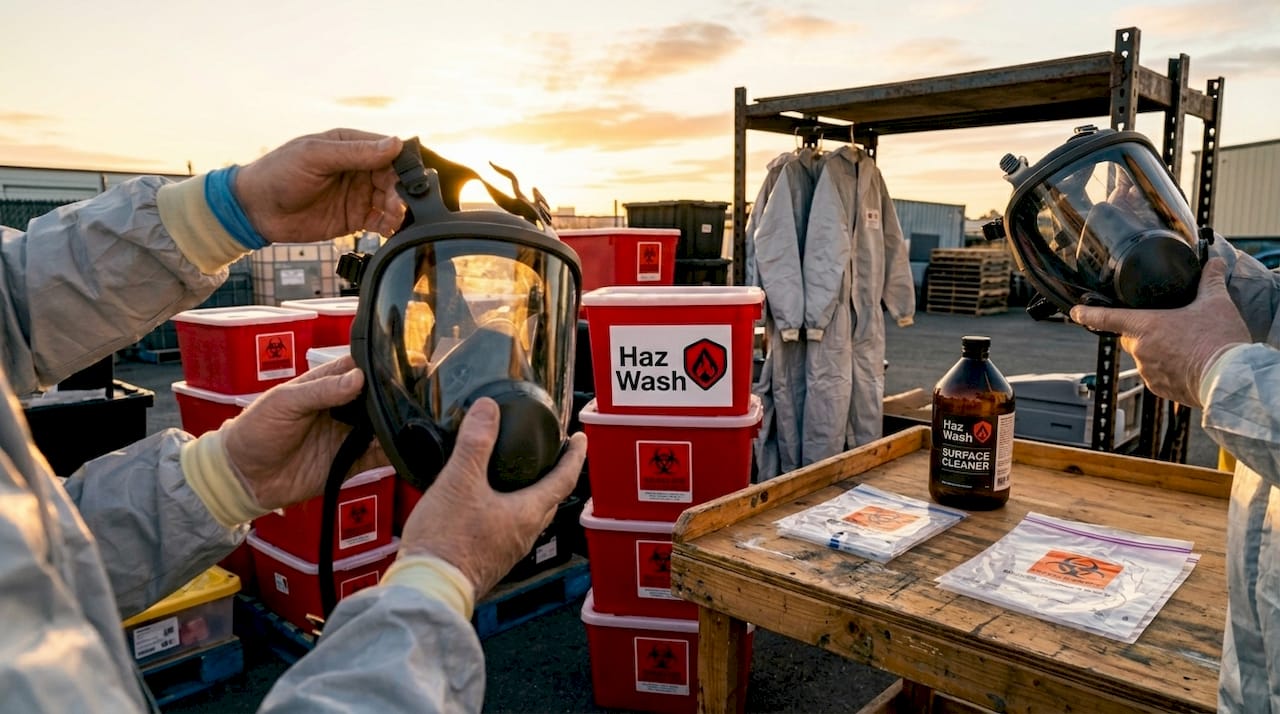
The EPA’s Emergency Response Special Teams demonstrate the standard for this work. The EPA Environmental Response Team brings together experts in biology, chemistry, and engineering to manage complex hazardous incidents. Certified biohazard companies follow the same multidisciplinary model at the residential and commercial level.
The decontamination process for a trauma scene typically follows this sequence:
Scene assessment. Technicians identify all affected surfaces, including areas not immediately visible such as subfloor materials, wall cavities, and HVAC systems.
Containment establishment. Plastic sheeting, negative air pressure systems, and sealed entry points prevent pathogen migration to clean areas.
Removal of biohazardous materials. Contaminated items, including porous materials like carpet, drywall, and upholstery, are bagged and removed according to regulated waste protocols.
Chemical decontamination. Hospital-grade disinfectants and EPA-registered biocides are applied to all affected surfaces.
Air treatment. UV-C light systems and ozone generators address airborne contamination that surface cleaning cannot reach.
Verification testing. ATP testing or similar methods confirm decontamination is complete before the space is cleared for reoccupancy.
Specialist cleaning cuts sick days by 44% in environments where proper decontamination replaces inadequate cleaning. That figure reflects a measurable health outcome, not a marketing claim. For families returning to a home after a trauma incident, that reduction in pathogen exposure is the difference between a safe environment and a recurring health risk.
You can learn more about what this process looks like in practice by reading about biohazard cleanup professionals and the specific steps they take on your behalf.
Why privacy and discretion matter in specialized cleanup services
Trauma incidents carry social weight that extends beyond the physical scene. Neighbors notice unfamiliar vehicles. Children ask questions. Community members form impressions. The importance of specialized cleanup extends to managing this social dimension with the same professionalism applied to the physical cleanup.
Privacy practices are vital to reducing stigma and protecting families’ emotional and social wellbeing during traumatic cleanups. Certified teams build these protections into their standard operating procedures:
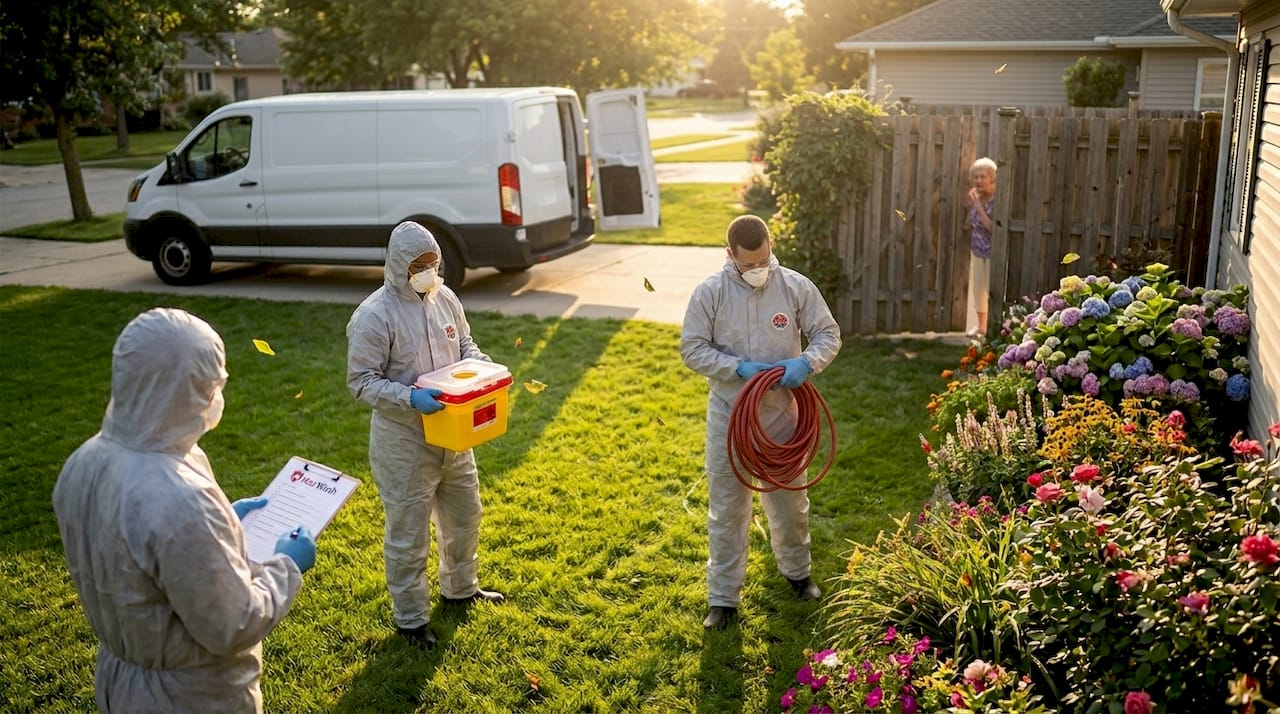
Unmarked vehicles. Specialist firms use vehicles without company branding or biohazard markings to avoid drawing attention to the property.
Delayed PPE donning. Technicians delay donning protective gear until a visual privacy perimeter is established, so neighbors do not see suited workers entering the home.
Privacy perimeters. Screens, barriers, or contained entry points prevent public visibility of the cleanup process.
Confidentiality agreements. Reputable companies operate under non-disclosure protocols. Cleanup details are not shared with third parties without client consent.
Controlled documentation. Cleanup records are produced for legal and insurance purposes but are handled with strict confidentiality.
“Families commonly worry about the stigma or social impact of trauma cleanups. Professional teams address this by controlling every visible element of the operation, from vehicle markings to the timing of PPE use, so the process remains as private as possible.” — KBEW Information Station
These protocols are not courtesy gestures. They are recognized operational safety needs that reduce community anxiety and protect the family’s standing in their own neighborhood.
What are the risks of DIY cleanup vs. hiring professionals?
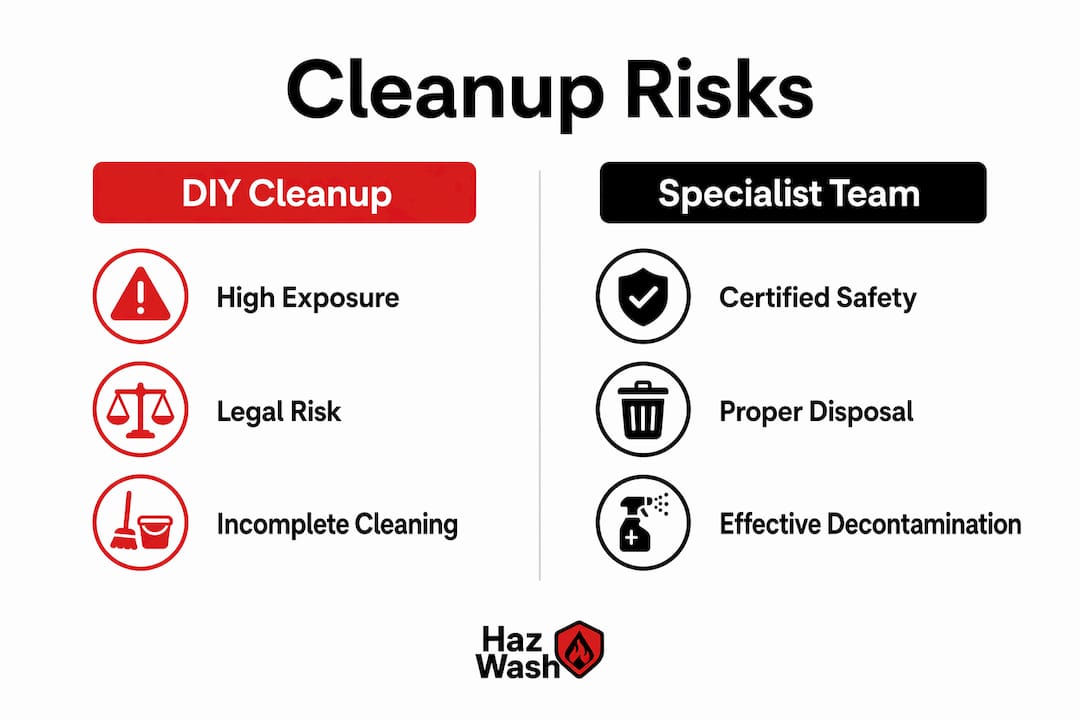
Attempting to clean a biohazard scene without professional training creates compounding risks that extend well beyond the day of the incident. The health, legal, and financial consequences of inadequate decontamination are documented and serious.
Incomplete decontamination risks health exposure, legal liability, and insurance coverage complications that specialist cleaning prevents. The cost of a certified cleanup is consistently lower than the cost of addressing the consequences of an incomplete one.
Pro Tip: Before any cleanup begins, contact your homeowner’s insurance provider. Many policies cover biohazard remediation when performed by a certified company. A specialist team can provide the documentation your insurer requires to process the claim.
For families managing a property after a traumatic event, understanding your legal cleanup obligations in your jurisdiction is a critical first step before any remediation begins.
How do specialized teams handle hazardous waste disposal?
Hazardous waste generated during biohazard cleanup does not go into standard trash. Federal law, specifically EPA regulations and DOT transport rules, governs every step from the moment contaminated material is bagged to its final disposal at a licensed facility.
Certified teams follow a structured waste management process:
Professional biohazard cleanups manage hazardous waste according to strict environmental regulations to avoid contamination and penalties. Every load of waste leaves the property with a manifest document that creates a legal chain of custody from your home to the disposal facility. This documentation protects you as the property owner from any future regulatory inquiry. Certified teams also provide a written cleanup verification report, which confirms that the space meets safety standards for reoccupancy.
Key takeaways
Specialized cleanup teams are the only legally and medically appropriate response to biohazard and trauma scenes, providing certified decontamination, compliant waste disposal, and privacy protections that general cleaning services cannot deliver.
What I’ve learned from working with families after trauma incidents
Having worked alongside families navigating some of the most difficult moments of their lives, I can tell you that the question families ask most often is not “Is this safe?” It is “Will anyone find out?” That tells you something important about what people actually need from a specialized cleanup service. They need competence, yes. But they need discretion just as much.
What I have observed is that families who try to handle cleanup themselves, often out of a desire to protect privacy or avoid the cost, almost always face a harder situation later. Either the decontamination is incomplete and a health issue surfaces weeks afterward, or an insurer denies a claim because there is no certified documentation, or a property sale falls through because contamination was discovered during inspection. The short-term discomfort of calling a professional team is always smaller than the long-term consequences of not doing so.
My advice to any family in this situation is direct: call a certified team within 24 hours of the incident. Not because the scene will get worse (though it will), but because the legal and health clock starts immediately. The scene cleanup process is designed to protect you, and the sooner it begins, the more completely it can do that.
Select a company that holds OSHA HAZWOPER, IICRC, and DOT certifications. Ask for their waste disposal documentation. And do not let cost be the deciding factor. The companies that cut corners on compliance are the ones that leave you with a problem that costs far more to fix.
— David
Hazwash is here when your family needs certified cleanup support
Hazwash provides 24/7 biohazard and trauma cleanup services across Detroit and the surrounding area, with a team certified in OSHA HAZWOPER, IICRC, and DOT compliance. Every response is discreet, from unmarked vehicles to confidential documentation, so your family’s privacy is protected from the moment the team arrives. Hazwash handles blood spill remediation, death scene cleanup, hoarding situations, and violence scene restoration, all with verified decontamination and legally compliant waste disposal. If you are facing a biohazard situation and need a team you can trust, contact Hazwash’s certified cleanup team today. For sensitive trauma situations requiring the highest level of care and confidentiality, Hazwash also provides discreet trauma scene support for families across the Detroit area.
FAQ
What makes a cleanup team “specialized”?
A specialized cleanup team holds certifications such as OSHA HAZWOPER and IICRC, follows regulated decontamination procedures, and disposes of biohazardous waste according to EPA and DOT standards. General cleaning companies hold none of these credentials and cannot legally perform this work.
Can I clean up a biohazard scene myself?
Attempting DIY cleanup of a biohazard scene risks pathogen exposure, violates federal waste disposal laws, and can void your homeowner’s insurance coverage. Certified specialist teams are the legally and medically appropriate response.
How do cleanup teams protect my family’s privacy?
Professional biohazard teams use unmarked vehicles and privacy perimeters and delay donning PPE until visual containment is established, minimizing any visible indication of the cleanup to neighbors or passersby.
Does insurance cover specialized biohazard cleanup?
Many homeowner’s insurance policies cover certified biohazard remediation. A specialist team provides the documentation your insurer requires, including waste manifests and a verified cleanup report, to support your claim.
How quickly should I call a specialized cleanup team?
Contact a certified team within 24 hours of a biohazard incident. Bloodborne pathogens survive on surfaces for extended periods, and prompt professional response limits health exposure and preserves your legal and insurance options.