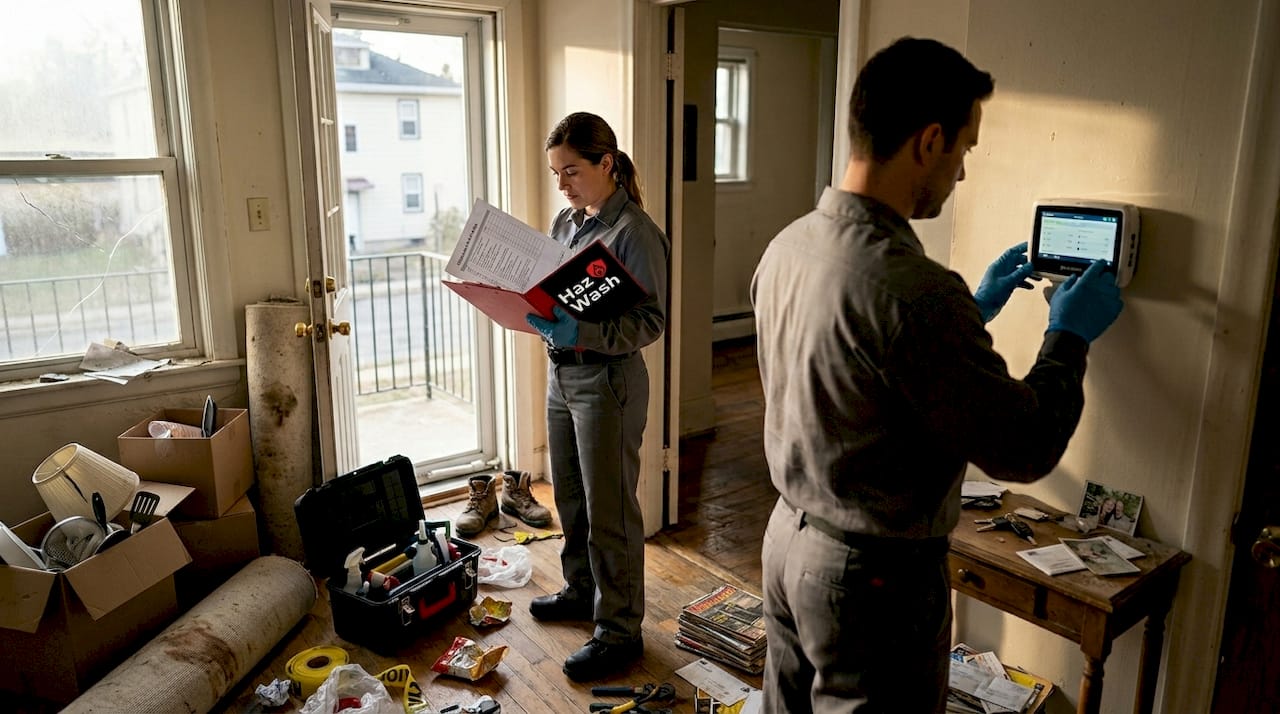
What biohazard cleanup professionals really do for you
What biohazard cleanup professionals really do for you
Biohazard cleanup requires specialized procedures, equipment, and certified professionals for safety and compliance.
The process includes thorough inspection, containment, removal, disinfection, odor mitigation, waste disposal, and clearance testing.
DIY attempts often miss hidden hazards, lack proper documentation, and pose legal and health risks.
When a traumatic incident occurs in your home or rental property, the instinct is to clean it up quickly and move on. But biohazard cleanup is not a matter of bleach, gloves, and a mop. It involves regulated procedures, specialized equipment, and certified professionals who are trained to detect hazards invisible to the naked eye. Families, landlords, and property managers in Detroit who skip professional intervention often face hidden health risks, regulatory fines, and legal liability long after the incident is over. This guide walks you through exactly what certified cleanup professionals do and why it matters.
Table of Contents
Step-by-step process: How cleanup professionals restore safety
Odor and ventilation: Why it matters beyond surface cleaning
The uncomfortable truth: DIY cleanup rarely provides real safety
Key Takeaways
Biohazard cleanup professionals eliminate hidden risks and provide certified clearance for affected properties. Every cleanup follows a clear step-by-step process focused on risk assessment, containment, and testing. Persistent odors after a biohazard incident often mean underlying issues remain unresolved. Professional service ensures hazardous waste disposal follows Detroit and Michigan regulations, minimizing legal risk. Attempting cleanup without professionals usually leaves contamination and documentation gaps, risking health and liability.
What makes biohazard cleanup a professional job?
Most people picture biohazard cleanup as a more intense version of regular cleaning. The reality is far more technical, and far more consequential if done incorrectly.
Biohazard incidents cover a wide range of situations, including:
Unattended deaths and decomposition scenes
Violent crime scenes with bloodborne pathogen exposure
Hoarding environments with mold, animal waste, or sharps
Medical waste spills and needle contamination
Chemical spills and drug lab residue
Sewage backups with fecal matter contamination
Each one of these situations carries genuine health risks. Bloodborne pathogens such as HIV and Hepatitis B can survive on surfaces for days. Decomposition fluids can penetrate flooring, subfloor, and wall cavities. Airborne contaminants from drug labs can trigger neurological and respiratory harm for years after exposure.
Professional biohazard cleanup is not optional for most incidents. It is legally required in many cases, and failure to comply can result in regulatory fines, insurance claim denials, and civil liability for property owners.
The legal liabilities in cleanup situations are significant. Michigan landlords, in particular, face tenant safety obligations that extend beyond cosmetic cleaning. If a tenant is harmed because a property was not properly remediated after a biohazard event, the legal consequences can be severe.
What separates a professional from a well-meaning but uninformed attempt? Certifications and compliance. Professionals hold credentials such as OSHA HAZWOPER (Hazardous Waste Operations and Emergency Response), IICRC (Institute of Inspection, Cleaning and Restoration Certification), and DOT certification for hazardous waste transport. These are not decorative credentials. They represent specific training in handling, transporting, and disposing of materials that can cause serious harm.
Knowing when odors indicate biohazard problems is also part of the professional skill set. A trained technician can assess a property and identify contamination zones that a general cleaner would miss entirely.
Step-by-step process: How cleanup professionals restore safety
Now that you understand the reasons behind professional cleanup, let’s walk through the process step by step so you know what really happens, and who handles what.
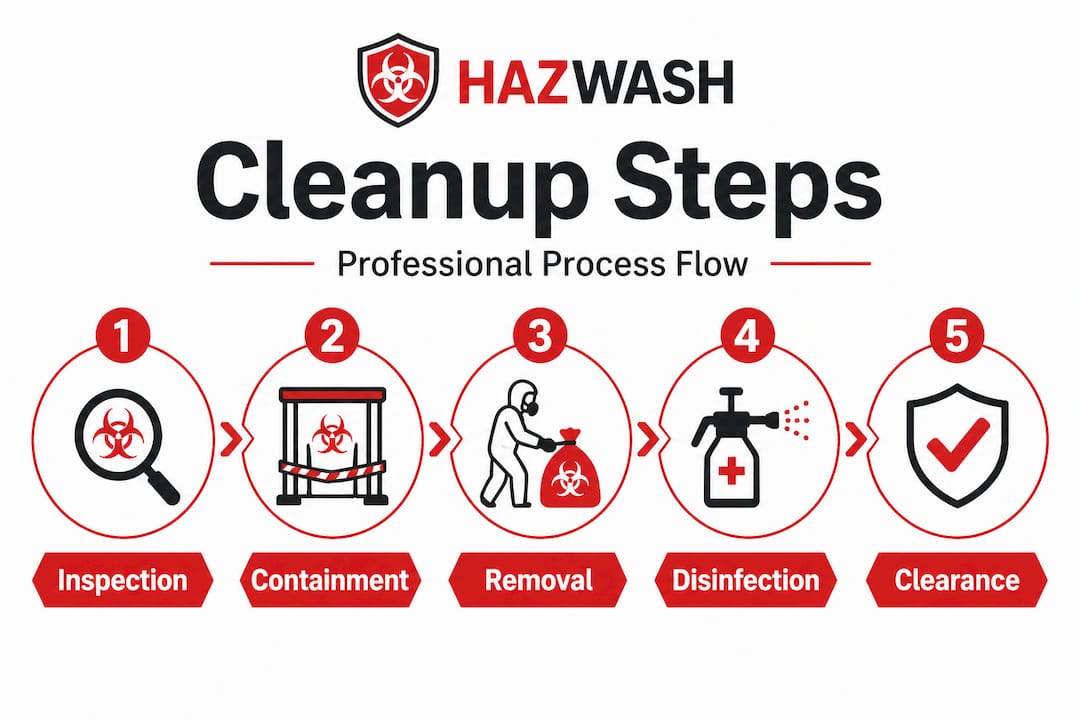
The cleanup process outlined by industry standards follows a structured, seven-stage framework that ensures nothing is missed:
Initial inspection and risk assessment. Technicians evaluate the full scope of contamination, identify safety hazards, and determine which materials are affected. This step drives every decision that follows.
Containment with barriers and negative air pressure. Affected areas are sealed off using plastic sheeting and negative air machines. This prevents cross-contamination from spreading to unaffected parts of the property.
Removal of porous materials. Carpet, drywall, insulation, and other absorbent materials that have been contaminated cannot be safely cleaned. They are carefully removed and disposed of as regulated biohazard waste.
Cleaning and disinfection of non-porous surfaces. Floors, walls, and hard surfaces are treated with EPA-registered disinfecting agents. This is not household bleach. These are hospital-grade products applied at precise concentrations.
Odor and HVAC mitigation. Odor is addressed using hydroxyl generators, ozone treatment, or thermal fogging, depending on the severity. HVAC systems are inspected and often cleaned to prevent recirculation of contaminated air.
Waste transport and disposal. All biohazard materials are packaged in DOT-compliant containers, labeled, and transported to licensed treatment facilities. This step is strictly regulated under both federal and Michigan state law.
ATP testing and clearance. ATP (adenosine triphosphate) testing uses bioluminescence to detect biological residue at the microscopic level. Clearance testing confirms the space is safe for reoccupancy.
Understanding these stages helps you ask the right questions when hiring a cleanup company. If a company skips the ATP testing phase, for example, you have no objective evidence that the space is actually safe.
Pro Tip: Always request a written clearance report after biohazard cleanup. This document protects you legally and confirms that all seven process stages were completed to standard.
For incidents involving suspected drug manufacturing, drug lab exposure cleanup steps follow a modified version of this protocol with additional air sampling and chemical testing requirements.
Odor and ventilation: Why it matters beyond surface cleaning
After containment and disinfection, attention shifts to odors and air quality. This is where many DIY efforts fall short and how professionals tackle these lingering issues.
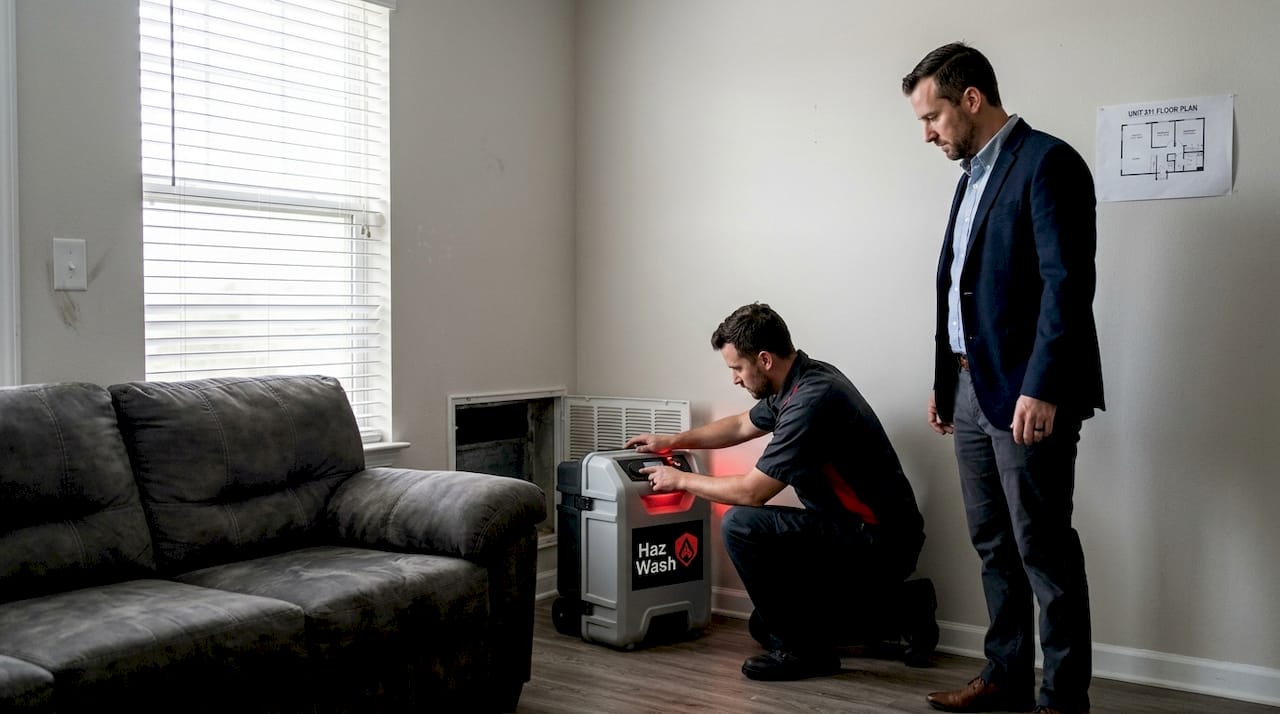
Persistent odor after a biohazard incident is not a cosmetic problem. It is a symptom. An ammonia-like smell may signal decomposition fluids that have settled into floor joists. A chemical odor in a former rental could indicate drug lab residue that has absorbed into drywall and insulation. Odors are your property telling you that contamination is still present.
Understanding hazardous odor removal methods used by professionals helps you see why household products do not reach the same standard. Spraying air freshener or burning candles masks the smell temporarily. It does nothing to neutralize the biological or chemical compounds producing it.
Professionals use a layered approach to odor removal:
Hydroxyl generators produce hydroxyl radicals that break down odor-causing compounds at the molecular level. They are safe for use in occupied properties and do not leave chemical residue.
Ozone treatment is more aggressive. It destroys odor molecules but requires the property to be vacated during treatment due to the concentration needed.
Thermal fogging uses a heated deodorizer that penetrates porous materials like wood, fabric, and drywall in the same way odors do, neutralizing them at the source.
HVAC duct inspection and cleaning ensures that contaminated air is not being recirculated every time the heating or cooling system runs.
Many landlords and property managers make the same critical odor removal mistakes after a biohazard event: they repaint, install new flooring, and call the property restored. Weeks later, the odor returns when humidity rises or the HVAC kicks on. New tenants complain. The problem was never solved, only hidden.
Pro Tip: If a property has a persistent odor that returns after cleaning, do not cover it. Stop and call a certified professional for an assessment. Odor recurrence almost always signals residual contamination that needs remediation, not renovation.
Reviewing real biohazard odor removal results from Detroit property managers shows a consistent pattern: properties that skipped professional odor mitigation required a second, more expensive intervention to reach safe clearance levels.
Safe waste management and regulatory compliance
Once the site is clean and the air is safe, there is still a critical responsibility: handling and disposing of hazardous waste, which carries legal risks if not managed properly.
The waste transport and disposal stage is one of the most regulated parts of the entire process. In Michigan, biohazard waste is classified as infectious, regulated medical waste, or hazardous chemical waste depending on the incident type. Each classification carries its own rules for packaging, labeling, transport, and treatment.
Here is what proper compliance looks like:
All biohazard materials are packaged in red, leak-proof bags or puncture-resistant containers that meet DOT specification requirements.
Containers are labeled with the universal biohazard symbol and relevant hazardous material designations.
A licensed waste transport vehicle carries the materials to a licensed treatment facility, typically an autoclave or incineration site.
A waste manifest (a formal chain-of-custody document) is generated for every regulated waste load and retained by all parties.
A critical fact for Detroit property owners: Improper disposal of biohazard waste is a federal offense under the Resource Conservation and Recovery Act (RCRA). Violations can result in fines exceeding $37,500 per day per violation. Property owners who hire uncertified cleaners and are later found responsible for improper disposal face these penalties directly.
This is why documentation matters so much. A professional cleanup company provides you with a complete record of what was removed, how it was categorized, where it was transported, and how it was treated. That paper trail protects you from liability claims and satisfies insurance requirements. Reviewing a comprehensive hazardous waste disposal guide is a practical starting point for landlords who want to understand what documentation to request.
Certifications like OSHA HAZWOPER and DOT hazardous materials handler credentials are not suggestions. They are legal requirements for anyone transporting or treating this category of waste in the state of Michigan.
The uncomfortable truth: DIY cleanup rarely provides real safety
Most guides walk you through what professionals do. Very few tell you the full picture of what happens when property owners, families, or facility managers attempt to handle biohazard cleanup themselves.
We understand the impulse. A tragic event has occurred. You want to restore normalcy quickly. Calling in professionals feels like an additional burden on top of an already overwhelming situation. So you buy supplies, call a trusted friend or maintenance crew, and attempt to handle it.
Here is the gap no one talks about clearly enough. The visible contamination is almost never the most dangerous part. What you can see, smell, and identify is usually the surface layer. The contamination that creates long-term health risk has already migrated into porous building materials, settled into HVAC systems, and in some cases become airborne in concentrations that are not detectable without specialized equipment.
DIY attempts almost universally fail on three counts. First, they miss hidden contamination. Standard cleaning products do not reach adequate concentrations to kill all bloodborne pathogens, and most people do not know how to apply them correctly. Second, they create legal exposure. Without a professional clearance document, you have no defensible proof that a space is safe for occupancy. Insurance companies and courts will not accept “we cleaned it ourselves” as evidence of remediation. Third, they lack documentation. The single most overlooked mistake in self-managed cleanup is the failure to obtain and retain clearance documentation.
For incidents involving drug manufacturing or chemical exposure, this gap becomes even more serious. Professional drug lab cleanup requires chemical testing protocols that only licensed professionals can conduct and certify. A property that looks and smells clean can still exceed safe contamination thresholds for methamphetamine residue, for example, and expose future occupants to serious neurological harm.
The emotional cost of attempting DIY cleanup in the wake of a traumatic event is also real. Families who take on this work themselves without professional support often report lasting psychological impact. Professional cleanup teams are trained to handle these scenes with discretion and efficiency, allowing families to step away and grieve rather than manage a technical remediation process.
Where to find trusted biohazard cleanup experts in Detroit
Now that you know the risks, the professional process, and the pitfalls of DIY, here is how to find the right experts to safeguard your Detroit property.
HazWash LLC serves families, landlords, and property managers across Detroit and surrounding areas with 24/7 certified biohazard cleanup, trauma scene restoration, and hazardous waste removal. Every technician holds current OSHA HAZWOPER, IICRC, and DOT certifications, and every job produces the documentation you need to protect your property and your liability exposure. Whether you are managing a complex death cleanup, a chemical spill, or a hoarding situation, the process follows the same rigorous standards every time. For more background on navigating regulatory requirements, review federal compliance cleanup Michigan and the DOT hazardous waste Detroit property manager guide. When you are ready to compare certified local providers, top biohazard cleaning options Detroit offers a clear overview of what qualified services look like in 2026. Call HazWash LLC any time, day or night, for immediate, discreet, and compliant assistance.
Frequently asked questions
What does a biohazard cleanup professional do?
They secure, clean, disinfect, and restore areas impacted by hazardous materials, following the full seven-stage process from inspection through ATP clearance testing to ensure the space is legally and biologically safe.
Can I handle biohazard cleanup myself?
DIY cleanup poses direct health risks, creates legal liability, and rarely meets the clearance standards required for reoccupancy because professional-grade protocols are needed to detect and eliminate hidden contamination.
How long does professional biohazard cleanup take?
Most incidents resolve within a few hours to a few days, depending on contamination severity and scope, as the structured process is designed to move efficiently through each stage without compromising safety standards.
Is odor removal part of biohazard cleanup?
Yes, odor and HVAC mitigation are required stages in professional cleanup because persistent odor signals ongoing contamination and unresolved air quality issues that affect occupant safety.
Do professionals handle hazardous waste disposal?
Yes, all biohazard waste is transported and disposed of under strict federal and Michigan regulatory requirements following the waste transport and disposal protocol, with full chain-of-custody documentation provided to protect property owners from liability.