Emergency cleanup best practices for Detroit families: 2026
Emergency cleanup best practices for Detroit families: 2026
Biohazard incidents require professional cleanup due to hidden health risks and legal implications.
Immediate actions include securing the area, limiting access, and calling certified experts.
DIY cleanup is risky, often ineffective, and can lead to insurance denials and ongoing contamination.
Discovering a biohazard situation on your property is one of the most stressful events a family or landlord can face. The pressure to act fast is real, but acting wrong carries serious health and legal consequences. In Detroit, where landlord liability laws are strictly enforced and insurance carriers increasingly require certified documentation, the margin for error is narrow. This guide walks you through exactly what to do, step by step, so you protect your family, your tenants, and your property without making a costly mistake.
Table of Contents
Why professional cleanup is essential: Health, legal, and insurance factors
Top professional emergency cleanup practices for Detroit properties
Key Takeaways
PointDetailsIdentify true emergenciesRecognize which situations require expert biohazard cleanup for safety and compliance.Take fast, safe actionSecure the scene and protect everyone before calling certified professionals.Prioritize health and lawProfessional cleanup prevents unseen threats and meets Detroit’s legal standards.Understand professional valueExperts follow strict protocols for thorough, insured, and documented remediation.
Recognizing a biohazard emergency and its risks
Not every mess is a biohazard. But some incidents cross a line where standard cleaning is not only inadequate, it is dangerous. Knowing that line is critical for any Detroit homeowner or landlord.
Common biohazard emergencies in Detroit properties include:
Trauma scenes involving blood or bodily fluids
Unattended deaths, where decomposition may have occurred
Suicide or homicide scenes
Methamphetamine or fentanyl drug lab contamination
Gross filth or hoarding environments with biological waste
Sewage backups with fecal contamination
Many people assume a scene is safe once it looks visually clean. That is a dangerous assumption. Bloodborne pathogens like HIV and Hepatitis B can survive on surfaces for days. Fentanyl residue is invisible and can cause overdose through skin contact. Decomposition fluids seep into subflooring and wall cavities, creating long-term contamination that no household cleaner can address.
You can review biohazard risk indicators specific to Michigan properties to better understand what triggers professional intervention. Detroit landlords should also check warning signs for Detroit landlords to know when a unit requires immediate professional assessment rather than a routine turnover clean.
“Trauma scenes and drug contamination require special handling because of infection and toxicity risks that are not visible to the untrained eye.”
Statistic to know: Hepatitis B can remain infectious on a dry surface for up to 7 days at room temperature, making any blood-contaminated area an active health threat long after the initial incident.
If you are unsure whether your situation qualifies, treat it as a biohazard emergency until a certified professional confirms otherwise. The cost of caution is far lower than the cost of exposure.
Immediate actions to take after a biohazard incident
The first 30 minutes after discovering a biohazard situation matter enormously. Your actions in that window can protect lives, preserve evidence, and limit your legal exposure as a property owner.
Follow these steps in order:
Secure the area immediately. Close off the affected room or space. Lock doors if possible.
Limit access. Keep family members, tenants, and visitors away from the contaminated zone. Do not allow pets in the area.
Do not touch anything. Avoid contact with surfaces, materials, or fluids. This includes picking up items or attempting to remove debris.
Call 911 if required. If the incident involves a death, violence, or a suspected crime, law enforcement must be notified before any cleanup begins.
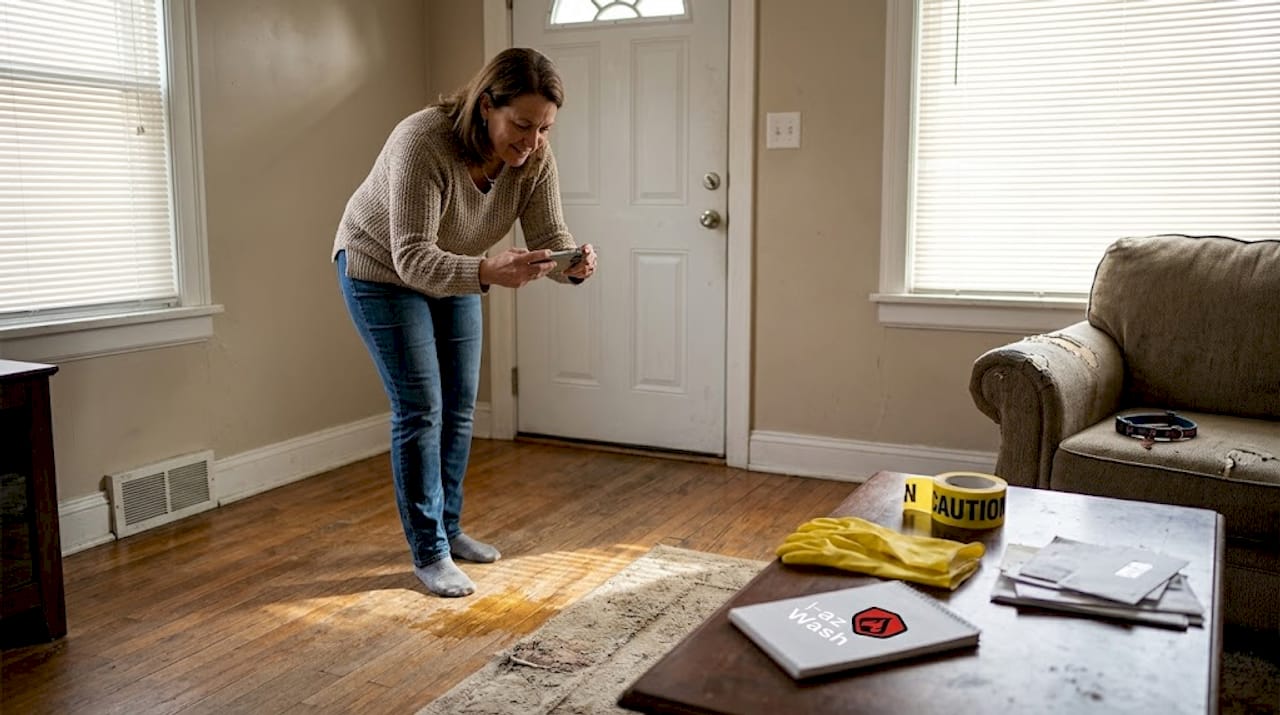
Document the scene. If safe to do so from a distance, photograph the area for insurance and legal records.
Contact a certified biohazard cleanup company. Once authorities clear the scene, call professionals immediately. Delays increase contamination spread.
Notify your insurance carrier. Report the incident as soon as possible to begin the claims process.
Before anyone reenters the space, review what you need to know before reentering your home after a hazmat incident. You should also familiarize yourself with safe response protocols for different incident types.
Pro Tip: Never attempt even surface cleaning without proper PPE. Gloves from a hardware store are not rated for biohazard exposure. Even a “minor” scene can harbor infectious material that penetrates standard latex gloves.
Property owners are not legally barred from handling cleanup themselves, but all experts warn against it due to health and liability risks that are difficult to fully anticipate without professional training.
Your priority is safety first, documentation second, and professional remediation third. That sequence protects everyone involved.
Why professional cleanup is essential: Health, legal, and insurance factors
Some landlords and families consider handling cleanup on their own to save money. This decision almost always costs more in the long run. Here is why professional biohazard cleaning is not optional in most real-world situations.
Health hazards you cannot see:
Bloodborne pathogens: HIV, Hepatitis B, Hepatitis C
Airborne infectious agents from decomposition
Chemical toxins from drug manufacturing residue
Mold triggered by biological fluid saturation
Legal liability for Detroit landlords: Michigan landlord-tenant law requires habitable living conditions. If a tenant or future occupant becomes ill due to improper cleanup, you face civil liability. Detroit’s housing code enforcement takes these violations seriously.
Insurance requirements: Many carriers in Michigan require proof of certified professional remediation before honoring a biohazard-related claim. Without documentation, your claim may be denied entirely.
FactorDIY cleanupProfessional cleanupPathogen removalIncomplete, high riskFull decontamination, testedLegal liabilityHigh, owner assumes all riskReduced, documentation providedInsurance acceptanceOften deniedTypically accepted with clearance certLong-term contaminationLikelyPrevented with proper protocolsCost over timeHigher due to remediation failuresLower with one thorough treatment
Reviewing biohazard aftermath risks from hoarding situations illustrates how quickly incomplete cleanup creates lasting damage. For drug-related incidents, the guide on cleaning after drug lab exposure shows the chemical complexity involved.
Pro Tip: Always request a written clearance certificate and full documentation from your cleanup company. This single document protects you in insurance claims, tenant disputes, and any future legal proceedings.
Top professional emergency cleanup practices for Detroit properties
Understanding what certified professionals actually do helps you evaluate vendors and set expectations. Not all cleanup companies follow the same standards. Here is what gold-standard biohazard remediation looks like.
The professional process, step by step:
Initial assessment. Certified technicians inspect the full scope of contamination before anyone enters. This includes testing for hidden biological material.
Containment setup. Affected areas are sealed off using negative air pressure barriers to prevent cross-contamination to clean zones.
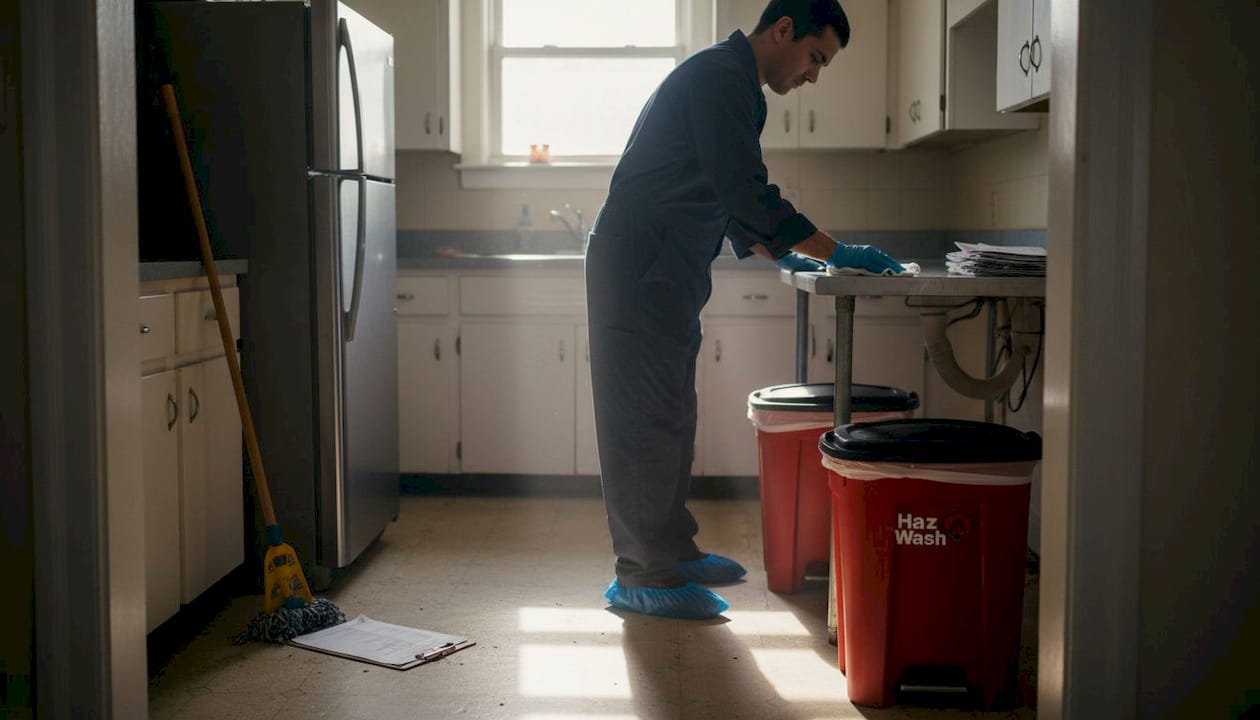
Safe removal. All contaminated materials, including porous surfaces like carpet and drywall, are removed using proper PPE and sealed in regulated biohazard waste containers.
Decontamination. EPA-registered hospital-grade disinfectants are applied to all affected surfaces. This is not a spray-and-wipe process. It involves dwell times, multiple applications, and surface-specific protocols.
Final clearance testing. Independent or in-house ATP testing or swab sampling confirms contamination levels are within safe thresholds before the space is cleared for reoccupancy.
Standard cleaningBiohazard remediationHousehold or commercial cleanersEPA-registered disinfectantsNo PPE or basic glovesFull Tyvek suits, respirators, face shieldsVisual inspection onlyATP testing and surface samplingNo waste disposal protocolRegulated biohazard waste disposalNo documentationClearance certificates and chain-of-custody records
Professional cleanup uses specialized PPE, protocols, and disposal methods that are simply not available to non-experts or general cleaning services.
For Detroit-specific services, the Detroit trauma cleanup services page outlines available response options. A detailed look at the step-by-step cleanup process for landlords is also available.
Pro Tip: Before hiring any biohazard cleanup company in Detroit, verify they hold OSHA HAZWOPER certification, IICRC credentials, and carry liability insurance that covers biohazard remediation specifically. Ask to see documentation before signing any agreement.
The uncomfortable truth: Why you should never go it alone
Here is what years of working Detroit’s toughest scenes have taught us. The legal loophole that allows property owners to self-clean is not a safety net. It is a trap.
On paper, no safe DIY threshold exists in biohazard cleanup. In practice, every case we have encountered where an owner attempted self-cleanup resulted in higher costs, more stress, and in several cases, secondary health incidents involving other occupants.
The problem is not just what you miss. It is what you cannot know you missed. Pathogens do not announce themselves. Contamination does not stay where you can see it. A trauma scene that looks contained to one room may have already affected the HVAC system, the subfloor, or the wall cavity behind the drywall.
Insurance denial is another consequence that catches owners off guard. Carriers are increasingly sophisticated. They ask for documentation. If you cannot produce a clearance certificate from a certified company, your claim is at serious risk.
Reviewing what to expect from professionals before making any cleanup decision is a practical first step. Choose safety and compliance over perceived savings. Every time.
Trust Detroit’s biohazard cleanup experts for peace of mind
When a biohazard incident strikes your home or rental property, you need more than a cleaning crew. You need certified professionals who respond 24/7, follow documented protocols, and provide the clearance paperwork your insurance carrier and legal team will require.
HazWash LLC provides emergency trauma cleanup across Detroit and surrounding areas with OSHA HAZWOPER and IICRC-certified technicians. Whether you are dealing with a trauma scene, unattended death, drug contamination, or gross filth situation, we respond fast and handle every detail with discretion. Review the full range of incident types and response options, or contact trusted Detroit biohazard cleaners directly for immediate assistance. Your safety and compliance are our priority.
Frequently asked questions
Is it legal for Detroit homeowners to clean up biohazards by themselves?
While not strictly illegal when no employees are involved, self-cleanup is extremely risky and strongly discouraged by all experts due to severe health hazards and liability exposure that most property owners are not equipped to manage.
What kinds of incidents count as a biohazard emergency in Detroit?
Biohazard emergencies include trauma scenes, unattended deaths, suicide, homicide, drug lab contamination, and hoarding environments where biological waste is present, all of which require certified professional remediation.
What immediate steps should I take after discovering a biohazard?
Secure the area immediately, keep all people and pets out, avoid touching any surfaces, and contact authorities or professionals right away before any cleanup attempt is made.
Will insurance cover professional biohazard cleanup in Detroit?
Many Michigan insurance policies cover biohazard remediation when performed by certified professionals, but clearance documentation is typically required to process the claim, so always request written certification from your cleanup company.