Odor removal after biohazard incidents: 99% faster results
Odor removal after biohazard incidents: 99% faster results
Chlorine dioxide can neutralize 99% of airborne pathogens and odors in 30 minutes.
Effective odor removal requires specialized technology like ClO2, especially for severe biohazard cases.
Proper sequence, documentation, and timely intervention are critical for successful biohazard odor remediation.
Chlorine dioxide (ClO2) can reduce airborne pathogens by over 99% in as little as 30 minutes. Most property managers in Detroit assume biohazard odors will linger for weeks, no matter what they do. That assumption costs time, money, and tenant trust. The reality is that advanced odor removal technologies have changed what’s possible. This guide covers the evidence-based methods, practical sequences, and compliance steps that certified biohazard cleanup teams use to resolve even the most severe odor incidents fast. If you manage rental properties in Detroit, this is the information you need to act decisively and protect your investment.
Table of Contents
Industry-grade odor removal technologies: What works and why
Best practice sequence for odor removal after a biohazard event
Hard truths and fresh perspectives: What actually works for biohazard odor removal in Detroit
Connect with expert odor removal and biohazard services in Detroit
Key Takeaways
PointDetailsDeep odor penetrationBiohazard odors can linger deep in materials and air, making basic cleaning insufficient.ClO2 technology advantageChlorine dioxide achieves over 99% odor and pathogen reduction in 30–180 minutes with safer residues.Routine inspection impactRegular property inspections reduce odor incidents by up to 60%, ensuring safer and more compliant spaces.Avoid common mistakesSkipping documentation, ozone misuse, and lack of validation are frequent pitfalls in odor remediation.Professional support vitalCertified Detroit biohazard cleanup companies ensure thorough, compliant, and rapid odor removal for landlords and managers.
Understanding biohazard-related odors in Detroit properties
Biohazard incidents produce odors that are fundamentally different from everyday household smells. When organic matter such as blood, decomposing tissue, or human waste breaks down, it releases volatile organic compounds (VOCs), ammonia, hydrogen sulfide, and other chemical byproducts. These molecules are small enough to penetrate porous surfaces like drywall, subflooring, carpet padding, and wood framing. Standard cleaning products cannot reach them.
The challenge for Detroit property managers is that these odors are not just unpleasant. They signal ongoing biological contamination and potential health risks. Mold, bacteria, and bloodborne pathogens can remain active long after visible matter is removed. If your tenants or future occupants are exposed, you face liability concerns that go well beyond a bad smell.
Common sources of persistent biohazard odors include:
Unattended death or decomposition scenes
Blood spills and trauma events
Human waste contamination from sewage backups or neglect
Hoarding situations with organic waste accumulation
Hidden odors in abandoned properties that surface seasonally
One reason odors persist is that routine cleaning only addresses surface-level contamination. The odor molecules embedded in structural materials continue to off-gas long after the visible source is removed. This is why properties can smell clean immediately after a basic cleanup, then develop strong odors again within days.
Key fact: Routine inspections reduce odor incidents by 60%, which means proactive property management is one of the most effective tools in your arsenal.
Understanding the chemistry behind these odors matters because it directly informs which removal technology will actually work. Not every product neutralizes every type of odor molecule. Matching the right tool to the right contamination source is what separates effective remediation from repeated callbacks.
Industry-grade odor removal technologies: What works and why
Now that you know what’s behind these persistent odors, let’s look at what specialized tools and products can resolve them effectively. The four main categories of odor neutralizer technologies each have distinct strengths, limitations, and appropriate use cases.
1. Enzymatic cleaners These products use biological enzymes to break down organic odor molecules at the source. They work well on urine, feces, and blood when applied directly to contaminated surfaces. The limitation is penetration depth. Enzymatic cleaners cannot reach odor molecules embedded several inches into structural materials.
2. Hydroxyl generators Hydroxyl generators produce hydroxyl radicals that react with and neutralize odor molecules in the air. They are safe for occupied spaces and do not damage materials. The tradeoff is speed. Hydroxyl treatment is gradual and may take 24 to 72 hours to show measurable results in heavily contaminated rooms.
3. Ozone treatment Ozone is a powerful oxidizer that can neutralize a wide range of organic odors. However, it comes with serious limitations. Ozone can damage rubber, plastics, and fabrics. It is also hazardous to respiratory health, which means the space must be fully vacated during treatment. Reviewing common odor removal mistakes shows that ozone overuse is one of the most frequent errors property managers make.
4. Chlorine dioxide (ClO2) ClO2 is the most effective option for severe biohazard odors. It penetrates porous materials, neutralizes VOCs and organic compounds at the molecular level, and leaves minimal harmful residue. ClO2 reduces spores and VOCs by 99.99% in 30 to 180 minutes. For strong odor removal after trauma or death scenes, ClO2 is the industry standard.
TechnologySpeedSafetyPenetrationBest use caseEnzymatic cleanersModerateHighSurface onlyUrine, feces, blood on surfacesHydroxyl generatorsSlowVery highAir and surfaceOccupied spaces, light contaminationOzoneFastLowModerateVacant spaces, organic odorsChlorine dioxideVery fastModerateDeepSevere biohazard, decomposition
For winter odor removal in Detroit properties, ClO2 combined with HEPA air filtration is the most reliable approach because it works effectively in sealed, low-ventilation environments.
Pro Tip: Never use ozone as a first-line treatment in a property with active tenants or sensitive materials. Reserve it for fully vacated, hard-surface spaces where speed outweighs material risk.
Best practice sequence for odor removal after a biohazard event
With the main odor removal options clear, let’s walk through exactly how to apply these technologies to biohazard incidents in Detroit properties. A structured sequence protects you legally, ensures thorough remediation, and reduces the chance of odor recurrence.
Step 1: Document everything Before any work begins, photograph and log the odor source, affected areas, and scope of contamination. Use an odor investigation checklist to record findings systematically. This documentation supports insurance claims and compliance records.
Step 2: Contain and ventilate Isolate the affected area using plastic sheeting and negative air pressure if possible. Open windows and run exhaust fans to reduce initial VOC concentration before technicians enter.
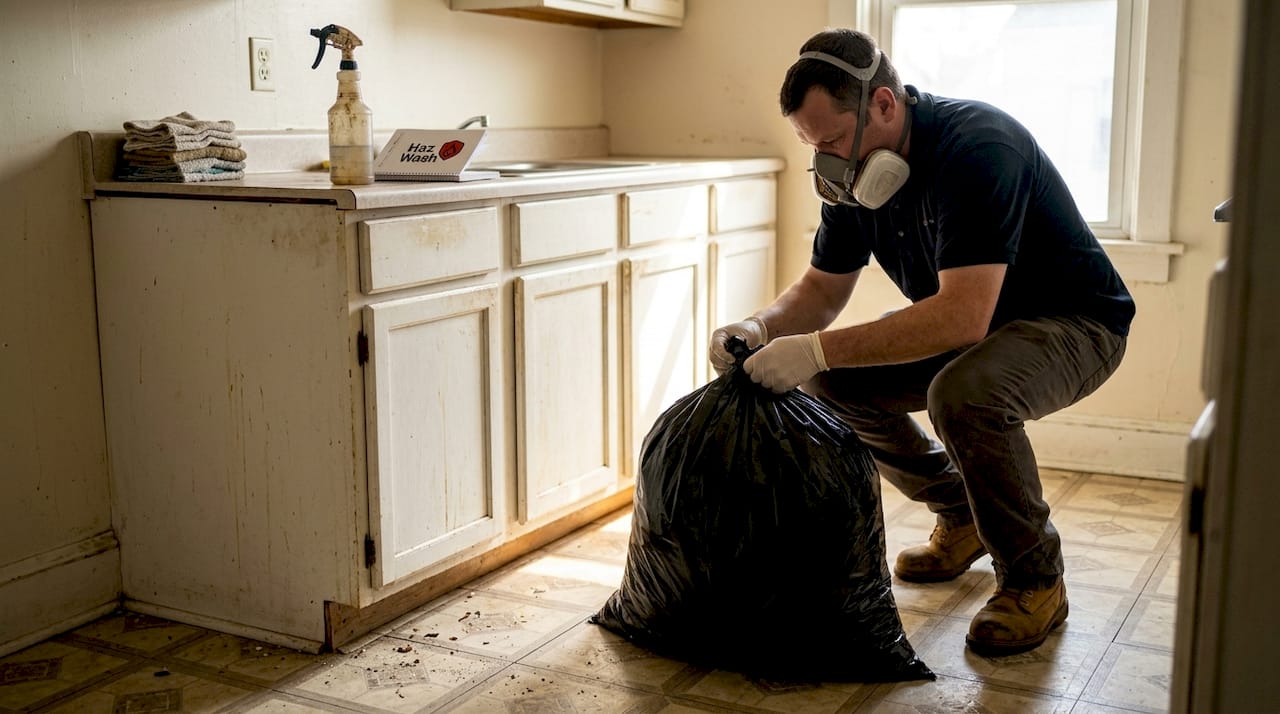
Step 3: Remove the source No odor neutralizer works effectively if the biological source remains. Remove contaminated materials including carpet, padding, drywall sections, and personal property as required. Follow your biohazard cleaning guide for proper disposal procedures.
Step 4: Apply the neutralizer Select your technology based on the contamination type and space occupancy status. For severe cases, deploy ClO2 gas treatment. For lighter contamination or occupied adjacent units, use hydroxyl generators.
Step 5: Run HEPA air filtration After neutralizer treatment, run HEPA air scrubbers to capture residual particulates and VOCs. This step is critical for air quality clearance.
Step 6: Validate with clearance testing Do not skip post-remediation testing. Air sampling and surface swabs confirm that contamination levels meet regulatory thresholds before you allow re-occupancy.
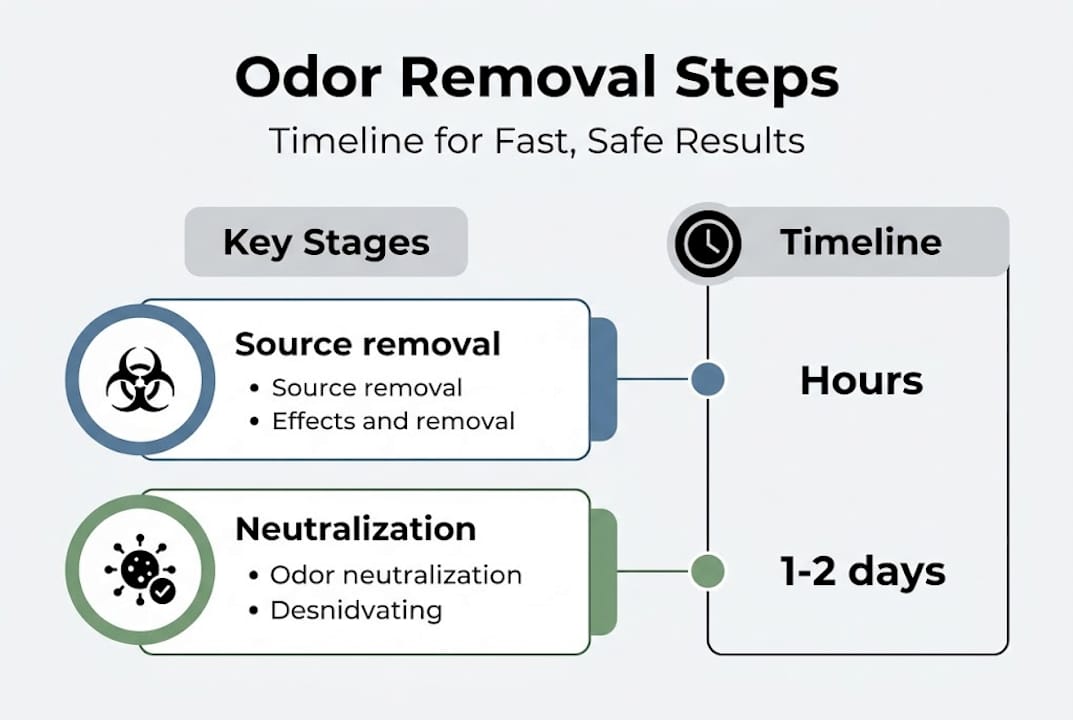
StageTechnologyTimelineSource removalManual extractionHoursNeutralizationClO2 or hydroxyl30 min to 72 hoursAir purificationHEPA filtration4 to 24 hoursClearance testingAir and surface samplingSame day results
Single-room decomposition can be fully resolved in days with proper technology and sequencing. For hoarding biohazard situations, the timeline extends based on the volume of contaminated material.
Pro Tip: Schedule clearance testing with an independent third party whenever possible. Independent results carry more weight with insurers, regulators, and future tenants.
Common odor removal mistakes and how to avoid them
Even with advanced technologies and a solid process, there are missteps that can undermine odor removal efforts. Here is what to watch for.
Underestimating penetration depth Many property managers assume odors are surface-level. If the contamination source was present for more than 24 hours, assume the odor has penetrated into structural materials. Treat accordingly.
Overusing ozone Ozone is tempting because it works fast and is widely available. But ozone provides only temporary relief and risks material damage and respiratory harm. It does not penetrate deeply into porous materials, which means odors often return within weeks. Reviewing common odor removal mistakes confirms this is one of the most costly errors in biohazard remediation.
Skipping clearance testing Clearance testing is not optional in regulated biohazard remediation. Without documented results, you have no legal protection if a tenant reports health issues after re-occupancy.
Failing to document the process Every step of your remediation should be logged with dates, methods, products used, and technician credentials. This documentation is your compliance record and your liability shield.
Ignoring re-inspection cycles Odors can resurface as temperatures change or humidity rises. Build re-inspection into your property management schedule, particularly for units that have had biohazard incidents. For feces and urine cleanup situations, secondary inspections at 30 and 60 days are standard practice.
Pro Tip: Create a written remediation protocol specific to biohazard incidents and keep it on file. When an incident occurs, your team follows the protocol rather than improvising, which reduces errors and liability exposure.
Avoidable mistakes:
Masking odors with air fresheners instead of neutralizing them
Using residential-grade products on commercial-scale contamination
Allowing re-occupancy before clearance testing is complete
Failing to notify your insurer before remediation begins
Hard truths and fresh perspectives: What actually works for biohazard odor removal in Detroit
Here is something most guides will not tell you directly. The biggest predictor of a failed odor remediation is not the technology chosen. It is the decision to delay. Property managers who wait even 48 hours after a biohazard incident is discovered face significantly deeper contamination and higher remediation costs.
Conventional cleaning and ozone treatments disappoint because they address symptoms, not sources. We have seen properties treated with ozone three times that still failed clearance testing, because the odor source was embedded in the subfloor and never removed.
ClO2 edges out ozone for biohazard odors due to its penetration depth and safer residue profile. Combined with HEPA filtration, it delivers lasting results. But it requires trained handling and proper concentration management. This is not a DIY solution.
Routine inspections are more impactful than reactive approaches. Properties with quarterly inspection schedules catch early odor indicators before they escalate into full biohazard events. For Detroit crime scene odor removal, the lesson is consistent: early intervention and validated technology outperform any reactive cleanup effort.
Use proven technology. Validate your results. Never shortcut compliance documentation.
Connect with expert odor removal and biohazard services in Detroit
If you are managing a property affected by a biohazard incident, professional support is the fastest and safest path to a fully restored, compliant space.
As a certified Detroit biohazard cleaning company, HazWash LLC responds 24/7 with OSHA HAZWOPER and IICRC-certified technicians who handle odor remediation from source removal through clearance testing. We provide full documentation for compliance and insurance purposes. You can review safe biohazard response options to understand what your situation requires. Our trauma cleanup services and suicide cleanup services are handled with complete discretion. Contact HazWash LLC today to schedule an assessment or request emergency response.
Frequently asked questions
What is the fastest, safest way to remove biohazard odors in Detroit rental properties?
Chlorine dioxide treatment, paired with HEPA filtration, can reduce biohazard odors by over 99% in as little as 30 to 180 minutes and is safer for occupied spaces than ozone. It is the preferred method for severe contamination in residential and commercial rental properties.
Why do odors persist after cleaning biohazard incidents?
Odors persist because VOCs and organic molecules penetrate porous materials and continue to off-gas long after visible contamination is removed. Standard cleaning products cannot reach these embedded compounds without specialized neutralizer technology.
Is ozone safe for odor removal in occupied Detroit properties?
Ozone is not safe for occupied spaces. It risks material damage and respiratory harm, and it does not penetrate deeply enough for severe biohazard odors. Hydroxyl generators or ClO2 are the appropriate alternatives when occupant safety is a priority.
How long does it take to resolve strong biohazard odors in a single room?
Single-room decomposition odors can be fully resolved within days using ClO2 treatment combined with proper source removal and HEPA air filtration. The exact timeline depends on contamination depth and the materials affected.