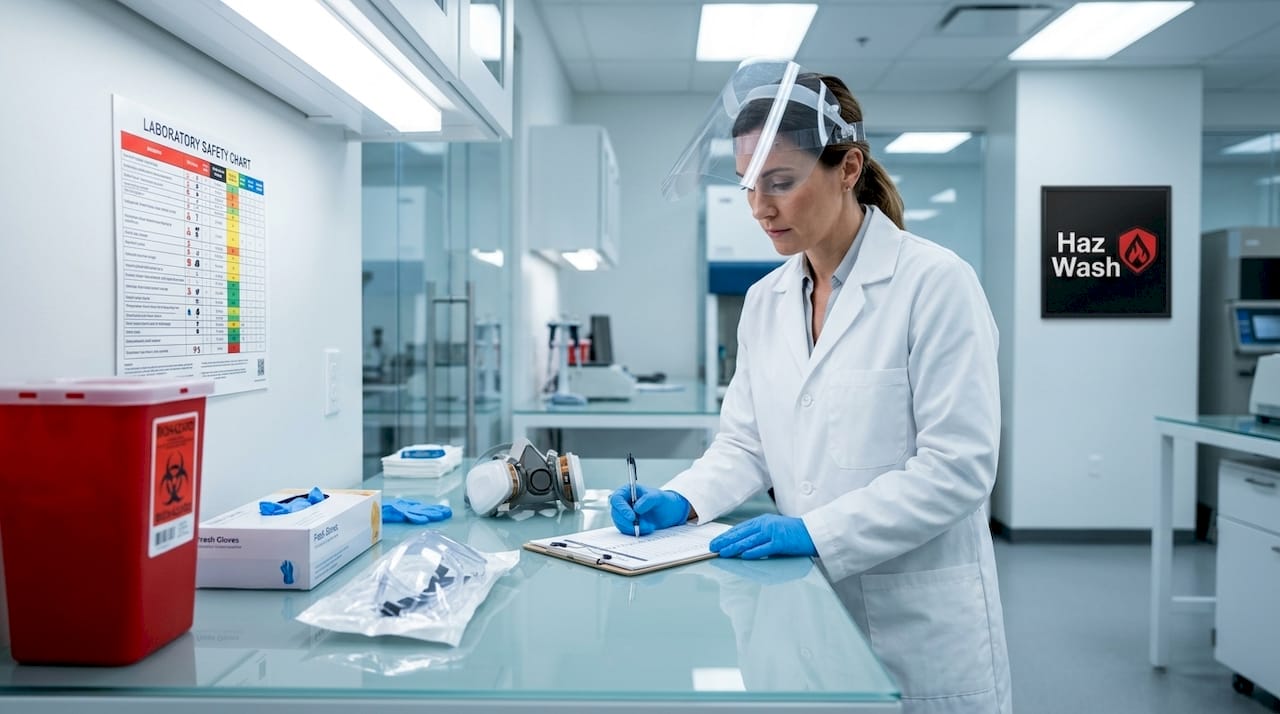
Biohazard Personal Protective Equipment: 2026 Guide
Biohazard Personal Protective Equipment: 2026 Guide
TL;DR:
Choosing the appropriate biohazard PPE depends on specific hazards, exposure routes, and task duration to ensure safety. Proper donning, doffing, and equipment maintenance are critical to prevent self-contamination during biohazard cleanup. Professional services with certified PPE protocols effectively mitigate risks beyond individual capabilities.
Choosing the right biohazard personal protective equipment is not a one-size-fits-all decision. Bloodborne pathogens, chemical contaminants, and infectious agents each demand a different defense strategy, and a single gap in your PPE ensemble can mean direct exposure. Whether you are responding to a trauma scene, handling hazardous waste removal, or managing a health emergency, the stakes are too high for guesswork. This guide breaks down the top PPE items, how to evaluate them, and how to avoid the most common mistakes that lead to self-contamination.
Table of Contents
Key takeaways
1. How to evaluate biohazard personal protective equipment
Before you select a single piece of gear, you need a framework for assessment. OSHA’s Bloodborne Pathogens Standard ties every PPE requirement to the specific exposure route, meaning your selection must start with the hazard itself.
The three primary exposure routes are skin contact, mucous membrane exposure, and respiratory inhalation. Each demands a different PPE category, and many scenarios involve all three simultaneously.
Key evaluation criteria include:
Exposure route. Identify whether the risk is contact, splash, or airborne before selecting any item.
Task type and duration. Short-duration tasks allow lighter gear; extended operations require gear rated for prolonged hazard exposure.
Compliance standards. Look for OSHA, NIOSH, and ASTM certifications on every item.
Fit and comfort. Ill-fitting PPE fails. A gown that rides up or a respirator that gaps at the cheek provides false confidence.
Donning and doffing protocols. PPE that is difficult to remove safely is a liability, not a safeguard.
Material compatibility is another overlooked factor. Nitrile resists biological fluids well but offers limited chemical resistance. If your cleanup involves both biological and chemical hazards, you need layered or specialized materials.
Pro Tip: Always review the Safety Data Sheet for any chemical contaminant present at the scene before selecting glove material. A glove rated for biohazards may degrade rapidly in chemical-heavy environments.
2. Gloves: the first line of biological defense
Gloves are the most frequently used and most frequently mismanaged piece of biological safety equipment. Nitrile gloves are the current standard for biohazard work. They resist punctures better than latex, eliminate latex allergy risks, and provide solid protection against bloodborne pathogens.
That said, nitrile has limits. It degrades faster than butyl rubber when exposed to certain chemicals, and contaminated gloves must be removed and replaced immediately upon any visible breach or contamination event.
Latex gloves remain common in medical settings due to their tactile sensitivity, but they carry allergy risks and are not preferred for trauma scene cleanup. Vinyl gloves are the weakest option and should only be used for low-risk, non-splash tasks.
Double-gloving is standard practice during high-exposure scenarios. The outer glove takes the contamination; the inner glove protects your hands during doffing. This is not optional for blood spill or trauma scene cleanup.
Pro Tip: Change gloves every 30 minutes during extended cleanup operations, or immediately after any contact with concentrated biological material. Glove degradation is invisible and cumulative.
3. Gowns and coveralls: full-body barrier protection
A gown or coverall is your barrier between contaminated surfaces and your clothing and skin. The distinction between the two matters. Gowns provide frontal and forearm coverage and are faster to don and doff. Coveralls offer 360-degree protection and are preferred for heavy contamination scenarios.
Lab coats and gowns must match the fluid resistance requirements of the task. AAMI (Association for the Advancement of Medical Instrumentation) rates protective apparel on a four-level scale, with Level 4 providing the highest fluid and viral penetration resistance.
For trauma scene and biohazard cleanup, Level 3 or Level 4 gowns or disposable Tyvek coveralls are the minimum standard. Reusable gowns require proper laundering in designated facilities. Cross-contamination from improperly handled reusable garments is a documented risk that many homeowners and untrained responders underestimate.
Seam construction matters as much as material. Stitched seams allow fluid wicking. Taped or heat-sealed seams do not. For high-splash environments, only sealed-seam coveralls provide reliable protection.
4. Eye and face protection: stopping the splash route
Mucous membrane exposure through the eyes, nose, and mouth accounts for a significant number of occupational biohazard infections. OSHA specifies goggles or face shields whenever splashes or sprays of bloodborne pathogens are plausible.
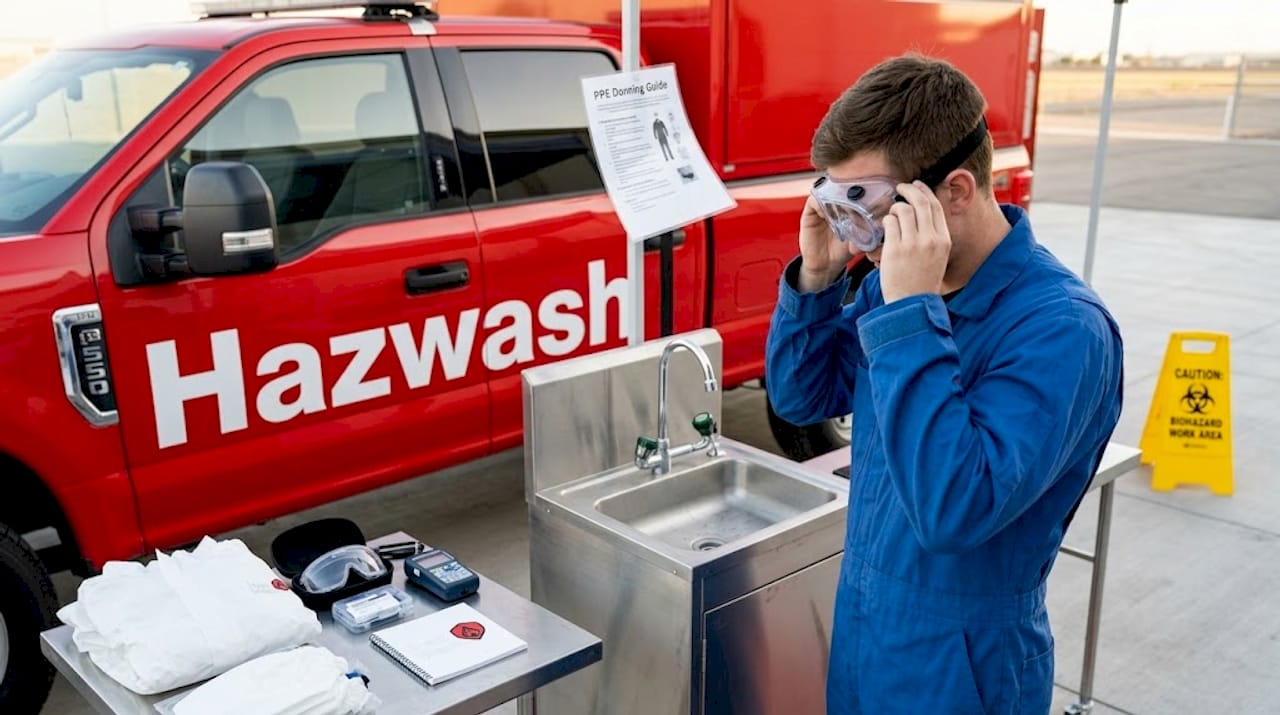
Safety glasses are not sufficient for biohazard work. They leave gaps at the sides and top that aerosols and splatter can enter. Goggles with indirect ventilation are the minimum standard for splash protection.
Face shields provide broader coverage and are often worn over goggles in high-risk scenarios. The combination protects the full face while maintaining respirator seal integrity. Face shields alone, without goggles underneath, leave the eyes vulnerable to fine aerosol droplets.
Anti-fog coating is a practical necessity. Fogged lenses cause workers to adjust or remove eye protection during a task, which is precisely when exposure occurs.
5. Respiratory protection: the most regulated PPE category
No other category of PPE for biohazards carries more regulatory weight than respiratory protection. Fit testing, medical clearance, and training are all mandatory under OSHA’s Respiratory Protection Standard before any tight-fitting respirator is used in occupational settings.
Surgical masks are not respirators. They protect others from the wearer but do not filter incoming air to a protective standard. N95 respirators filter at least 95% of airborne particles but require a proper face seal to achieve that rating. An untested N95 provides far less protection than the certification implies.
Powered air-purifying respirators, or PAPRs, use a battery-powered blower to force air through high-efficiency filters. They eliminate the fit-testing requirement because they do not rely on a face seal. They are preferred for workers with beards, certain facial structures, or those who must wear respiratory protection for extended periods.
NIOSH-improved CBRN respirators represent the current standard for emergency responders facing biological, chemical, and radiological threats simultaneously. For standard biohazard cleanup, a properly fitted N95 or a half-face elastomeric respirator with biological cartridges is the practical baseline.
Pro Tip: Perform a user seal check every single time you don a tight-fitting respirator. Cover the exhalation valve and exhale gently. If air leaks around the edges, readjust before entering the contamination zone.
6. Shoe covers and head coverings: the overlooked layers
Shoe covers and head coverings rarely generate the same attention as respirators and gloves, but they close exposure pathways that full-body coveralls alone cannot address. Contaminated floors are a transfer vector. Without fluid-resistant shoe covers, cleanup workers track biological material out of the work zone on every step.
Disposable boot covers should extend above the ankle and ideally overlap with coverall legs. For heavily contaminated scenes, rubber overshoes worn over boot covers provide a second barrier and allow safer doffing.
Head coverings matter in environments with overhead contamination risk, including ceiling splatter from trauma scenes, or when working in confined spaces. Disposable bouffant caps or full hood coveralls address this. Workers who skip head coverings and then touch their hair before removing gloves create a self-contamination pathway that the rest of their PPE cannot compensate for.
7. Comparison of biohazard PPE protection levels
OSHA and EPA recognize four standardized PPE protection levels, labeled A through D, for hazardous material response. Understanding these levels tells you which ensemble matches your specific scenario.
For most biohazard cleanup situations, including trauma scene restoration and blood spill remediation, Level C or a task-specific Level B ensemble is appropriate. The Detroit biohazard protocols used by certified teams reflect this tiered selection approach.
8. Best practices and common pitfalls in PPE use
The most technically advanced biohazard safety suits fail when users make procedural errors. Improper doffing is the most consistent failure point. Self-contamination happens when workers pull contaminated outer surfaces across clean skin or clothing during removal.
Follow this doffing sequence to minimize risk:
Remove outer gloves first using the cuff-to-glove inversion technique. Never touch the outer surface of a contaminated glove with a bare hand.
Remove gown or coverall by rolling it away from your body, pulling contaminated surfaces inward.
Remove face shield or goggles by touching only the straps at the back of the head.
Remove respirator last, after all other outer PPE is off, by touching only the straps.
Perform hand hygiene immediately after each removal step.
Two additional practices prevent the majority of field failures. First, never reuse single-use gloves. The cost savings are not worth the exposure risk. Glove management failures are one of the most frequently cited root causes in occupational biohazard exposure incidents. Second, always have a trained observer during doffing when working in a high-contamination environment. A second set of eyes catches errors the wearer cannot see.
For guidance on what these protocols look like in practice for residential and commercial cleanup, the OSHA-compliant cleanup guide for Michigan homes provides an accessible reference for landlords and property managers.
Pro Tip: Set up a designated doffing zone at the clean perimeter of the work area before you start. Doffing in an uncontrolled location spreads contamination and defeats your entire PPE ensemble.
My honest take on where PPE programs actually fail
I have seen a lot of biohazard response situations, and the pattern is almost always the same. The equipment is adequate. The process breaks down.
What I have learned is that most people focus entirely on putting PPE on and almost no thought goes into taking it off. Doffing is where exposure happens. A perfectly sealed respirator and a double-gloved hand mean nothing if you pull your coverall over your face during removal. This is not theoretical. It is the mechanism behind documented biohazard infections in trained healthcare and emergency response workers.
The other gap I see consistently is the distance between what a certification says and what a piece of equipment delivers under real conditions. An N95 certified at 95% filtration only achieves that rating with a proper fit on a face that has been tested. On an untested wearer, the real protection can drop significantly. Certifications are a starting point, not a guarantee.
My view on the future of protective gear for hazards is cautiously optimistic. Improved PAPR designs, better seam-sealing technology in disposable coveralls, and integrated sensor systems that detect seal failure in real time are all moving from lab settings toward field use. But no technology replaces the discipline of a correct donning and doffing sequence. Training matters more than gear budget.
— David
Professional biohazard cleanup: leave the PPE to the certified team
When a biohazard situation involves blood, bodily fluids, or infectious material, the PPE requirements alone can overwhelm someone without formal training and equipment.
Hazwash operates with OSHA HAZWOPER certification, task-specific PPE ensembles, and documented doffing protocols on every job. Families, landlords, and property managers in Detroit and surrounding areas trust Hazwash because the team handles what you should not have to. If you are facing a trauma scene, hazardous waste situation, or death cleanup, contact Hazwash’s certified Detroit cleanup team for discreet, compliant, and thorough remediation available 24/7.
FAQ
What is biohazard personal protective equipment?
Biohazard personal protective equipment is specialized gear worn to prevent exposure to infectious biological materials, including bloodborne pathogens, bodily fluids, and hazardous biological agents. It typically includes gloves, gowns or coveralls, respiratory protection, and eye and face protection.
What PPE level is required for blood spill cleanup?
Most blood spill cleanup scenarios require a Level C or task-specific Level B ensemble, including fluid-resistant coveralls, nitrile gloves, eye protection, and an N95 or elastomeric respirator when aerosols are possible.
Do N95 respirators require fit testing for biohazard use?
Yes. Fit testing and medical clearance are mandatory under OSHA’s Respiratory Protection Standard before any tight-fitting respirator is used occupationally. An untested N95 will not perform to its certified filtration standard.
What is the most common cause of self-contamination during PPE removal?
Improper doffing technique is the leading cause. Specifically, touching contaminated outer surfaces with bare hands or pulling PPE across the face during removal transfers biological material to clean skin.
Can homeowners safely use biohazard PPE for cleanup without professional training?
Homeowners can acquire the physical PPE, but without training in proper donning, doffing, and bloodborne pathogen exposure protocols, the risk of self-contamination remains high. Professional certified services are the safer option for trauma scenes and significant biological hazards.