Hazardous incident guide: Safe, compliant cleanup in Detroit
Hazardous incident guide: Safe, compliant cleanup in Detroit
TL;DR:
Most hazardous incidents in Detroit involve biological or chemical risks that require professional cleanup to ensure safety and legal compliance. DIY efforts often fail to address porous surfaces, hidden contamination, and regulatory documentation, leading to long-term health hazards and liability. Engaging licensed, certified biohazard cleanup services guarantees proper disposal, documentation, and safety, protecting property value and occupant health.
When a hazardous incident occurs at a Detroit property, most people’s first instinct is to grab cleaning supplies and handle it quickly. That instinct is understandable, but it can lead to serious legal consequences, ongoing health risks, and costly property damage that far outlasts the original incident. Michigan’s regulatory framework for biohazard cleanup is detailed, enforced, and applies to homeowners and property managers alike. This guide explains what qualifies as a hazardous incident, which regulations apply, how professional cleanup works, and why cutting corners almost always costs more in the end.
Table of Contents
Detroit compliance: State and federal biohazard regulations explained
The uncomfortable truth most property managers miss about hazardous incidents
Key Takeaways
What qualifies as a hazardous incident in Detroit?
Not every spill is a biohazard, but far more situations qualify than most people expect. Understanding the legal definition matters because the moment a scene crosses into regulated territory, specific rules govern how it must be handled, removed, and disposed of.
In Detroit and across Michigan, a hazardous incident typically involves materials that pose a biological, chemical, or pathogen-based risk to human health or the environment. These include:
Blood spills and bodily fluid contamination
Unattended deaths and decomposition scenes
Trauma scenes from violence or accidents
Illicit drug lab residue, including methamphetamine
Medical waste from home health care situations
Sewage backups involving biological matter
Animal remains or infestations with associated pathogens
The legal threshold becomes especially clear when bloodborne pathogens are involved. OSHA’s Bloodborne Pathogen Standard applies wherever human blood or other potentially infectious materials are present. For property managers, this means a tenant injury scene or death cleanup is not a maintenance issue. It is a regulated cleanup event.
Understanding biohazard risk indicators early helps you make faster, safer decisions. Similarly, knowing the full range of hazardous incident types prevents surprises when insurance adjusters or inspectors arrive.
Important: According to Michigan EGLE guidance, medical waste must be labeled with a biohazard symbol, stored in leak-proof containers, decontaminated via autoclave or incineration, and disposed of in a sanitary landfill after treatment. These requirements apply regardless of the amount of waste generated.
Even small spills on porous surfaces like hardwood floors, drywall, or carpet can harbor infectious material well below the surface level. What looks clean to the naked eye may still test positive for pathogens. That is why surface appearance alone is never a reliable indicator of safety after a biological event.
Detroit compliance: State and federal biohazard regulations explained
Understanding regulatory requirements is vital to any safe, legal response to a biohazard event on Detroit property. Multiple overlapping frameworks govern what must happen after an incident, and violating any one of them can expose property owners and managers to significant liability.
The major regulatory bodies and frameworks include:
EGLE (Michigan Department of Environment, Great Lakes, and Energy): Governs medical and hazardous waste under Part 111 of the Natural Resources and Environmental Protection Act (NREPA) and the Medical Waste Regulatory Act (MWRA) Part 138. Property generators must obtain a Waste Generator ID and use manifests for all regulated waste transport.
OSHA Bloodborne Pathogens Standard (29 CFR 1910.1030): Requires specific personal protective equipment (PPE), exposure control plans, and safe handling protocols for any work involving human blood or infectious materials.
EPA Hazardous Waste Regulations: Apply to chemical residue, including drug lab contamination, and govern disposal methods and documentation requirements.
DOT (Department of Transportation): Controls how hazardous and biological materials are packaged, labeled, and transported. Improper transport is a federal violation.
As Michigan’s compliance cleanup guide outlines, these requirements are layered and interconnected. A property manager who hires an uncertified cleaning crew may think the job is done, only to discover later that waste disposal documentation is missing or waste was transported without proper manifests.
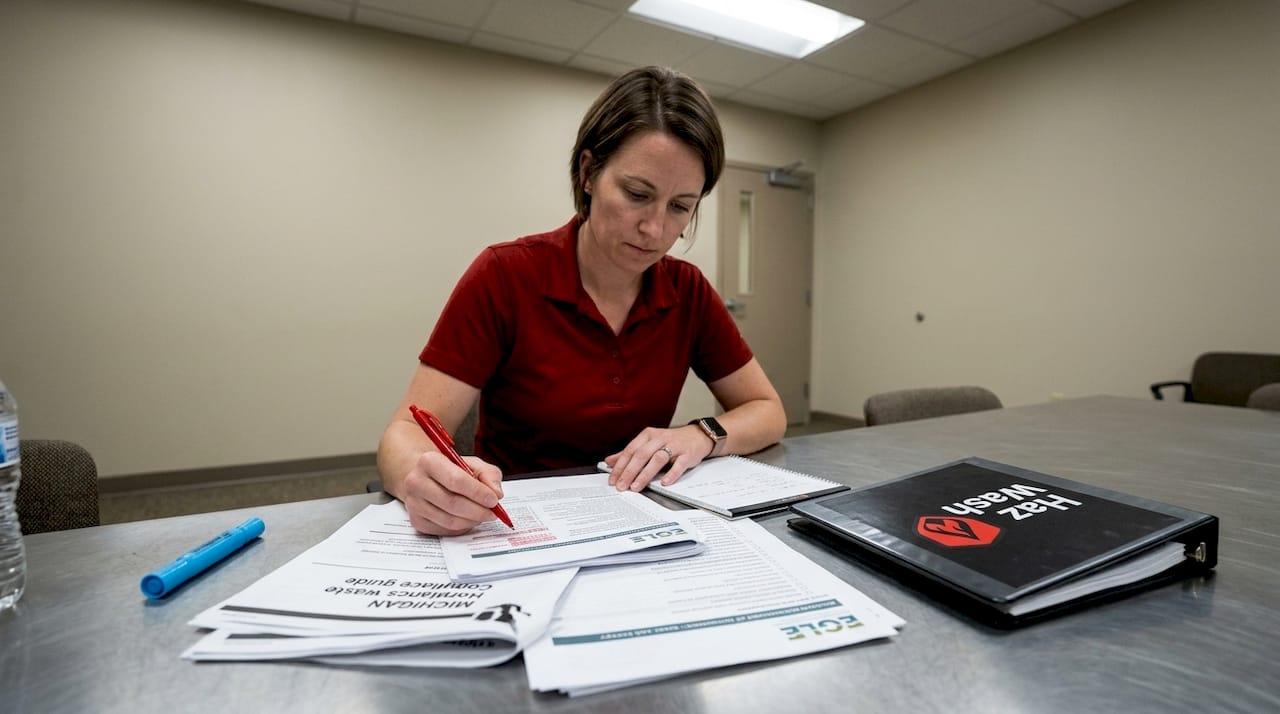
The Michigan hazardous waste rules guide provides a clear breakdown of generator thresholds and record-keeping requirements. Most residential incidents fall into the Very Small Quantity Generator (VSQG) category, but that classification still carries real obligations. Ignoring them is not a gray area.
According to Michigan EGLE’s regulatory documentation, Detroit compliance requires adherence to EGLE for hazardous and medical waste under Part 111 NREPA and MWRA Part 138, OSHA Bloodborne Pathogens standards under 29 CFR 1910.1030, and EPA and DOT transport regulations. These rules apply collectively, not selectively.
Regulatory bodyArea of oversightKey requirementEGLEMedical and hazardous wasteGenerator ID, manifests, approved disposalOSHAWorker and site safetyPPE, exposure control, handling protocolsEPAEnvironmental protectionChemical waste documentation and disposalDOTTransport of hazmat materialsLabeling, packaging, transport manifests
Property managers must also avoid compacting biological waste or mixing it with regular trash. Both actions can result in regulatory violations and fines. Working with an OSHA-compliant cleanup provider removes this burden from your hands and transfers accountability to a licensed professional.
Professional vs. DIY: When should you call experts?
Knowing the laws, the next step is deciding who should handle a hazardous incident. That decision is more straightforward than it might seem.
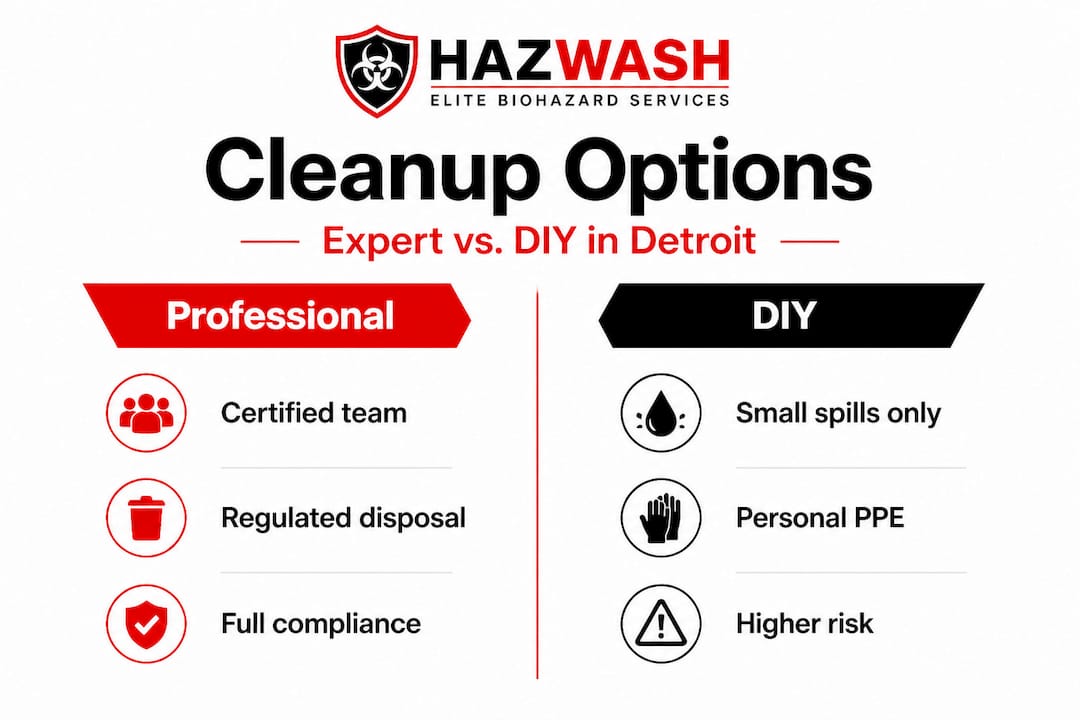
For very minor incidents, such as a small blood spill from a minor cut on a non-porous surface, a trained facility manager with proper PPE and disinfectant protocol may be able to manage the situation. However, this represents a narrow exception. Most incidents that arise in residential and rental property contexts require professional intervention.
Here is why DIY cleanup fails in most real-world situations:
Porous surface penetration: Blood and biological fluids soak into wood, concrete, carpet, and drywall within minutes. Surface cleaning does not reach contamination at depth.
Bloodborne pathogen risk: Hepatitis B, Hepatitis C, and HIV can survive on surfaces for hours to days. Without certified PPE and decontamination procedures, exposure risk is real.
Hidden contamination: Decomposition fluids, drug residue, and infectious materials can migrate through walls and subfloors in ways that are invisible during a basic inspection.
Documentation gaps: Insurance claims and legal clearance often require certified cleanup documentation. DIY leaves no paper trail.
Regulatory violations: Improper disposal of biohazard waste carries significant penalties under Michigan law.
As biohazard cleanup authority sources confirm, porous material penetration and regulatory requirements make amateur cleanup inadequate for unattended death and trauma scenes.
ScenarioDIY appropriate?ReasonSmall surface cut, non-porous floorPossibly, with PPELimited contamination, accessible surfaceBlood spill on carpet or woodNoPorous penetration, pathogen riskUnattended death or decompositionNeverRegulatory mandate, health hazardTrauma or violence sceneNeverHidden contamination, documentation requiredDrug lab or meth residueNeverChemical hazard, EPA involvement
Pro Tip: Always ask a cleanup provider for their OSHA HAZWOPER certification, IICRC credentials, and DOT compliance documentation before they begin work. A legitimate service will share these without hesitation.
Reviewing Detroit biohazard cleaning options helps you compare services effectively. You can also evaluate local cleanup service options to confirm which providers meet Michigan’s compliance standards.
What to expect during professional biohazard cleanup
Once you’ve chosen professional help, understanding the cleanup process helps manage expectations and keeps you, your family, or your tenants safe during remediation.
A certified biohazard crew follows a structured process that meets EGLE, OSHA, and EPA requirements at each stage. Here is what that process typically looks like:
Initial site assessment: The crew evaluates the full scope of contamination, including areas that may not be visually obvious. This assessment determines the appropriate containment strategy and PPE level required.
Regulatory notifications: Depending on incident type and waste volume, notifications to EGLE or local health authorities may be required before cleanup begins.
Containment setup: Affected areas are sealed off using physical barriers and negative air pressure systems where necessary to prevent cross-contamination.
Waste removal: All contaminated materials, including carpeting, padding, drywall, and personal items, are removed using leak-proof, labeled biohazard containers. As mandated by Michigan regulations, waste must be labeled with the biohazard symbol and stored securely until transport.
Decontamination: Surfaces are treated with hospital-grade disinfectants and antimicrobial agents. ATP testing or similar verification methods confirm decontamination effectiveness.
Disposal documentation: All waste is transported under proper manifests to licensed disposal facilities, where it is treated by autoclave or incineration before landfill placement.
Final verification and restoration: The site is verified clean, and a certificate of completion is provided for insurance and legal records.
Key tips for property owners and families during this process:
Secure and remove personal valuables from the affected area before the crew arrives.
Do not enter the contaminated zone until the crew confirms it is safe. Even brief exposure carries risk.
Keep the property address and incident details ready to share when you call, as this helps the crew prepare the right equipment.
Ask for all documentation in writing, including waste manifests, disposal certificates, and any regulatory notifications filed on your behalf.
Pro Tip: Request that your cleanup provider share the final decontamination verification report. This report protects you if a future tenant, buyer, or insurer asks whether the property was properly remediated.
Following emergency cleanup best practices helps Detroit families stay safe and legally protected throughout the remediation process.
The uncomfortable truth most property managers miss about hazardous incidents
We see patterns repeatedly in this work. And the pattern that causes the most long-term damage is this: property managers and families treat regulatory compliance as a procedural inconvenience rather than a genuine safeguard.
That mindset leads to predictable outcomes. A manager hires a general cleaning service to handle a trauma scene because it costs less. The surfaces look clean. The smell is gone. Everyone moves on. Then, months later, a new tenant develops a respiratory illness. An insurance claim is denied because cleanup documentation does not meet regulatory standards. Or a health inspection reveals residual contamination that triggers a mandatory remediation order, which now costs three times what compliant cleanup would have.
Detroit’s legal requirements around biohazard events are not designed to burden property owners. They exist because contamination is rarely as contained as it appears. Bloodborne pathogens survive on surfaces in ways that routine cleaning cannot address. Drug residue from meth production absorbs into HVAC systems and insulation. Decomposition fluids penetrate into structural materials and cannot be addressed without removing affected layers entirely.
There is also the insurance dimension that most managers overlook. Many commercial property policies and landlord insurance plans include provisions that void coverage if a biohazard event was not remediated by a certified, documented provider. That means an informal cleanup does not just create a health risk. It creates a direct financial liability that will surface at the worst possible time.
As the DOT hazardous waste guide makes clear, transport and disposal documentation is a legal obligation, not optional paperwork. Missing manifests and disposal certificates expose you to regulatory penalties that accrue per violation per day.
True compliance is about protecting long-term property value and the health of everyone who occupies that space. The cost of certified cleanup is predictable. The cost of skipping it is not.
Need help? Detroit’s trusted biohazard cleanup pros
Facing a hazardous incident at your Detroit property is already one of the most stressful situations you can encounter. Navigating compliance requirements, coordinating waste removal, and ensuring the property is safe should not fall on you alone.
HazWash LLC provides discreet, certified biohazard cleanup throughout Detroit and surrounding areas. Our crews are OSHA HAZWOPER certified, IICRC credentialed, and DOT compliant, meaning every job is documented, legally handled, and backed by verifiable credentials. Whether you are a family managing an unexpected loss or a property manager responding to a tenant incident, we respond 24/7 with the sensitivity and precision the situation requires. Explore biohazard cleaning alternatives and see how certified service compares, or review our compliance cleanup service to understand what legal documentation you should expect. When you are ready to act, our trauma cleanup specialists are available now.
Frequently asked questions
What biohazard incidents require professional cleanup in Detroit?
Any incident involving medical waste, bloodborne pathogens, unattended death, or significant contamination requires a regulated expert service, as EGLE and OSHA rules mandate strict handling and disposal procedures for these materials.
Can families or property managers handle minor spills themselves?
Small spills on non-porous surfaces may be manageable with proper PPE and training, but trauma scenes and porous material contamination always require professionals because, as porous surface studies confirm, DIY methods cannot reach contamination at depth.
What legal documents are needed for transporting hazardous waste?
A Michigan EGLE Waste Generator ID and transport manifests are both required for compliant hazardous or medical waste movement, as EGLE’s guidance makes clear for all regulated waste generators.
How is biohazard waste disposed in Detroit?
Biohazard waste must first be decontaminated by autoclave or incineration, then placed in a sanitary landfill following treatment, with all steps documented on official manifests.
What should I do immediately after a hazardous incident?
Secure the area, prevent anyone from entering the contaminated zone, avoid direct contact with any biological material, and contact a certified biohazard cleanup service as soon as possible to ensure both health safety and legal compliance from the start.