What Is Bioremediation? Methods, Types, and Uses
What Is Bioremediation? Methods, Types, and Uses
TL;DR:
Bioremediation utilizes living organisms to permanently neutralize environmental contaminants through biological processes. Its success depends on precise site assessment, environmental conditions, and often hybrid approaches for effective, scalable cleanup. Properly managed, it offers a sustainable, cost-effective alternative to conventional methods like excavation or incineration.
Bioremediation is defined as the use of living organisms, primarily bacteria, fungi, and plants, to degrade or neutralize environmental contaminants in soil, water, and sediment. The process converts harmful pollutants into less toxic or completely harmless compounds through natural metabolic activity. Environmental agencies including the U.S. EPA have adopted bioremediation at contaminated sites nationwide because it destroys contaminants permanently rather than relocating them. For environmental professionals and property owners dealing with hazardous contamination, understanding how this process works is the foundation of any sound remediation strategy.
How does bioremediation work at the microbial level?
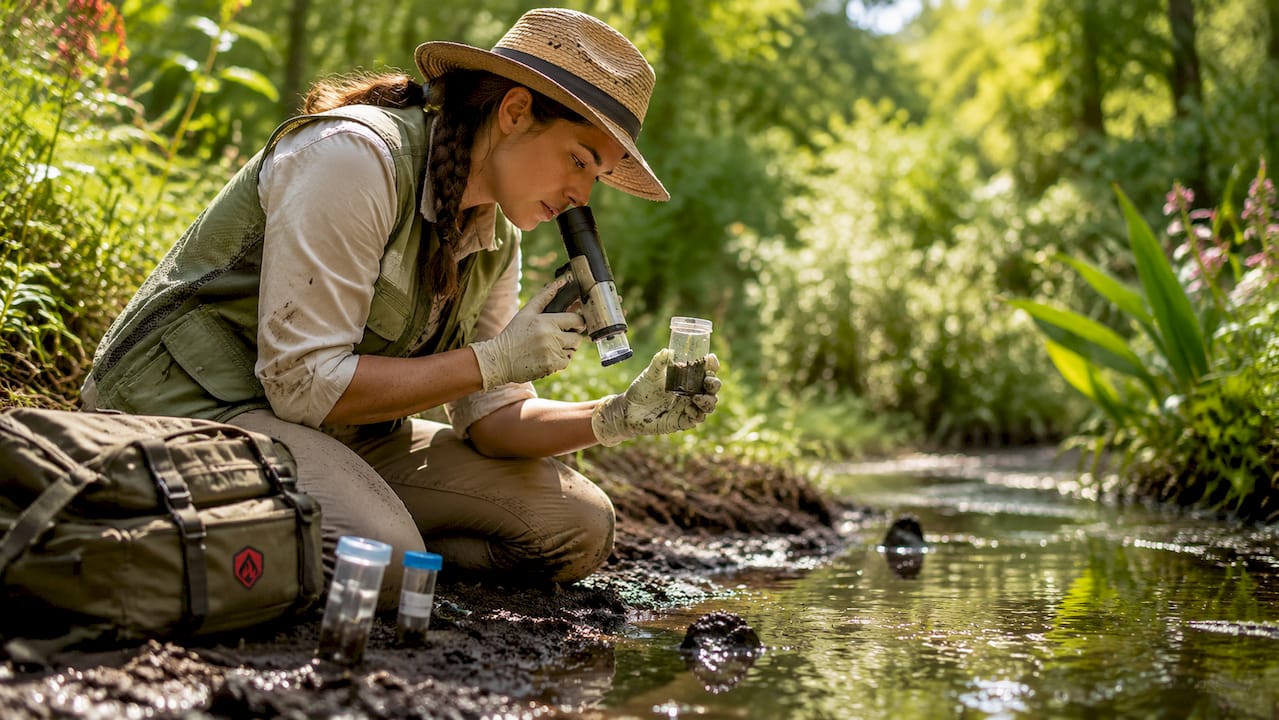
Bioremediation works by harnessing microbial metabolism to break down organic pollutants into carbon dioxide, water, and biomass. Bacteria like Alcanivorax and Acinetobacter junii consume hydrocarbons as a carbon source, effectively dismantling the molecular structure of petroleum compounds. Fungi extend this capacity through enzymatic secretion, while plants absorb and sequester heavy metals through their root systems in a sub-process called phytoremediation.
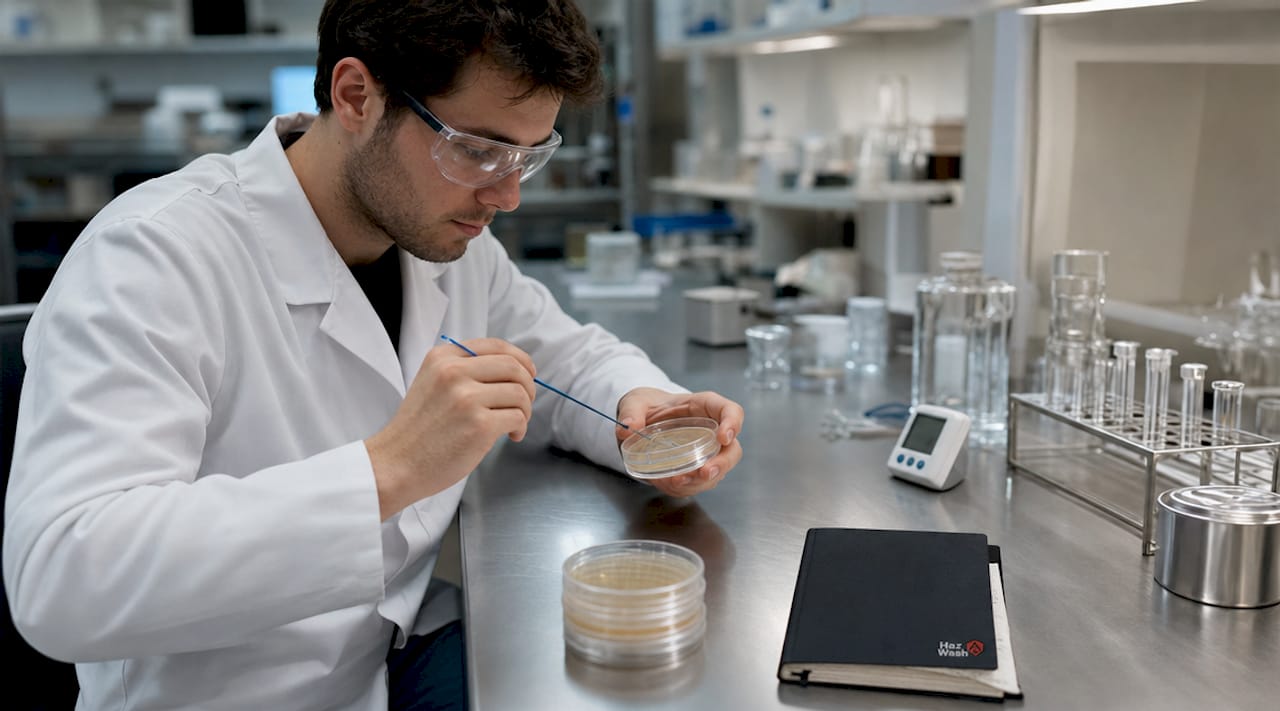
Two primary techniques drive most field applications. Biostimulation adds nutrients, typically nitrogen, phosphorus, and potassium (NPK), to stimulate the growth of indigenous microbial populations already present at the site. Bioaugmentation introduces laboratory-cultured microbes, either indigenous or exogenous, to supplement or replace a depleted native population.
Environmental conditions determine whether either approach succeeds or fails. Oxygen availability, soil pH, moisture content, and nutrient ratios all directly affect microbial activity rates. Proper environmental conditions like oxygen, moisture, and nutrients optimize microbial breakdown, while mismanagement can produce toxic intermediates instead of full mineralization. That outcome, partial degradation that creates a more harmful compound than the original, is the most underappreciated risk in field bioremediation.
Recent research confirms that mixed microbial consortia consistently outperform single-strain applications because synergistic interactions between species expand the range of degradable compounds and improve resilience under variable site conditions.
Pro Tip: Before selecting biostimulation or bioaugmentation, conduct a baseline microcosm test using soil or water samples from the actual site. Lab results from a controlled microcosm predict field performance far more accurately than generic treatment protocols.
What are the benefits of bioremediation over traditional methods?
The primary advantage of bioremediation over excavation or incineration is permanent contaminant destruction. Traditional methods physically move contaminated material to a landfill or burn it, transferring liability rather than eliminating it. Bioremediation converts the pollutant into non-hazardous byproducts on-site, which reduces long-term liabilities and directly supports corporate ESG compliance goals.
The operational cost difference is significant. Excavation requires heavy equipment, transportation, disposal fees, and site restoration. Bioremediation requires nutrient amendments, monitoring equipment, and time. The EPA uses bioremediation at over 50 Superfund sites precisely because it reduces energy consumption, equipment costs, and secondary waste generation compared to mechanical alternatives. That scale of institutional adoption reflects a clear cost-effectiveness verdict.
The core benefits, ranked by practical impact for site managers, are:
Permanent destruction of contaminants rather than relocation to another site or medium
Lower operational costs with reduced equipment, transportation, and disposal fees
Minimal site disturbance preserving soil structure and surrounding ecosystems
Regulatory alignment with EPA Superfund protocols and ESG reporting frameworks
Scalability from small residential plots to large industrial contamination zones
Bioremediation does carry real limitations. It is slower than mechanical cleanup, highly site-specific, and can fail entirely if environmental conditions are not maintained. Success depends on precise site characterization and ongoing environmental monitoring, making professional oversight non-negotiable for complex sites.
“Bioremediation is not a silver bullet. Its effectiveness is inseparable from the quality of site assessment and the rigor of ongoing monitoring throughout the treatment period.”
What are common examples and applications of bioremediation?
Real-world bioremediation applications span petroleum spills, heavy metal contamination, and organic compound degradation across soil and water environments. The following table compares the most documented application types by contaminant, method, and documented performance.
The Bermuda grass (Cynodon dactylon) result deserves specific attention. A pollutant half-life reduction from 296 days to 20 days represents a 93% reduction in cleanup time. That figure comes from combining phytoremediation with microbial consortia and NPK amendments, not from any single technique applied in isolation. The synergy between plant root activity and microbial populations in the rhizosphere is what drives that performance.
Microbially Induced Calcite Precipitation (MICP) is a less familiar but highly effective technique for heavy metal contamination. Bacteria like Sporosarcina pasteurii produce urease, which triggers calcium carbonate precipitation that immobilizes heavy metals in a stable crystalline matrix. Remediation rates of up to 98% for cadmium and lead make MICP one of the most precise tools available for metal-contaminated industrial sites.
Bioremediation also applies to biohazard and trauma scene cleanup, where microbial agents break down biological contaminants including bloodborne pathogens. Understanding what biohazard cleanup professionals actually do at a scene clarifies how biological treatment integrates with physical decontamination in those high-stakes environments.
What emerging bioremediation technologies improve remediation outcomes?
Hybrid bioremediation systems, which combine biological treatment with mechanical or chemical methods, represent the most significant recent development in remediation technology. Hybrid systems address the two most common failure points of standalone bioremediation: insufficient scale and unacceptable timelines. A site too large or too heavily contaminated for biology alone can be pre-treated mechanically, then handed off to microbial processes for final mineralization.
Key advances driving the field forward include:
Engineered microbial consortia designed with specific degradation pathways for target contaminants, reducing the guesswork in bioaugmentation
Kinetic modeling to estimate contaminant half-lives and calculate optimal nutrient amendment schedules, which dramatically reduces cleanup times by preventing over- or under-dosing
Electrobioremediation, which uses low-level electrical currents to mobilize contaminants toward microbial treatment zones in low-permeability soils
Nanomaterial-assisted bioremediation, where engineered nanoparticles increase bioavailability of contaminants that would otherwise be inaccessible to microbial metabolism
Long-term monitoring remains the most underinvested component of most bioremediation projects. Some bioremediation projects take months or years to complete, and the risk of toxic intermediate accumulation rises sharply when monitoring lapses. Chlorinated solvents like trichloroethylene (TCE), for example, can partially degrade into vinyl chloride, which is more carcinogenic than the original compound if reductive dechlorination stalls.
Pro Tip: Build kinetic modeling into your remediation plan from day one. Knowing the projected contaminant half-life under your specific site conditions lets you set realistic milestones and catch treatment failures before they become regulatory violations.
How can professionals implement bioremediation effectively?
Effective implementation starts with site-specific assessment, not with selecting a treatment method. The microbial community already present at a contaminated site determines whether biostimulation alone will suffice or whether bioaugmentation is required. Microcosm experiments that simulate site conditions in the laboratory are the most reliable way to answer that question before committing resources to field treatment.
A structured implementation sequence for environmental professionals:
Conduct a site characterization covering contaminant type, concentration, distribution, soil permeability, groundwater depth, and existing microbial populations
Run microcosm tests using actual site samples to determine baseline degradation rates and identify nutrient or microbial deficiencies
Select the appropriate approach: natural attenuation for low-concentration sites with active indigenous microbes; biostimulation for sites with adequate microbial diversity but nutrient limitation; bioaugmentation for sites with depleted or absent relevant microbial populations
Optimize environmental conditions by adjusting pH to the 6.5 to 8.0 range, maintaining adequate moisture, and supplying oxygen through air sparging or bioventing for aerobic processes
Establish a monitoring schedule with defined milestones, contaminant concentration targets, and contingency protocols for stalled treatment or intermediate accumulation
Access and infrastructure present practical barriers that laboratory planning often underestimates. Treating contaminated groundwater requires injection wells, extraction systems, or permeable reactive barriers, each of which demands site access, permitting, and ongoing maintenance. Residential and urban sites add regulatory complexity, particularly under Michigan biohazard disposal regulations that govern how biological and chemical waste is handled during remediation activities.
Key takeaways
Bioremediation permanently destroys contaminants through biological processes, making it more sustainable and cost-effective than excavation or incineration when site conditions are properly managed.
Why bioremediation deserves more credit than it gets
I have spent years working alongside environmental professionals who default to excavation the moment a contamination timeline gets tight. The logic is understandable. Excavation is fast, visible, and easy to document for regulators. Bioremediation asks for patience and precision, two things that are hard to sell when a client is staring at a contaminated property and a liability clock.
What that default misses is the permanence argument. Moving contaminated soil to a landfill does not solve the problem. It relocates it, often to a community with less political capital to resist it. Bioremediation, when executed correctly, eliminates the contaminant. That distinction matters enormously for long-term liability, for ESG reporting, and frankly, for doing the right thing.
The research coming out in 2026 on engineered microbial consortia and kinetic modeling is genuinely exciting. The ability to model a contaminant’s half-life under specific site conditions and then adjust nutrient amendments in real time changes the economics of bioremediation significantly. It makes the timeline more predictable, which removes the biggest objection most clients have.
My honest recommendation: stop treating bioremediation as the slow, uncertain option and start treating it as the precise, permanent one. The technology has caught up with the promise. What it still needs is professionals willing to invest in proper site characterization and monitoring rather than cutting corners on the science.
— David
How Hazwash supports biohazard and environmental cleanup
Hazwash provides certified biohazard cleanup and environmental decontamination services across Detroit and surrounding Michigan communities. When biological contamination, trauma scenes, or hazardous waste require professional remediation, Hazwash responds 24/7 with OSHA HAZWOPER-certified technicians trained in both physical decontamination and biological treatment protocols. Every cleanup follows federal, state, and local compliance standards, with full documentation to protect property owners and landlords from liability exposure. Understanding why specialized cleanup teams are required for biohazard scenes is the first step toward protecting your property and the people in it. Contact Hazwash for a confidential assessment.
FAQ
What is bioremediation in simple terms?
Bioremediation is the process of using living organisms, including bacteria, fungi, and plants, to break down or neutralize harmful contaminants in soil and water. The organisms convert pollutants into non-toxic compounds through natural metabolic processes.
How long does bioremediation take?
Treatment timelines range from weeks to years depending on contaminant type, concentration, and site conditions. Combined biostimulation and bioaugmentation can achieve 67–78% petroleum hydrocarbon degradation in 30–45 days under optimized conditions.
What are the main types of bioremediation?
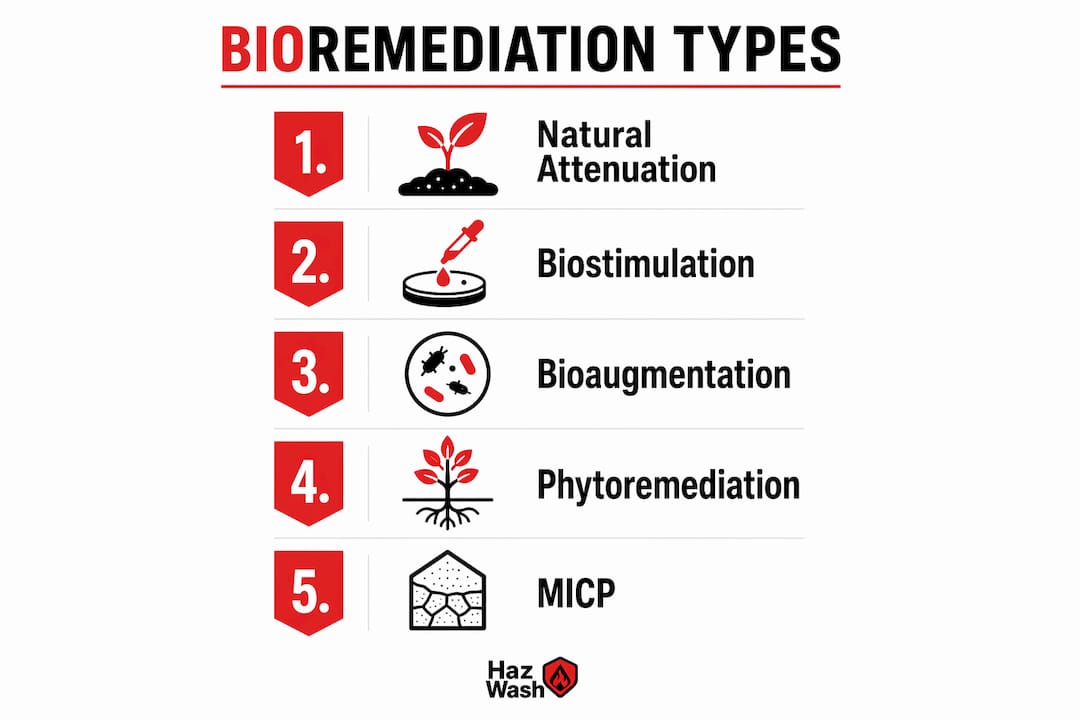
The three primary types are natural attenuation (relying on existing microbes without intervention), biostimulation (adding nutrients to boost indigenous microbial activity), and bioaugmentation (introducing cultured microbes to supplement or replace native populations).
Can bioremediation remove heavy metals?
Yes. Microbially Induced Calcite Precipitation (MICP) achieves remediation rates of 84–98% for heavy metals including lead, cadmium, zinc, and chromium by immobilizing them in a stable calcium carbonate matrix.
When should a professional handle bioremediation?
Professional oversight is required whenever contamination involves regulated substances, groundwater, or biological hazards. Site-specific microbial assessment, permitting, and long-term monitoring all require certified expertise to meet compliance standards and avoid producing toxic intermediates.