The Role of First Responders: What Families Need to Know
The Role of First Responders: What Families Need to Know
TL;DR:
First responders include EMTs, firefighters, police, and trained community members who provide critical early assistance at emergency scenes. Their effectiveness relies on clear command, community involvement, and safety protocols during hazardous incidents, all while facing physical and mental health challenges. Families should rely on certified cleanup services like Hazwash to safely address biohazard residues left after emergency responders depart.
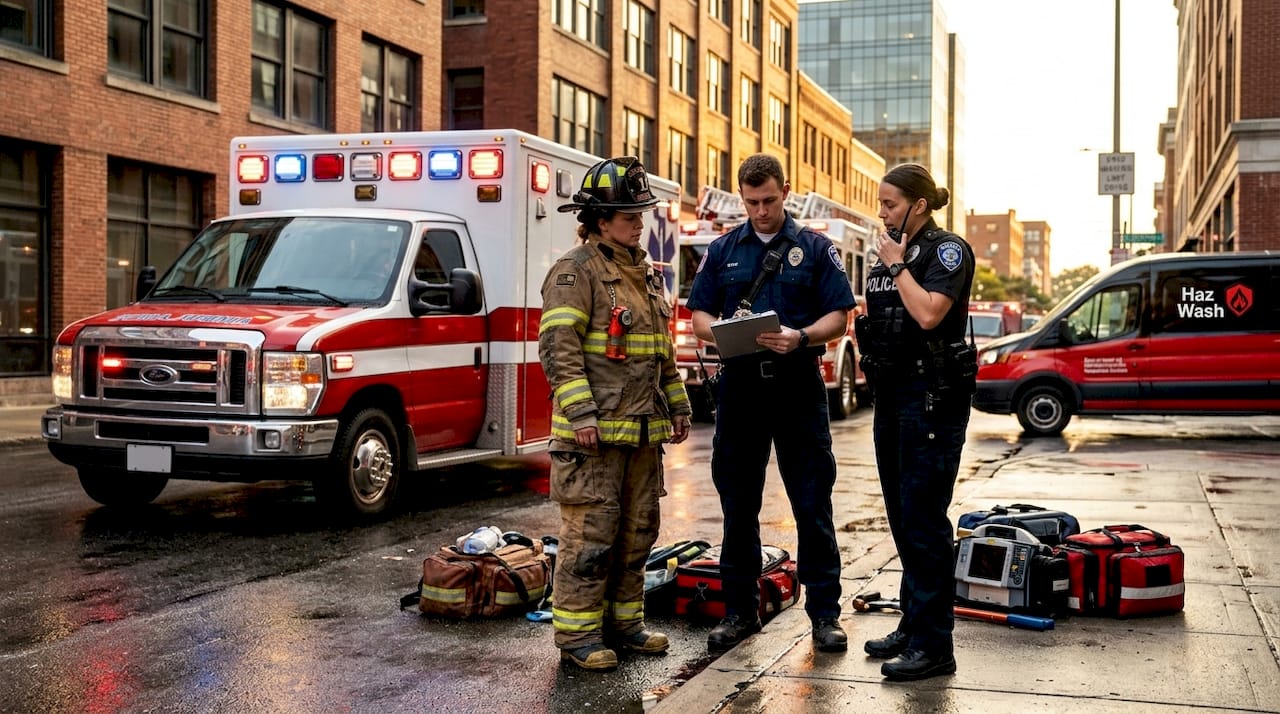
First responders are defined as the initial trained individuals who arrive at an emergency scene to deliver critical care, establish safety, and coordinate further assistance until specialized help takes over. This definition covers EMTs, paramedics, firefighters, and police officers. It also now includes trained community members who provide immediate aid before professionals arrive. Understanding what these responders do, what they face, and how you can support them gives your family a real advantage in any emergency.
What is the role of first responders in an emergency?
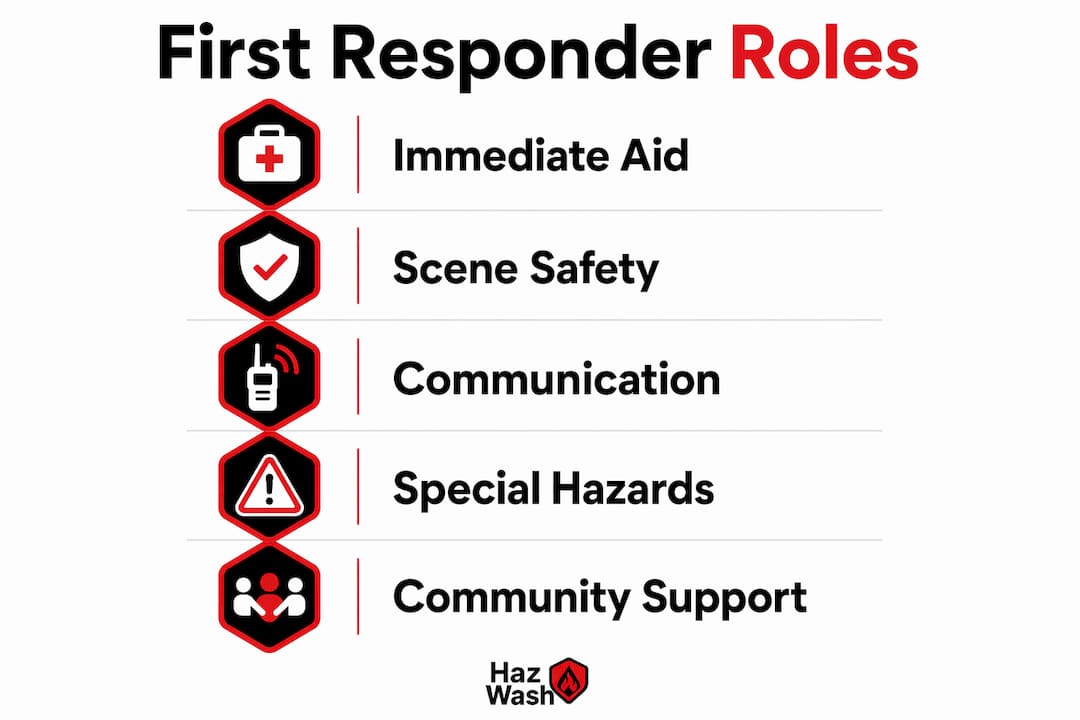
The role of first responders is to close the gap between when an emergency happens and when definitive care begins. That gap is where lives are saved or lost. EMTs and paramedics deliver prehospital medical care including CPR, airway management, and hemorrhage control. Firefighters manage structural hazards, vehicle extractions, and hazardous material containment. Police officers secure scenes, manage crowds, and coordinate with other agencies. Each role is distinct, but all share one core function: stabilize the situation so that more specialized resources can do their work effectively.
First responders also carry communication responsibilities that most people overlook. They relay critical scene information to hospital emergency departments, coordinate with dispatch for additional resources, and execute handoff protocols when transferring patient care. A clean handoff between a paramedic and an emergency physician can directly affect a patient’s outcome. These coordination duties are as important as any clinical skill.
Pro Tip: If you call 911, stay on the line and answer every question the dispatcher asks. The information you provide shapes how first responders prepare before they even arrive at your location.
The core first responders duties during any emergency include:
Assessing scene safety before approaching any victim
Providing immediate lifesaving interventions such as CPR, tourniquet application, and basic airway management
Triaging multiple patients when resources are limited
Establishing a command structure and calling for backup when needed
Documenting patient condition and care provided for hospital handoff
How do trained community members transform emergency response?
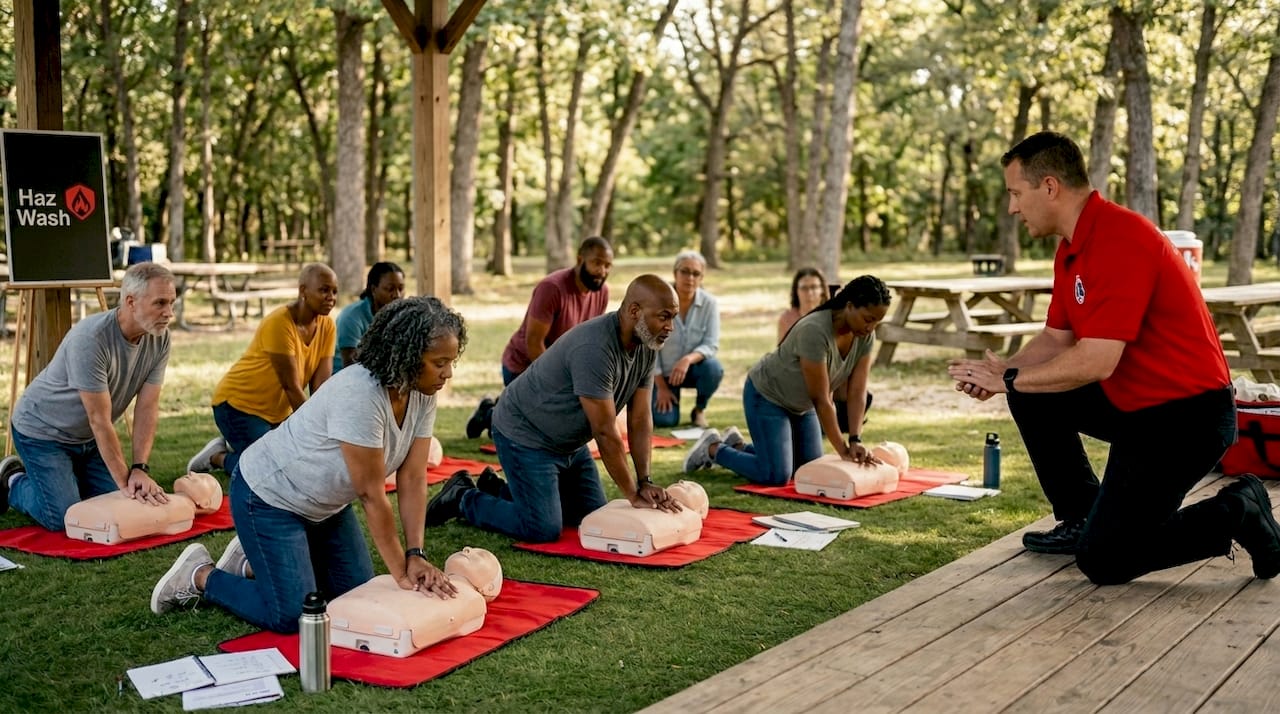
Trained community members act as force-multipliers by providing immediate aid before professionals arrive, and communities that invest in bystander training report faster lifesaving care and measurably reduced strain on official emergency systems. This is not a minor footnote in emergency preparedness. It is a structural shift in how public safety works. When a bystander starts CPR within the first two minutes of cardiac arrest, survival rates increase dramatically compared to waiting for an ambulance.
The practical impact of this shift is significant for families. Here is how community-level training changes emergency outcomes:
Faster care initiation. A trained neighbor can begin bleeding control or CPR within seconds. Professional response times in urban areas like Detroit average several minutes, and every minute without intervention reduces survival odds.
Reduced system overload. When bystanders handle stabilization, paramedics and EMTs arrive to patients who are already receiving care rather than deteriorating.
Better scene management. Trained community members can direct crowds, keep bystanders back, and relay accurate information to dispatchers, all of which improve conditions for arriving professionals.
Cultural normalization of safety. Programs like Stop the Bleed, CPR certification through the American Heart Association, and community emergency response teams (CERT) build a culture where preparedness is expected, not exceptional.
“The most effective emergency response systems treat trained community members not as a backup plan, but as the first layer of a coordinated response network.”
Public safety agencies in cities across the United States are integrating civilian training into their preparedness frameworks. Detroit-area families who complete basic first aid and CPR training directly support the professionals who serve their neighborhoods. Knowing how first responders help at every stage of an incident makes you a more effective partner in that system.
What challenges do first responders face on the job?
First responders carry physical and psychological burdens that most people outside the profession rarely see. Cardiovascular disease is a leading health risk for first responders, and professional guidelines now recommend combining standard cholesterol tests with coronary artery calcium scoring and carotid ultrasounds for early detection. This matters because standard population-level screenings miss the specific risks created by shift work, high-stress exposures, and physical exertion patterns unique to emergency work.
Fatigue is a second major challenge, and its causes are more systemic than most people assume. Unclear task definitions and fragmented command structures contribute significantly to responder fatigue during disaster response, with missed breaks and meals having a stronger effect on performance than individual experience levels. This means a well-trained responder working under a disorganized command structure will fatigue faster than a less experienced responder with clear direction and adequate rest.
Mental health carries its own weight. First responders have unique PTSD treatment needs shaped by occupational culture and repeated trauma exposure, and tailored clinical interventions that leverage their existing resilience produce better outcomes than standard civilian protocols. The cultural pressure to “push through pain” remains a barrier. Leadership that normalizes injury reporting and prioritizes sustainable recovery over short-term toughness is the single most effective lever for improving long-term responder health.
Pro Tip: Families of first responders should recognize that fatigue-related errors are a system problem, not a personal failure. Advocating for better scheduling and command structures in your community protects both responders and the public they serve.
How do first responders handle biohazards and hazardous incidents?
The role of first responders in biohazard and chemical emergencies follows a strict priority order: personal safety comes before patient care. In CBRNE (Chemical, Biological, Radiological, Nuclear, and Explosive) incidents, personal safety precedes patient care to prevent secondary casualties. A responder who becomes contaminated is no longer a resource. They become a patient. This is not callousness. It is operational logic that protects everyone on scene.
Zone-based frameworks govern how responders approach these incidents. The hot zone contains the active hazard and is restricted to fully equipped personnel. The warm zone is a transition area for decontamination. The cold zone is where command, medical treatment, and family coordination occur. Understanding these zones helps families and property owners know where they can safely be and what information to provide to arriving personnel.
Practical safety tools used in high-threat and biohazard response include:
Detection devices that identify chemical agents, radiation levels, and biological indicators before responders enter a hazard zone
Personal protective equipment (PPE) rated for the specific hazard class present
Individual First-Aid Kits (IFAKs) worn on the body, not stored in vehicles, enabling immediate self-aid or buddy aid in the first critical minutes of a high-threat incident
Decontamination stations established in the warm zone before any patient transport
Responders also maintain what professionals call a high-threat mindset throughout an incident, actively resisting the psychological tendency to downgrade vigilance once a scene appears controlled. A scene that looks safe can still carry hidden biological or chemical risks. For families dealing with the aftermath of a hazardous incident, understanding hazardous incident types and safe response is the first step toward protecting your household after responders leave.
Key takeaways
First responders provide the critical first layer of emergency care, and their effectiveness depends on clear command structures, community support, and specialized training for hazardous and biohazard incidents.
Why the definition of “first responder” needs to change
I have spent years working alongside families and property owners in the aftermath of traumatic incidents, and the most consistent gap I see is not in professional response. It is in what happens before and after the professionals arrive. The traditional image of a first responder as someone in a uniform with specialized equipment is accurate, but it is incomplete.
The communities that recover fastest from emergencies are the ones where neighbors know basic CPR, where families have talked through what to do in a crisis, and where people understand that calling 911 is the start of a process, not the whole solution. The expansion of the first responder definition to include trained community members is not a policy shift. It is a recognition of how emergency response actually works on the ground.
What concerns me more is the mental health side. The cultural pressure on responders to minimize injury and push through exhaustion is a structural problem that leadership has to own. Families of responders can play a real role here by normalizing conversations about recovery and advocating for systems that treat rest as a professional requirement, not a weakness.
The importance of first responders cannot be overstated. But the system that supports them matters just as much as the individuals within it. Investing in that system, whether through community training, better command structures, or post-incident support services, is how communities protect the people who protect them.
— David
How Hazwash supports families after first responders leave
When first responders clear a scene, their job is done. Yours may just be beginning. Biological hazards, trauma residue, and contaminated materials left behind after an emergency require certified cleanup that goes beyond standard cleaning. Hazwash provides biohazard cleanup services in Detroit with OSHA HAZWOPER, IICRC, and DOT certifications, handling blood spills, trauma scenes, and hazardous waste removal discreetly and in full compliance with federal and state regulations. Families and property owners can review what families and property owners must know about scene cleanup to understand the process before a crisis happens. Hazwash is available 24/7 for emergency response across the Detroit area.
FAQ
What is the primary role of first responders?
First responders are the initial trained individuals who arrive at an emergency to deliver lifesaving care, establish scene safety, and coordinate with additional services. Their core duties include CPR, hemorrhage control, hazard containment, and patient handoff to hospital care teams.
How do trained community members fit into first responder roles?
Trained community members act as force-multipliers by providing immediate aid before professionals arrive. Communities that invest in bystander training in CPR and bleeding control report faster care initiation and reduced strain on official emergency systems.
What are the biggest challenges faced by first responders?
Cardiovascular disease, fatigue from unclear command structures, and PTSD from repeated trauma exposure are the leading challenges. Fatigue is driven more by missed breaks and fragmented roles than by physical labor alone, making organizational structure a critical factor in responder health.
How do first responders handle biohazard and chemical incidents?
In CBRNE incidents, responders follow a zone-based framework that separates hot, warm, and cold zones to minimize exposure. Personal safety takes priority over patient care to prevent secondary casualties, and IFAKs worn on the body provide immediate self-aid capability in the first critical minutes.
What should families do after first responders leave a scene?
Families should not attempt to clean biological or hazardous materials themselves. Certified biohazard cleanup services like Hazwash handle trauma residue, blood spills, and contaminated materials in compliance with OSHA and state regulations, protecting residents from ongoing health risks.