Decomposition Cleanup: What Families Need to Know
Decomposition Cleanup: What Families Need to Know
TL;DR:
Decomposition cleanup involves the safe removal of biological materials, decontamination, and odor neutralization after a death. It requires specialized knowledge, proper safety protocols, and professional biohazard remediation services to ensure safety and legal compliance. Prompt professional assistance not only safeguards health but also simplifies insurance claims and legal protections for families.
Facing decomposition cleanup after the loss of a loved one is one of the most difficult situations a family can encounter. The physical and emotional weight hits at once. Beyond grief, you’re suddenly responsible for a scene that carries real health risks, legal requirements, and restoration needs that most people have never dealt with before. This guide walks you through exactly what decomposition cleanup involves, why it demands careful handling, what legal and safety steps you must take, and how professional biohazard remediation services protect both your family and your property.
Table of Contents
Key takeaways
What decomposition cleanup actually involves
So what is decomposition cleanup, exactly? It is the process of safely removing biological material, decontaminating affected surfaces, neutralizing odors, and restoring a property after a body has been present for an extended period. It is not standard cleaning. It requires specialized knowledge, industrial-grade chemicals, and strict safety protocols.
Human decomposition occurs in stages. During active decay, the body releases biohazardous fluids and pathogens including bacteria, bloodborne viruses, and toxic gases that absorb into flooring, walls, and furniture. These contaminants do not become inert once the body is removed. They remain active and dangerous to anyone who enters the space without proper protection.
The biohazards present in a decomposition scene include:
Bloodborne pathogens such as hepatitis B, hepatitis C, and HIV
Bacteria that cause serious gastrointestinal and respiratory illness
Volatile organic compounds released during putrefaction
Insect activity and larvae that can spread contamination to adjacent areas
“Families who attempt to clean a decomposition scene without professional support frequently underestimate the scope of contamination. What is visible on the surface represents only a fraction of what has saturated porous materials beneath.” — Biohazard remediation field experience
Legal and health complexities are frequently underestimated by families, making certified professional guidance not just helpful but genuinely necessary. Biohazard remediation professionals use industrial cleaning tools and sterilization chemicals specifically formulated for this type of contamination, ensuring the property is safe for habitation after cleanup is complete.
Preparation before starting any cleanup
Before anyone enters a decomposition scene, several critical steps must come first. Skipping preparation is where most serious mistakes occur, both for health and legal reasons.
Legal and regulatory requirements
Cleanup company licensing requirements vary significantly from state to state. Some states require formal registration and compliance with OSHA regulations; others have fewer formal requirements but still hold property owners liable for safe and legal disposal of biohazardous waste. Research Michigan’s specific regulations before proceeding, and consult with a licensed biohazard firm if you are uncertain.
What you need for personal protection
If you are considering any involvement in the scene, proper PPE is non-negotiable. Adequate PPE for decomposition includes:
Nitrile or heavy-duty rubber gloves (double-layered)
Full-face respirator rated for biological hazards (N95 at minimum, P100 preferred)
Disposable Tyvek protective suit
Chemical-resistant boot covers
Safety goggles sealed against the face
Inadequate PPE is consistently the most common cause of health incidents among people attempting DIY biohazard cleanup. There is no shortcut that makes this acceptable.
Insurance and financial coverage
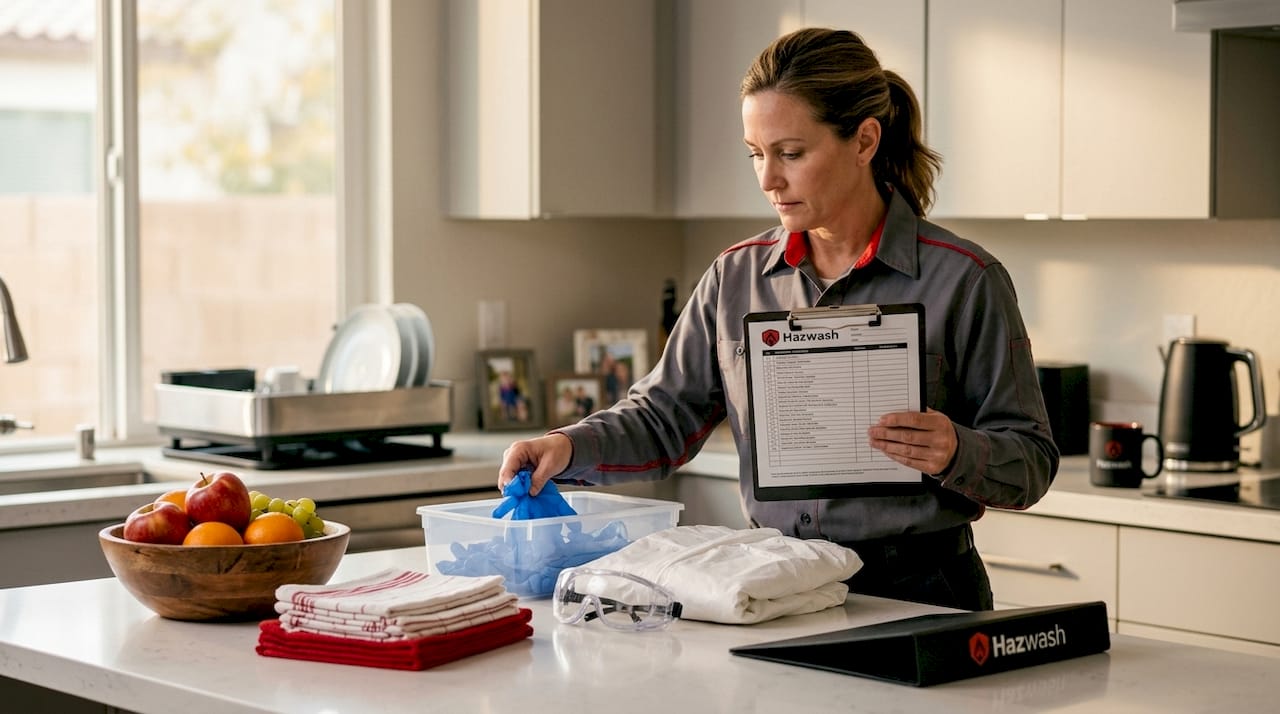
Homeowners’ insurance frequently covers professional biohazard and decomposition cleanup costs. Most families discover this far too late in the process. Contact your insurer as soon as the scene is cleared by law enforcement.
Pro Tip: Call your insurance provider before hiring any cleanup company. A certified biohazard firm can often work directly with your insurer, reducing out-of-pocket costs significantly and speeding up the process.
Step-by-step process for safe cleanup
Understanding the full scope of decomposition cleanup helps you either manage the process yourself in cases of minimal contamination, or oversee professionals with confidence. Here is how a proper cleanup proceeds.
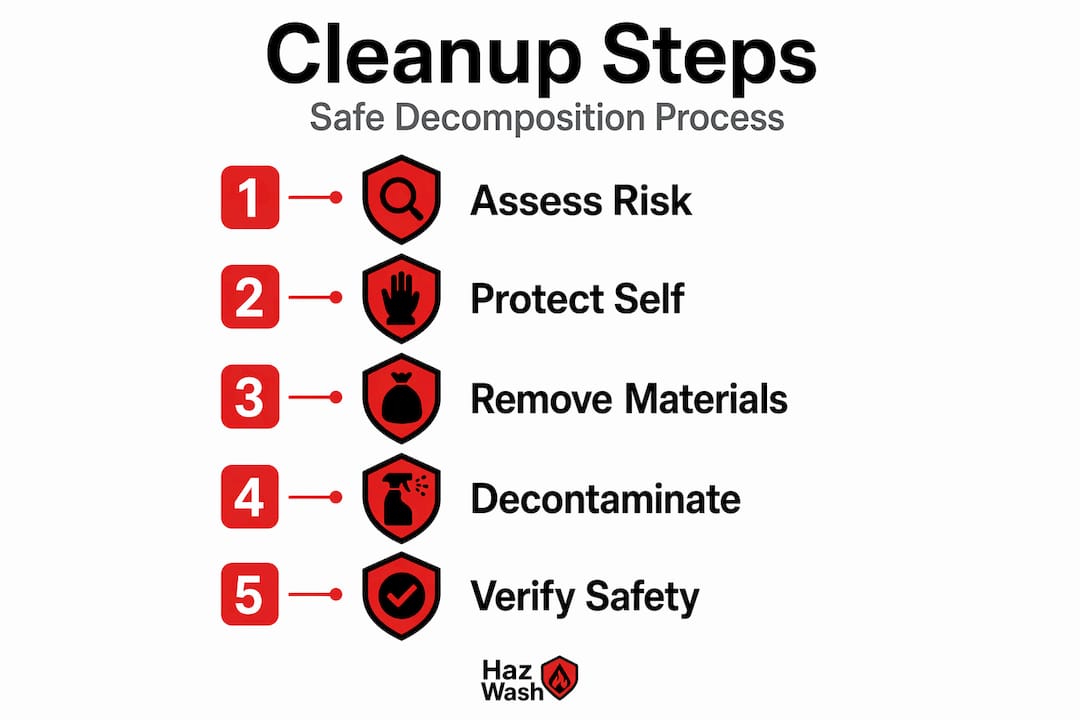
Initial assessment. A certified technician evaluates the full extent of contamination. This includes testing surfaces, checking subfloor materials, and identifying affected walls or HVAC systems. Visible contamination rarely tells the whole story.
Securing the scene. The area is sealed to prevent cross-contamination. Ventilation is carefully managed to reduce the spread of airborne pathogens before removal begins.
Removing biological material and contaminated items. Soft materials like carpet, padding, mattresses, and upholstered furniture are almost always unsalvageable and must be removed entirely. Hard surfaces undergo rigorous testing to determine whether decontamination alone is sufficient.
Sanitization and sterilization. Industrial-grade EPA-registered disinfectants are applied to all affected surfaces. Multiple treatment rounds are standard, not optional. This step addresses pathogens that have penetrated porous materials.
Odor elimination. Decomposition odors are persistent and require more than air freshener. Effective techniques include ozone treatment, thermal fogging, and encapsulation of affected structural materials. A space that smells clean is not necessarily safe, but a truly decontaminated space will also be odor-free.
Biohazardous waste disposal. Biohazard waste disposal must comply with federal and state hazardous waste laws. Improper disposal risks regulatory fines and environmental harm. All waste must be transported and disposed of by licensed carriers using approved biohazard containers and manifests.
Post-cleanup inspection and restoration. Once decontamination is verified, restoration may range from carpet replacement to structural repair depending on how long the scene was undiscovered and the extent of fluid absorption into building materials.
Pro Tip: Ask any cleanup company for their decontamination verification protocol before they begin work. A reputable firm will conduct ATP testing or swab cultures to confirm biological contamination has been eliminated, not just visually removed.
Common mistakes that compromise cleanup and safety
Even well-meaning families make errors that create long-term health and legal problems. Knowing what to avoid is as useful as knowing what to do.
Using inadequate PPE or removing it during the process. Pathogens do not require prolonged exposure to cause infection. A single unprotected contact with contaminated material can be enough.
Misreading the scope of contamination. Fluids travel. They seep under flooring, into wall cavities, and along joists. Cleaning only what you can see leaves active biohazards in place.
Improper disposal of contaminated materials. Placing biohazardous materials in standard trash bags and leaving them at the curb is a regulatory violation in most states, not just poor practice.
Skipping odor treatment. Persistent decomposition odor is not cosmetic. It signals that biological material remains present. Treating odor without addressing the source creates a cycle of recurring smell.
Neglecting the emotional toll. Families frequently push through cleanup without support, which compounds grief and can lead to trauma responses. Knowing when to step back and let professionals handle the physical work is not weakness. It is a sound decision.
“Neglecting odor control is the single most common sign that a decomposition cleanup was incomplete. If the smell returns within days or weeks, the biological source was never fully addressed.” — Biohazard remediation professionals consistently report this as the most frequent callback scenario.
If you want to understand the broader consequences of incomplete biohazard cleanup, the long-term risks of incomplete biohazard removal are well documented and should not be dismissed.
Verifying safety and completing restoration
Cleanup ends when the work is verified, not when the visible contamination is gone. Here is what post-cleanup verification looks like.
ATP testing. Adenosine triphosphate testing measures biological residue on surfaces. It provides a measurable, objective confirmation that decontamination was thorough.
Air quality sampling. In scenes with significant odor or HVAC involvement, post-cleanup air testing confirms particulate and pathogen levels are within safe limits.
Regulatory clearance. In some jurisdictions, a formal clearance certificate from the cleanup company is required before the property can be rented, sold, or reoccupied. Verify local requirements with your county health department.
Documentation for insurance and legal records. Retain all certificates, disposal manifests, and cleanup reports. These documents protect you in any future transaction or dispute related to the property.
Biohazard professionals engaging early in the process produce faster, safer, and more thoroughly documented outcomes than reactive engagement after families have already attempted partial cleanup.
My perspective on what families actually need to hear
I’ve worked alongside families in crisis, and the pattern I see repeated most often is this: people wait. They wait because they are grieving, because they are uncertain about cost, or because they do not realize how quickly a partially contaminated scene becomes a fully contaminated one.
In my experience, the families who contact a certified biohazard company within the first 24 to 48 hours after police clearance consistently have better outcomes. Not just in terms of health safety, but financially too. Insurance coverage for cleanup services is far more accessible than most families know, and a certified firm can navigate that process on your behalf.
What I’ve also seen too often is the legal blind spot. Families focused entirely on grief and immediate cleanup miss the paper trail. Disposal manifests, decontamination certificates, and written documentation are not bureaucratic formality. They are your legal protection if a property is ever sold or if a future occupant raises a concern. Improper cleanup creates liability that can surface years later.
My honest advice: let the professionals do the physical work. Focus your energy on your family, your grief, and the legal and insurance steps that require your personal attention. The cleanup itself should not be your burden to carry.
— David
How Hazwash supports families through decomposition cleanup
When your family is facing a decomposition scene, the last thing you need is uncertainty about who to call or whether the job will be done right. Hazwash provides certified, discreet, and fully compliant biohazard cleanup services throughout Detroit and the surrounding area, available 24 hours a day, seven days a week.
Every Hazwash technician is trained to OSHA HAZWOPER and IICRC standards. The team handles complete decomposition cleanup from initial assessment through verified decontamination and restoration documentation. Hazwash also assists families with insurance verification at the outset, removing a significant burden during an already difficult time.
For sensitive incidents including unattended deaths, Hazwash offers discreet local cleanup support that prioritizes your family’s privacy and comfort alongside safety and compliance. You do not have to manage this alone. Contact Hazwash today and let a certified team take this off your hands.
FAQ
What is decomposition cleanup?
Decomposition cleanup is the professional process of removing biological material, decontaminating surfaces, eliminating odors, and restoring a property after a body has been present for an extended period. It requires specialized equipment, EPA-registered chemicals, and certified technicians trained in biohazard remediation.
Is decomposition cleanup covered by insurance?
Many homeowners’ insurance policies cover professional biohazard and decomposition cleanup costs, but families must verify coverage immediately after law enforcement clears the scene. Contact your insurer before hiring a cleanup company to understand your benefits.
Can you clean up a decomposition scene yourself?
While not always illegal, DIY decomposition cleanup carries serious health risks from exposure to pathogens, bloodborne viruses, and toxic gases. Improper disposal of biohazardous waste also violates federal and state regulations, creating legal liability. Professional intervention is strongly recommended.
How long does decomposition cleanup take?
The timeline depends on how long the body was undiscovered and the extent of contamination. Straightforward scenes may be resolved in one to two days. Scenes involving significant fluid absorption into structural materials can require several days of remediation and restoration work.
How do I know when a decomposition scene is safe after cleanup?
A certified cleanup company will conduct ATP surface testing and, where needed, air quality sampling to confirm decontamination is complete. They should provide written documentation of the results, which also serves as legal protection for the property owner.