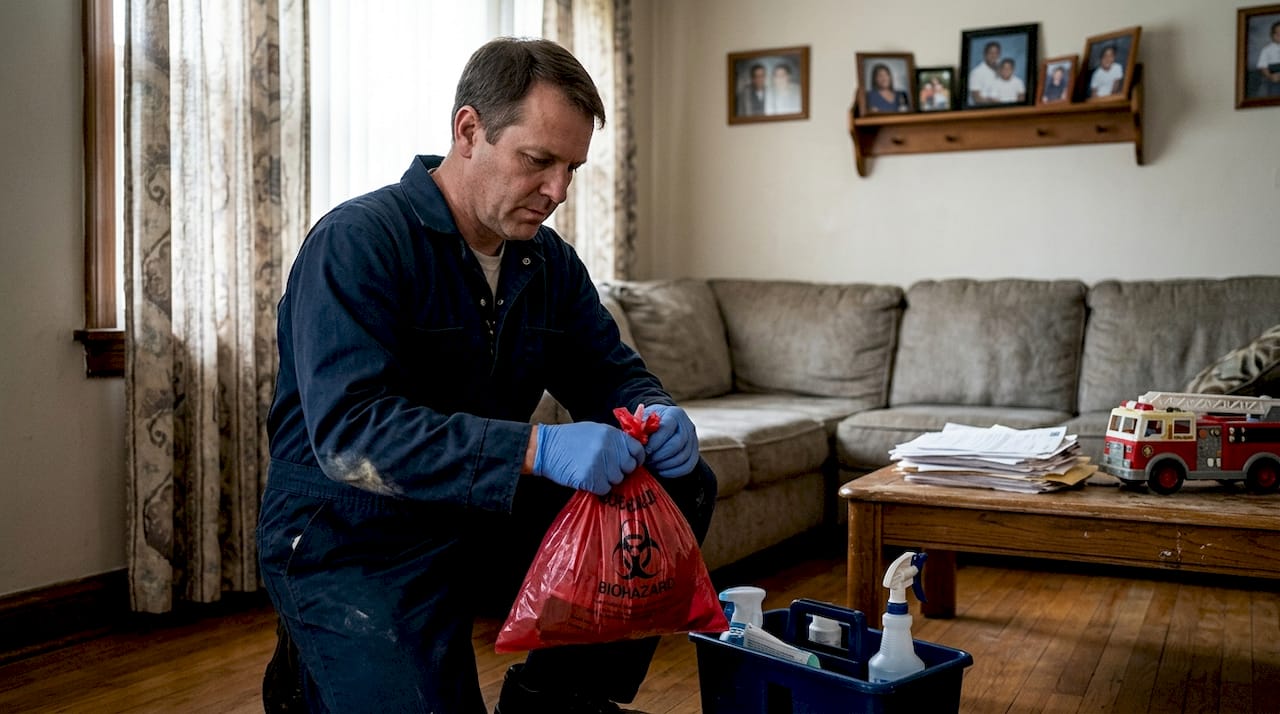
Hazardous incident types and safe biohazard response
Hazardous incident types and safe biohazard response
Hazardous incidents in Detroit homes and apartment buildings happen far more often than most families and property managers realize. A sewage backup, an unattended death, or discarded needles found in a vacant unit can all create serious biological hazards within hours. Common hazardous incidents range from trauma scenes and hoarding situations to sewage backups and drug paraphernalia, each carrying distinct health and legal risks. Knowing how to recognize these situations, and understanding why professional, compliant cleanup is required, can protect your family, your tenants, and your property from lasting harm.
Table of Contents
What makes these incidents dangerous? Biohazard categories explained
Legal requirements and expert standards for hazardous incident cleanup
Safe biohazard cleanup: What professionals do (and when you need them)
Hidden risks and real Detroit scenarios: Lessons from the field
A Detroit specialist’s perspective: Lessons most homeowners miss
Protect your property and peace of mind with Detroit’s trusted biohazard services
Key Takeaways
PointDetailsRecognize hazardous incidentsTrauma scenes, hoarding, sewage backups, and sharps are all risky situations needing fast, specialized action.Understand hidden dangersBiohazards like bloodborne pathogens can persist invisibly and require more than surface cleaning.Know when to call prosFor anything beyond minor, non-porous stains or where laws apply, certified experts are essential for health and compliance.Follow strict standardsIndustry guidelines and regulations ensure safe cleanup—cutting corners risks health, liability, and property damage.Detroit families and managersChoose certified local services prioritizing safety and peace of mind for any hazardous incident.
The main types of hazardous incidents in Detroit homes
With these incidents more common than expected, it is crucial to understand exactly what qualifies as a hazardous situation.
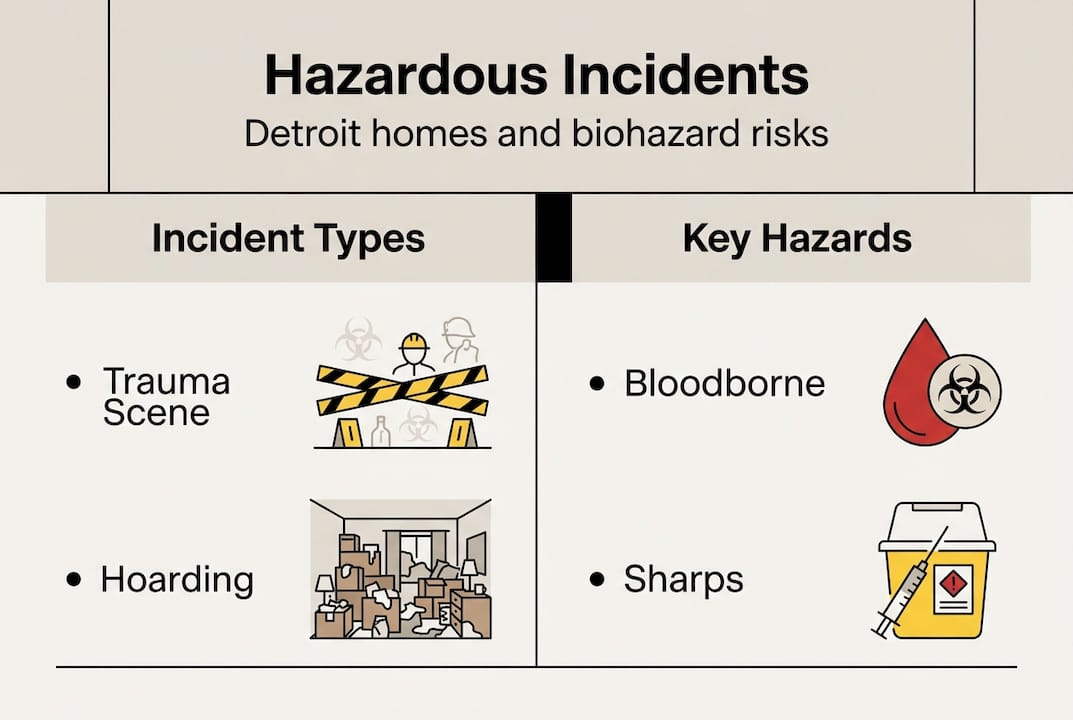
Detroit properties see a wide range of biohazard events. Common hazardous incidents include trauma scenes, hoarding with biological waste, sewage backups, and sharps or drug paraphernalia. Each type carries unique risks and requires a specific response.
Incident typeKey hazardProfessional required?Trauma sceneBlood, body fluids, pathogensAlwaysHoarding with wasteMold, rodents, biological wasteAlmost alwaysSewage backup (>10 sq ft)Category 3 water, bacteriaAlwaysSharps/drug paraphernaliaNeedlestick, bloodborne pathogensAlways
Trauma scenes include crime scenes, suicides, accidents, and unattended deaths. In Detroit, property managers sometimes discover a tenant has passed away days or even weeks before anyone notices. Decomposition fluids can soak through flooring and into subfloor materials quickly.
Hoarding situations are another frequent call. When a unit has been occupied by someone hoarding for years, the risks go beyond clutter. Understanding hoarding cleanup risks is essential because these scenes often involve rodent droppings, mold colonies, and biological waste that create multi-vector contamination.
Sewage backups are especially common in older Detroit housing stock. When sewage enters a living space, it carries bacteria, viruses, and parasites. Any affected area larger than 10 square feet is classified as Category 3 water damage. Learn more about sewage backup hazards before attempting any cleanup.
Sharps and drug paraphernalia are found in vacant properties, rental units, and even family homes. The risks are immediate and serious. Reviewing medical waste dangers shows why even a single uncapped needle is a reportable hazard.
Trauma scenes: blood, tissue, and body fluids present
Hoarding: waste, mold, vermin, and biological material
Sewage: Category 3 water with microbial contamination
Sharps: needlestick injury and pathogen transmission risk
What makes these incidents dangerous? Biohazard categories explained
Knowing what incidents to look for, let’s explore why these situations are high risk, beyond what can be seen.

Types of biohazard waste include blood and blood products, pathological waste, sharps, microbiological waste, contaminated materials, animal waste, and human body fluids. Each category carries specific infection and contamination risks.
Biohazard categoryExamplesPrimary riskBlood and blood productsPooled blood, dried bloodHBV, HCV, HIV transmissionPathological wasteTissue, organsInfection, decomposition toxinsSharpsNeedles, scalpelsNeedlestick injury, pathogen entryMicrobiological wasteCultures, specimensAirborne or contact infectionContaminated materialsSoiled PPE, bandagesSecondary contamination
One of the most dangerous misconceptions is that cleaning up a visible stain removes the hazard. It does not. Viruses and bacteria survive on surfaces long after the visible contamination is gone. Decomposing tissue releases gases and fluids that penetrate porous materials, making the hazard invisible but still active.
Here are the key health risks by category:
Bloodborne pathogens: HBV, HCV, and HIV can survive on surfaces and enter the body through cuts or mucous membranes.
Decomposition toxins: Gases from decomposing tissue are toxic and can cause respiratory harm.
Mold and bacteria from sewage: These spread rapidly in humid Detroit basements and can cause respiratory illness.
Sharps injuries: A single needlestick can expose you to multiple pathogens simultaneously.
“The risk does not end when the visible mess is cleaned. Pathogens persist in porous materials, in air, and on surfaces that look clean to the naked eye.”
Understanding sickness from medical waste makes it clear that invisible contamination is often the greater threat. Professional testing and validation are the only reliable ways to confirm a space is safe.
Legal requirements and expert standards for hazardous incident cleanup
Now that the dangers are clear, it is crucial to know what is required by law and by experts when hazardous incidents strike.
The OSHA Bloodborne Pathogens Standard (29 CFR 1910.1030) defines bloodborne pathogens including HBV, HCV, and HIV, and requires professional handling for any situation involving occupational exposure to these materials. This applies to property managers and maintenance workers, not just healthcare staff.
For Detroit property owners, the key legal and professional requirements are:
OSHA 1910.1030 compliance: Mandatory for any worker exposed to blood or body fluids during cleanup.
Michigan EGLE oversight: The Michigan Department of Environment, Great Lakes, and Energy regulates hazardous waste facilities and disposal.
IICRC S540 standard: The industry benchmark for trauma and crime scene cleanup, covering containment, removal, and verification.
HAZWOPER 40 Certification: OSHA-standard training that ensures technicians are qualified to safely handle hazardous materials, including biohazard cleanup and remediation.
For Detroit families and property managers, biohazard cleanup standards recommend prioritizing IICRC and ABRA certified services that comply with OSHA 1910.1030, with Michigan EGLE overseeing hazardous waste management in the region.
Non-compliance carries real consequences:
Fines from OSHA or Michigan EGLE for improper waste handling
Civil liability if a tenant or worker is harmed by inadequate cleanup
Persistent health hazards that reduce property value
Insurance claim denials if cleanup was not performed by certified professionals
Pro Tip: Review the trauma cleanup legalities before attempting any cleanup on a rental property. Property managers who skip certified services often face far greater costs in liability and remediation later.
Property managers also carry ethical responsibilities to tenants. Reviewing Detroit hoarding cleanup standards shows what compliant, certified cleanup looks like in practice.
Safe biohazard cleanup: What professionals do (and when you need them)
With laws and standards in mind, let’s walk through what real professional biohazard cleanup looks like, and when you must call experts.
The biohazard cleanup process follows a structured methodology aligned with the IICRC S540 standard:
Assessment: Technicians evaluate the scope, identify hazard categories, and document findings.
Containment and PPE: The area is sealed to prevent cross-contamination. All technicians wear full personal protective equipment.
Removal: Contaminated materials are physically removed. This includes carpet, drywall, and insulation when porous materials are involved.
Cleaning and disinfection: Hospital-grade disinfectants are applied to all affected surfaces.
Waste disposal: All biohazardous materials are packaged and disposed of per federal and Michigan state regulations.
Verification: Air and surface testing confirms the space meets safety standards before it is cleared for reoccupancy.
A critical point: porous material contamination requires removal, not just disinfection. Carpet, drywall, and wood flooring absorb fluids and cannot be made safe by surface cleaning alone.
Pro Tip: If your situation involves blood, sewage over 10 square feet, signs of decomposition, hoarding waste, or drug residue, do not attempt DIY cleanup. The Detroit trauma cleanup process used by certified professionals is the only reliable path to a safe, compliant result.
For feces, urine, or sewage incidents, certified cleanup expertise ensures proper Category 3 water handling. For drug-related scenes, review drug lab cleanup steps to understand what remediation actually involves.
Hidden risks and real Detroit scenarios: Lessons from the field
Finally, let’s pull these concepts together with real-world Detroit examples that show the consequences of both action and inaction.
These scenarios reflect what biohazard professionals encounter regularly across Detroit properties:
Unattended death in a second-floor unit: Decomposition fluids penetrated the subfloor and ceiling of the unit below. By the time the property manager called for help, two floors required remediation instead of one.
Needles found in a vacant property: A maintenance worker was stuck while clearing debris. Real incident examples confirm that porous surfaces near sharps can harbor contamination long after the needles are removed.
Sewage backup in a basement apartment: The affected area exceeded 10 square feet within two hours. Delaying professional response allowed bacteria to spread to adjacent walls and HVAC components.
Hoarding scene in a long-term rental: Rodent droppings, mold, and human waste created a multi-vector hazard. Reviewing risks of delayed cleanup and Detroit biohazard cleaning stories shows how quickly these situations escalate.
“HBV survives on dry surfaces for up to 7 days. Needlestick infection rates are 6 to 30 percent for HBV, 1.8 percent for HCV, and 0.3 percent for HIV. Porous surface penetration means contamination hides where you cannot see it.” Bloodborne Pathogens and Biohazard
For families dealing with a Detroit suicide cleanup or similar trauma scene, these statistics are a reminder that the emotional weight of the situation should never push you toward shortcuts. The health risks are real, measurable, and preventable with the right professional response.
A Detroit specialist’s perspective: Lessons most homeowners miss
Here is what Detroit biohazard experts wish more people knew before, during, and after a hazardous incident.
Most families focus on what they can see. That is understandable. But in our experience working Detroit cleanup insights, the visible mess is rarely the biggest problem. Contamination beneath flooring, inside wall cavities, and in HVAC systems is what causes ongoing illness and failed inspections months later.
DIY cleanup carries risks that go beyond health. Insurance companies often deny claims when cleanup was not performed by certified professionals. Property managers who handle incidents without documentation expose themselves to tenant lawsuits. The cost of doing it right the first time is almost always lower than the cost of fixing a botched attempt.
What most property managers tell us they regret is waiting. Every hour of delay allows pathogens to spread, materials to absorb more contamination, and costs to rise. The emotional difficulty of facing a traumatic scene is real, but delay makes everything worse, not better.
The contrarian truth: sometimes the scene that looks worst is actually the easiest to remediate. The dangerous scenes are the ones with no visible contamination but significant biological hazard beneath the surface.
Protect your property and peace of mind with Detroit’s trusted biohazard services
Armed with this understanding, here is how you can take safe action today if your property faces a hazardous incident.
When a hazardous incident strikes your Detroit property, you need certified professionals who know the regulations, carry the right equipment, and respond with discretion. HazWash biohazard cleanup provides 24/7 emergency response for trauma scenes, unattended deaths, hoarding situations, and sewage incidents across Detroit and surrounding areas.
Our team holds OSHA HAZWOPER, IICRC, and DOT certifications, ensuring every job meets federal and Michigan state compliance standards. Whether you need feces and urine cleanup after a sewage event or full hoarding cleanup services for a long-term rental, we handle every situation with care, documentation, and verified results. Contact HazWash today to protect your property and the people in it.
Frequently asked questions
What are the most common hazardous incidents requiring biohazard cleanup in Detroit homes?
Trauma scenes, hoarding, sewage backups, unattended deaths, and drug paraphernalia are the most common incidents requiring professional biohazard cleanup in Detroit properties.
When should I call a professional for hazardous incident cleanup?
Call a professional whenever blood, body fluids, needles, significant sewage, or decomposition are present. Any sewage area over 10 sq ft or porous material contamination requires certified remediation for safety and compliance.
What risks do sharps or drug paraphernalia pose in a residence?
Sharps can transmit HBV, HCV, and HIV, with HBV surviving dry surfaces up to 7 days, making even old needles a serious infection risk.
What is the standard process for professional biohazard cleanup?
Professionals follow a structured cleanup methodology that includes assessment, containment, removal, disinfection, regulated waste disposal, and verified safety testing per the IICRC S540 standard.
Are there legal consequences if I try to clean a hazardous scene myself?
Yes. Improper cleanup can violate OSHA Bloodborne Pathogens standards, result in fines, and leave residents or workers exposed to serious, ongoing health hazards.