
Hazardous Incident Liability Risk: What You Must Know
Hazardous Incident Liability Risk: What You Must Know
TL;DR:
Liability under environmental law can attach regardless of fault, exposing property owners and contractors to costly cleanup costs.
Effective risk management involves proactive compliance, thorough documentation, and engaging certified professionals for biohazard cleanup.
Most people assume liability only follows negligence. That assumption is wrong, and it can be costly. Hazardous incident liability risk, formally known in environmental law as strict, joint-and-several liability, can attach to property owners, contractors, and businesses regardless of fault or intent. Federal laws like CERCLA reach back in time, and OSHA’s biohazard standards impose ongoing obligations that many employers have never fully read. This article breaks down the legal framework, the real-world consequences, and the risk management strategies that actually protect you.
Table of Contents
Understanding hazardous incident liability risk under federal law
Risk management strategies to reduce your liability exposure
Key Takeaways
Understanding hazardous incident liability risk under federal law
The legal concept behind hazardous incident liability is not intuitive. You don’t have to spill a chemical yourself to be financially responsible for cleaning it up. Under the Comprehensive Environmental Response, Compensation, and Liability Act, better known as CERCLA, the government can hold multiple parties jointly and severally liable for hazardous substance cleanup costs. That means one party can be held responsible for the entire bill, even if others contributed.
CERCLA’s liability triggers are specific. Liability attaches when a hazardous substance is present at a facility, a release has occurred or is threatened, response costs have been incurred, and the defendant qualifies as a potentially responsible party (PRP). PRPs fall into four categories:
Current owners and operators of the facility where hazardous substances were released
Past owners or operators who controlled the site at the time of disposal
Generators and arrangers who arranged for hazardous waste disposal or treatment
Transporters who selected the disposal site and moved the hazardous substances there
The breadth of that PRP definition is what makes CERCLA liability so far-reaching. A landlord who purchased contaminated property years after the original polluter left can still face cleanup costs. This is intentional design. The law prioritizes getting sites cleaned up over resolving causation disputes, so defenses are narrow.
OSHA adds a parallel layer of liability for hazardous materials liability in workplace settings. The Bloodborne Pathogens Standard requires employers whose workers may contact blood or other infectious materials to maintain a written Exposure Control Plan, reviewed annually. The plan must address engineering controls, personal protective equipment (PPE), worker training, and medical evaluations. Failure to comply is not a paperwork issue. It’s a citation, a fine, and a lawsuit waiting to happen.
Pro Tip: If your business involves any property with prior industrial use, commission an environmental site assessment before purchase. Discovering contamination after closing transfers CERCLA exposure directly to you.
Types of hazardous incidents and their liability profiles
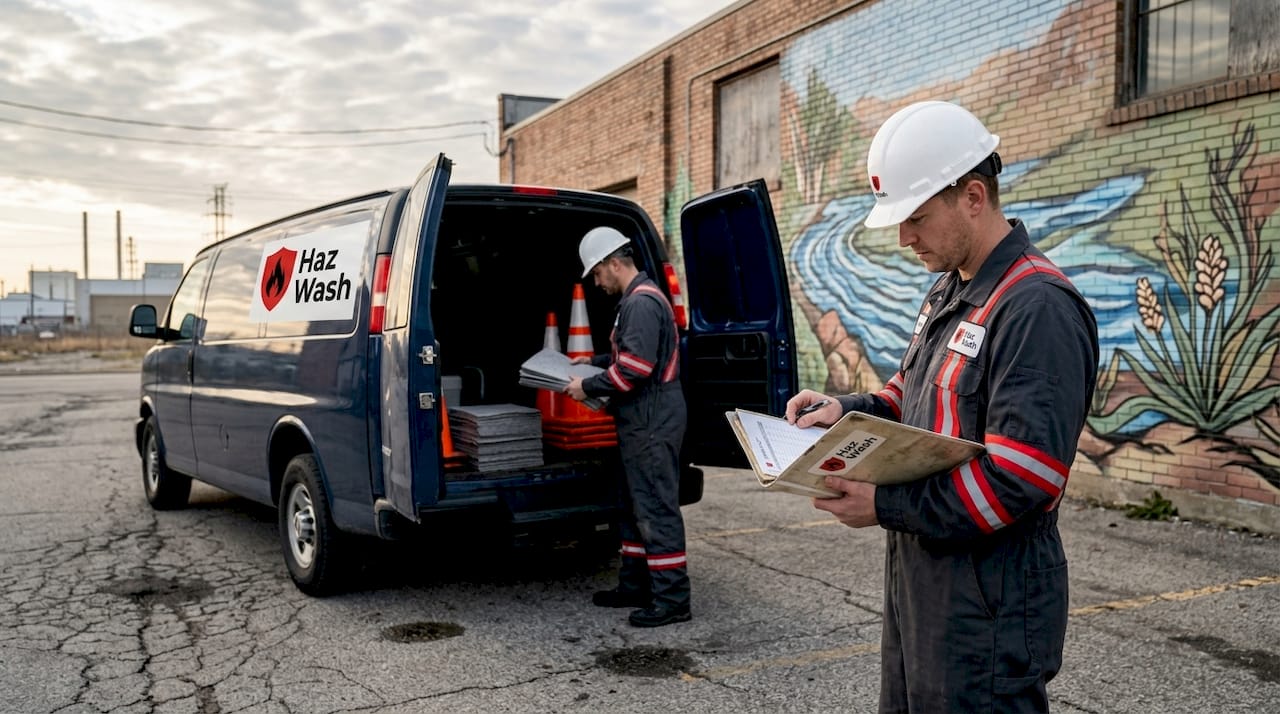
Not every hazardous incident carries the same liability profile. The type of incident determines who is exposed, what laws apply, and how significant the financial consequences can be. Understanding the categories helps you assess where your specific risk sits. Learn more about incident types and response before an emergency forces the decision.
The most common categories and their liability implications:
Toxic chemical releases. Industrial spills, vapor releases, and leaks from storage tanks trigger CERCLA and state environmental laws. A 2026 lawsuit filed against GKN Aerospace illustrates the scale: over 50,000 residents were evacuated, and damages sought include property damage, evacuation costs, and emotional distress. Both negligence and strict liability claims were filed simultaneously.
Biohazardous waste incidents. Blood spills, infectious material exposure at crime or trauma scenes, and improper medical waste disposal create both OSHA and civil liability. Workers, property owners, and landlords can all face claims depending on who controlled the site.
Environmental contamination during construction. Construction sites are a particularly active source of pollution liability. Bodily injury, property damage, and cleanup costs can all result from a single construction-related pollution event, and liability grows in proportion to the event’s scale and spread.
Transport and disposal failures. Moving hazardous materials without proper DOT documentation or depositing waste at an unauthorized facility creates transporter liability under CERCLA even when the generator believed disposal was legal.
Hoarding and abandoned property situations. Properties containing biohazardous accumulations can expose landlords and property managers to both state health code violations and civil claims from tenants or subsequent occupants.
The severity and geographic spread of an incident determine whether you face a single insurance claim or multi-party litigation. Incidents that cross property lines or affect municipal water supplies move quickly into the CERCLA and state Superfund territory.
Risk management strategies to reduce your liability exposure
Reactive responses to hazardous incidents are almost always more expensive than proactive compliance. The most effective risk management strategies are built before an incident occurs, not after one is reported.
Implement a written Exposure Control Plan. OSHA requires this for any business with potential bloodborne pathogen exposure. The plan must be reviewed annually and must document your specific workplace controls. A generic template is not compliant.
Provide documented training and PPE. Training records and signed acknowledgments from workers serve as defense evidence. Verbal training alone proves nothing in court.
Conduct incident risk assessment before starting cleanup work. Identify all potential contaminants, exposure pathways, and regulatory thresholds before any remediation begins. This step shapes your legal and insurance posture.
Maintain structured incident documentation. Centralized reporting channels and first incident report forms establish the known facts and response steps taken. That record becomes your primary defense in liability and insurance proceedings.
Require contractor insurance certificates. Contractors’ pollution liability insurance transfers risk away from the property owner for incidents caused by subcontractors. Always verify coverage before work begins.
Hire certified biohazard remediation professionals. Attempting to handle trauma scenes, blood spills, or infectious material without OSHA HAZWOPER certification exposes you to both direct OSHA citations and third-party claims. Professionals provide documentation of compliant disposal, which directly supports your liability defense. Understanding what biohazard cleanup professionals do clarifies why their role is protective, not just operational.
Pro Tip: For landlords and property managers, maintain a digital incident log with timestamped entries for every reported hazardous condition, even minor ones. That log demonstrates diligence and can prevent a small claim from becoming a major lawsuit.
Cleanup timing and cost recovery windows under CERCLA
When cleanup is required, the type of action taken determines your legal rights and exposure timeline. CERCLA distinguishes two cleanup categories with distinct cost recovery rules.
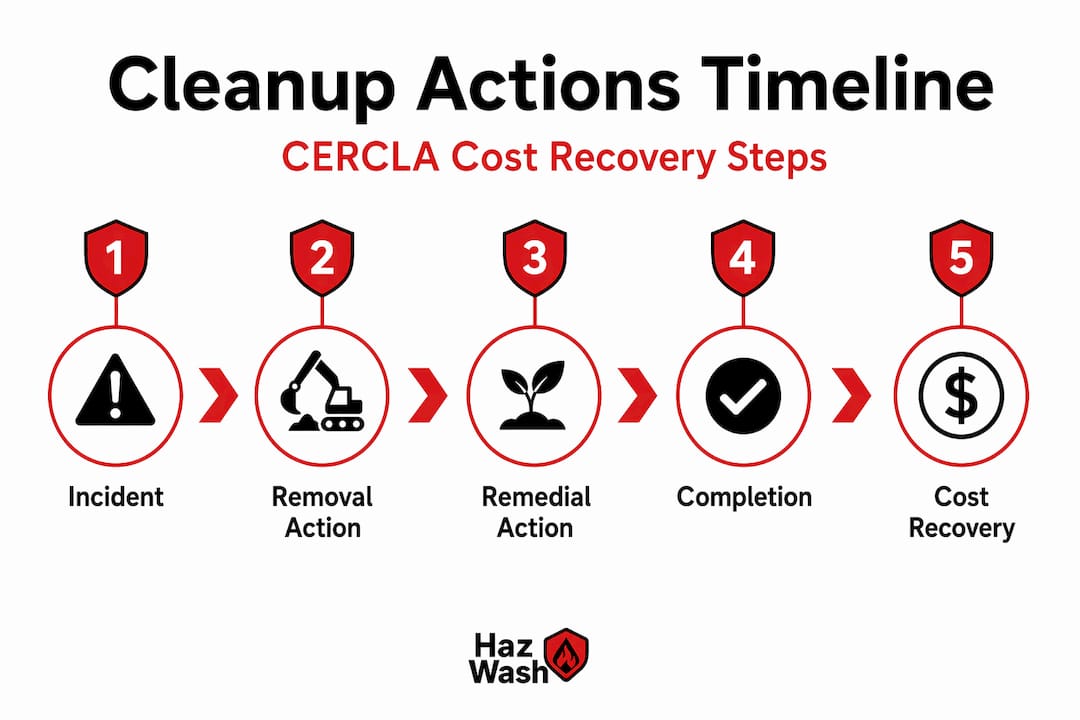
Cleanup typePurposeCost recovery windowRemoval actionAddresses immediate threats; short-term stabilization3 years from completion of the removalRemedial actionLong-term, permanent site cleanup6 years after physical on-site construction begins
The distinction matters more than most people realize. A party that conducts what it believes is a complete removal action may later discover the EPA classifies it as a remedial action, triggering a longer limitation period and expanding potential cost contribution from other PRPs. Meticulous records of what was done, when, and how it was classified can protect or undermine your cost recovery position years after the work ends.
Overlapping actions complicate this further. If a removal action transitions into remedial work without a clear documented boundary, both limitation periods may apply, creating uncertainty about when your recovery rights expire. The legal and financial planning implication is clear: classify cleanup actions precisely, document every phase in writing, and consult environmental counsel before closing out a remediation project.
Consequences of improper biohazard cleanup
Cutting corners on hazardous cleanup generates consequences that extend well beyond the immediate scene. The financial and reputational damage from non-compliant cleanup can outlast the incident itself.
OSHA citations and fines. Willful violations carry penalties up to $161,323 per violation. A single improperly handled biohazard scene with multiple citation categories can produce six-figure exposure before any civil lawsuit is filed.
Civil lawsuits from affected parties. Workers, tenants, and occupants who suffer illness or injury from incomplete decontamination can pursue claims for medical costs, lost wages, and emotional distress.
Insurance exclusions for negligence. Many general liability policies exclude negligent biohazard handling. Insurers treat liability events from improper containment and disposal as distinct exposures, meaning incomplete cleanup after a visibly clean scene can still produce uncovered claims.
Reputational damage. For businesses, a publicized biohazard incident handled poorly affects client relationships, lease renewals, and vendor contracts. The operational impact often exceeds the direct legal costs.
Regulatory agency involvement. Improper hazardous waste disposal can trigger state environmental agency investigations independent of any OSHA proceedings, multiplying your exposure across agencies simultaneously.
The pattern is consistent: parties who handle biohazardous and contamination incidents without documentation, certification, and proper disposal protocols face compounded liability across multiple legal tracks at once.
My perspective on navigating liability risk effectively
I’ve worked in and around hazardous cleanup situations long enough to notice one consistent pattern: the parties who get hurt financially are rarely those who were malicious. They’re the ones who assumed that because they did their best, they were protected. That assumption does not hold in strict liability law.
What I’ve found actually works is treating compliance as a permanent operating condition, not a one-time setup. Businesses write their Exposure Control Plan once, file it, and forget it. Then an incident happens and the plan is three years out of date with no training records to support it. That document that should have been a shield becomes evidence of neglect.
The other thing most people miss is the power of early documentation. I’ve seen liability claims fail entirely because the property owner had a timestamped incident report and a certified cleanup receipt. The documentation didn’t just defend them. It ended the dispute quickly. Investing in thorough incident documentation before you need it is genuinely the cheapest risk management available.
Doing the right thing matters. But doing the right thing and being able to prove you did it is the standard the law actually requires.
— David
How Hazwash helps you manage cleanup liability
When a hazardous incident happens at your property, every hour without compliant response increases your legal exposure.
Hazwash provides certified biohazard cleanup services in Detroit and the surrounding region, with OSHA HAZWOPER, IICRC, and DOT credentials backing every job. Their team handles trauma scenes, blood spills, infectious waste removal, and decontamination with full regulatory compliance and detailed disposal documentation, the exact paper trail that protects you in liability and insurance proceedings. With 24/7 emergency response available, you don’t have to decide between acting fast and acting correctly. Contact Hazwash’s cleanup team today to protect your property and your legal standing.
FAQ
What is strict liability in a hazardous incident?
Strict liability means a party can be held financially responsible for cleanup costs without proof of negligence or fault. Under CERCLA, liability attaches based on your role as a property owner, operator, transporter, or waste arranger.
Who qualifies as a potentially responsible party under CERCLA?
A PRP includes current and past property owners or operators, companies that generated or arranged hazardous waste disposal, and transporters who selected contaminated disposal sites, regardless of whether they caused the contamination.
What OSHA standard applies to biohazard cleanup workers?
OSHA’s Bloodborne Pathogens Standard (29 CFR 1910.1030) requires employers to maintain written Exposure Control Plans, provide PPE and training, and keep medical evaluation records for workers with potential infectious material exposure.
How long do you have to recover cleanup costs under CERCLA?
Cost recovery time limits differ by cleanup type: 3 years after completion of a removal action and 6 years after physical on-site construction begins for a remedial action.
Does general liability insurance cover biohazard cleanup negligence?
Not always. Many general liability policies exclude negligent biohazard handling, and insurers often treat improper containment and disposal as distinct liability events that may fall outside standard coverage terms.