What Is Infectious Disease Cleanup? A Family Guide
What Is Infectious Disease Cleanup? A Family Guide
TL;DR:
Infectious disease cleanup involves pathogen-specific disinfection, regulated waste disposal, and documented verification to ensure safety. It differs from routine cleaning by requiring proper products, contact times, and certified procedures for contamination involving bloodborne pathogens or resistant organisms. Professionals follow strict protocols and regulations, providing documented proof that areas are fully decontaminated and safe.
Infectious disease cleanup is the professional process of removing biological contaminants, disinfecting affected surfaces, and decontaminating spaces to eliminate the risk of disease transmission. This is not deep cleaning. It is a regulated, pathogen-specific remediation process governed by OSHA, the EPA, and state-level infectious waste management laws. Families and property owners who face a contamination event, whether from a norovirus outbreak, a bloodborne pathogen exposure, or a confirmed case of C. difficile, need to understand what this process involves, when professional help is required, and what safety standards apply. This guide covers all of it.
What is infectious disease cleanup and how does it differ from regular cleaning?
Infectious disease cleanup is defined as the professional cleaning, sanitizing, disinfection, and decontamination of areas exposed to biological hazards to reduce or eliminate transmission risk. That definition contains three distinct actions that most people treat as one.
Cleaning removes visible dirt and organic matter from surfaces. Disinfection kills pathogens using EPA-registered products applied at the correct concentration and left on the surface for a required contact time. Decontamination is the full process of rendering a space safe, combining both steps in the correct order with the right products for the specific pathogen present.
The order matters. Disinfectants cannot penetrate organic material like blood, mucus, or fecal matter. Cleaning must happen first. Skipping that step means the disinfectant never reaches the pathogen, and the surface looks clean while remaining biologically active.
Regular household products like bleach-based sprays or multi-surface cleaners are not substitutes. Most are not EPA-registered for use against specific pathogens like C. difficile spores or norovirus. Professional infectious disease decontamination uses products from the EPA’s List N (for SARS-CoV-2) or List K (for C. diff), selected specifically for the organism in question.
Cleaning removes visible contamination but does not kill pathogens
Disinfection requires EPA-registered products and correct contact times (commonly 3 to 10 minutes)
Decontamination combines both steps in sequence for full remediation
Pathogen-specific product selection is required. One disinfectant does not work for all organisms
Standard household cleaners lack the registration and efficacy data required for regulated cleanup
Pro Tip: Never assume a surface is safe because it looks clean. Pathogens like norovirus and C. difficile spores are invisible and can survive on hard surfaces for days or weeks without proper disinfection.
What are the key steps in a professional disease cleanup process?
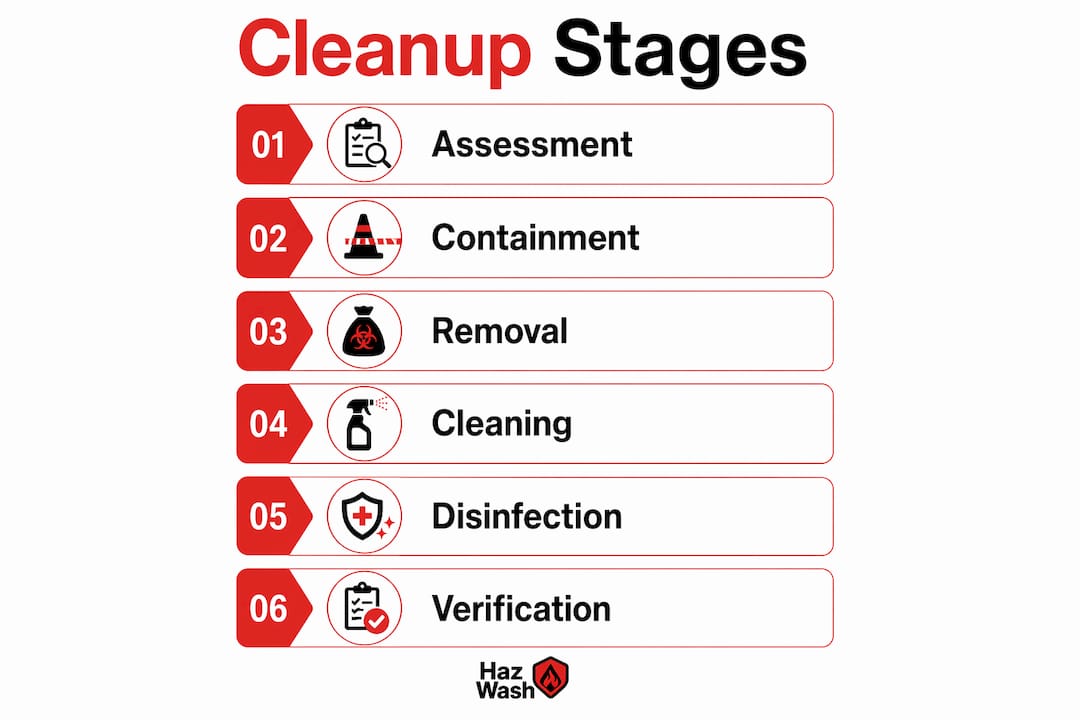
The biohazard cleanup process follows a structured workflow from initial assessment to final documentation. Each stage has a defined purpose, and skipping any step creates gaps in protection.
Assessment and containment. Technicians identify the scope of contamination, establish isolation zones, and set up engineering controls to prevent cross-contamination. This includes sealing off HVAC vents and using physical barriers.
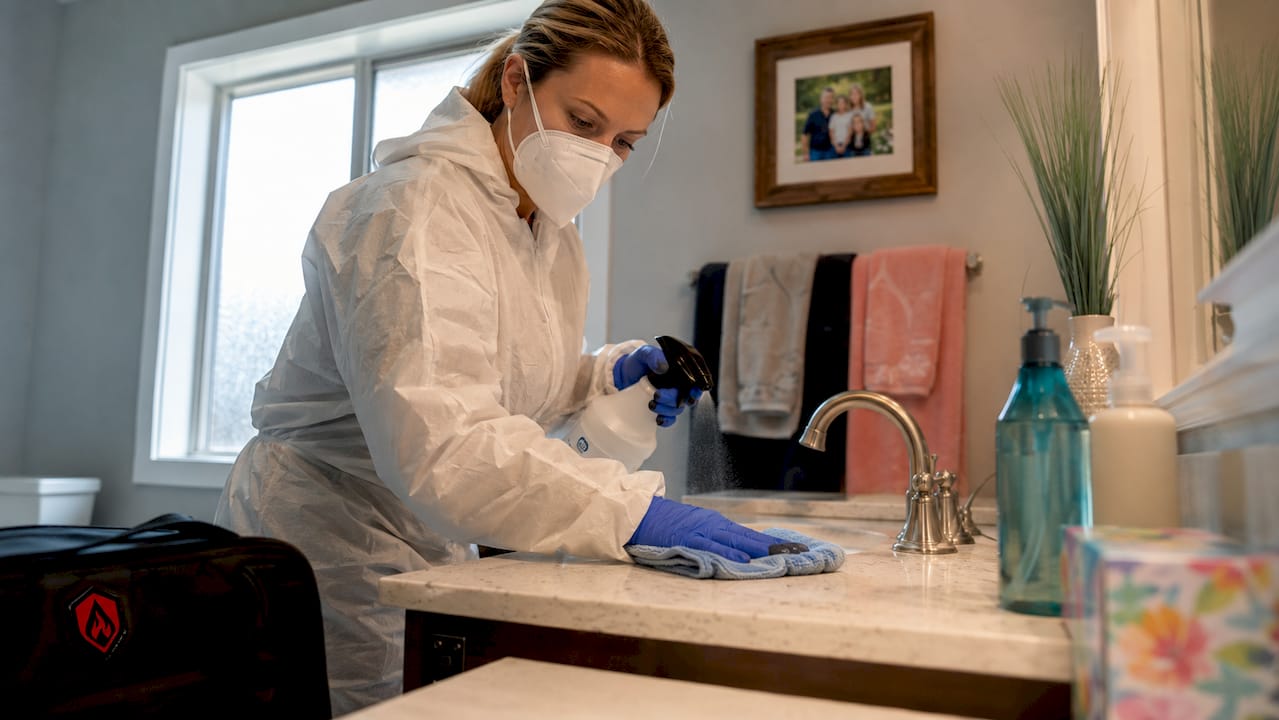
PPE setup. Before any materials are disturbed, technicians don appropriate personal protective equipment. This typically includes Tyvek suits, N95 or P100 respirators, nitrile gloves, and eye protection.
Removal of contaminated materials. Porous materials such as carpet, drywall, and upholstery that cannot be effectively disinfected are removed and packaged as regulated infectious waste.
Cleaning to remove organic matter. All surfaces are cleaned with appropriate agents to remove biological soil before disinfection begins.
Disinfection with pathogen-specific agents. EPA-registered disinfectants are applied at the correct dilution and left for the required wet contact time, commonly 3 to 10 minutes depending on the product and pathogen.
Advanced application methods. Electrostatic sprayers and UV-C light systems are used in larger or complex spaces to reach surfaces that manual application misses.
Regulated waste disposal. All contaminated materials are packaged, labeled, and transported according to EPA and state regulations with chain-of-custody documentation.
Final verification and documentation. The completed cleanup is documented with photos, disposal manifests, and compliance records for insurance and legal purposes.
StagePurposeAssessment and containmentDefine scope and prevent spread to unaffected areasOrganic matter removalAllow disinfectants to reach and kill pathogensEPA-registered disinfectionEliminate specific pathogens with verified productsRegulated waste removalComply with EPA and state infectious waste rulesDocumentation and verificationProtect clients legally and satisfy insurance requirements
Pro Tip: Ask any cleanup provider for their disposal manifest before they leave. This document proves contaminated materials were handled and disposed of legally. Without it, you have no protection if a liability question arises later.
What regulations govern infectious disease cleanup?
OSHA’s Bloodborne Pathogens Standard, codified at 29 CFR 1910.1030, is the primary federal regulation covering cleanup involving blood and other potentially infectious materials. It applies to any worker with occupational exposure and mandates PPE use, exposure controls, regulated waste handling, and sanitation protocols. Non-compliance carries significant financial penalties and personal liability.
Beyond the Bloodborne Pathogens Standard, OSHA’s General Duty Clause requires employers to protect workers from recognized hazards, which extends to infectious disease scenarios not explicitly covered by a specific standard. This means that even in a residential cleanup context where a contractor is hired, the contractor bears legal responsibility for worker safety.
The EPA governs medical and infectious waste at the federal level, defining it as healthcare waste contaminated by blood or other potentially infectious materials. State-level requirements vary significantly. Michigan, for example, has specific rules for packaging, labeling, transport, and disposal of infectious waste that go beyond federal minimums.
For families and property owners, these regulations have a direct implication. If you hire an uncertified cleaner who disposes of infectious materials in a standard trash bin, you may share liability for improper disposal. Certified providers carry DOT credentials for transport, maintain OSHA HAZWOPER training, and produce the documentation that protects you.
OSHA 29 CFR 1910.1030 governs all occupational exposure to bloodborne pathogens
EPA defines infectious waste and sets baseline disposal requirements
State regulations (including Michigan) add packaging, transport, and disposal rules
Uncertified cleanup creates liability risk for the property owner
Certified providers carry OSHA HAZWOPER, IICRC, and DOT credentials
When should you hire professional biohazard cleanup services?
Enhanced routine cleaning with EPA List N disinfectants is sufficient for a single confirmed COVID-19 case in a home. CDC guidance recommends waiting 24 hours, ventilating the space, and cleaning high-touch surfaces thoroughly. That is the threshold where routine cleaning ends and professional remediation begins.
Professional biohazard cleanup services are required when the contamination involves bloodborne pathogens, resistant organisms like C. difficile spores, or a confirmed multi-person outbreak. The scale of contamination, the pathogen type, and the vulnerability of occupants all factor into that decision.
Different pathogens require different disinfectants. Assuming one product handles all organisms is one of the most common and dangerous misconceptions families hold. A disinfectant effective against influenza may have zero efficacy against C. diff spores, which require a sporicidal agent with a specific EPA registration number.
The risks of inadequate cleanup are not abstract. Surfaces that appear clean but retain viable pathogens continue to transmit disease. For households with elderly members, immunocompromised individuals, or young children, that risk is compounded. Certified professionals eliminate the guesswork and provide documented proof that the space is safe.
Practical safety tips for families during infectious disease cleanup
If you are managing a minor contamination event before professional help arrives, or overseeing a cleanup in progress, these practices protect you and your household.
Wear disposable nitrile gloves, a face mask rated N95 or higher, and eye protection before handling any contaminated materials
Place all contaminated disposables, including gloves, wipes, and masks, into a sealed plastic bag before placing them in the trash
Follow product label instructions exactly. Contact time requirements mean the surface must stay visibly wet for the full duration, commonly 3 to 10 minutes
Never mix cleaning products. Bleach combined with ammonia-based cleaners produces toxic chloramine gas
Ventilate the space during and after cleanup by opening windows and running exhaust fans
Wash hands thoroughly with soap and water for at least 20 seconds after removing PPE, even if gloves were worn
For residential infectious disease cleanup, the most common mistake families make is underestimating the scope of contamination. Pathogens spread beyond the visible affected area through air movement, foot traffic, and surface contact. A professional assessment defines the true boundaries of contamination before any cleanup begins.
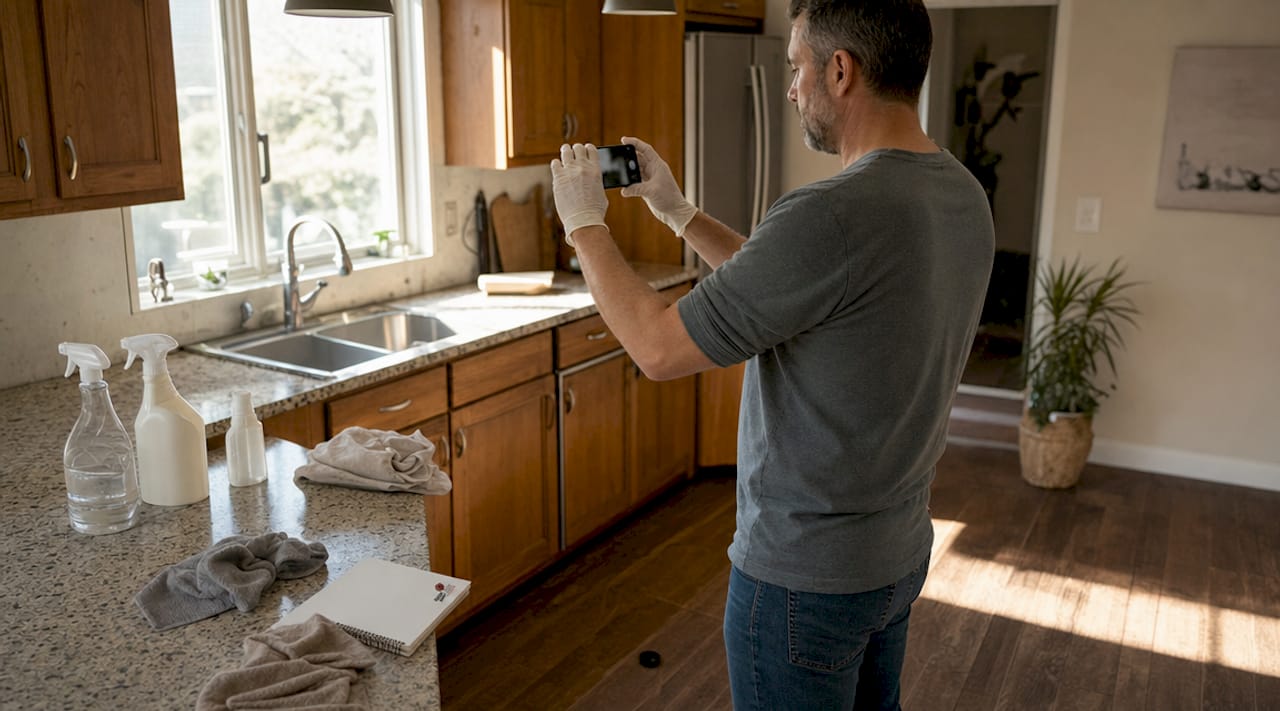
Pro Tip: Document the affected area with photos before cleanup starts. This protects you for insurance claims and gives a certified cleanup team a baseline to work from if you call for professional help.
Key takeaways
Infectious disease cleanup requires pathogen-specific disinfection, regulated waste handling, and documented verification. Routine cleaning cannot substitute for this process when bloodborne pathogens, resistant organisms, or multi-person outbreaks are involved.
What families often get wrong about this process
Working in this field, the misconception I encounter most often is that infectious disease cleanup is just thorough cleaning with stronger products. Families buy a bottle of hospital-grade disinfectant spray, wipe down surfaces, and believe the job is done. It is not.
The process is controlled and sequential. Biological soil must be removed before any disinfectant is applied. The disinfectant must be the right product for the specific pathogen. It must stay wet on the surface for the full contact time. And the contaminated materials removed during that process must be packaged, labeled, and transported as regulated waste, not placed in a household trash bag.
I have seen families face real liability exposure because a well-meaning cleaning service disposed of infectious materials improperly. The documentation piece is not bureaucratic overhead. It is your legal protection. A chain-of-custody manifest and a final verification report are what prove the space is safe and that the cleanup was done correctly.
The other thing families consistently underestimate is how far contamination spreads. A norovirus event in one bathroom does not stay in that bathroom. Pathogens travel on hands, shoes, and air currents. A professional assessment defines the true scope before any work begins, and that scope is almost always larger than the visible affected area.
If you are facing a situation that involves blood, a confirmed outbreak, or a resistant organism like C. diff, call a certified provider. The peace of mind that comes with documented, verified remediation is worth far more than the cost of getting it wrong.
— David
Protect your family with certified infectious disease cleanup from Hazwash
Hazwash provides 24/7 emergency infectious disease decontamination for Detroit and surrounding areas. Every technician holds OSHA HAZWOPER, IICRC, and DOT certifications. Hazwash uses EPA-registered disinfectants selected for the specific pathogen involved, applies them with electrostatic sprayers for complete surface coverage, and handles all regulated waste removal with full chain-of-custody documentation. Every job ends with a written verification report you can present to your insurer or property manager. If you need to understand why certified teams matter for your situation, Hazwash is ready to answer your questions and respond the same day. Call now or contact Hazwash online to schedule an assessment.
FAQ
What does infectious disease cleanup include?
Infectious disease cleanup includes assessment, containment, removal of contaminated materials, cleaning to remove organic matter, disinfection with EPA-registered products, regulated waste disposal, and final documentation. Each step must occur in sequence for the cleanup to be effective.
Can I clean up after a disease outbreak myself?
Enhanced routine cleaning is sufficient for a single low-risk case, such as one COVID-19 case with no vulnerable occupants. Outbreaks involving multiple people, bloodborne pathogens, or resistant organisms like C. difficile require professional biohazard remediation to meet OSHA and EPA standards.
How long does disinfectant need to stay on a surface?
EPA-registered disinfectants require a wet contact time of commonly 3 to 10 minutes depending on the product and pathogen. Wiping the surface before that time expires leaves viable pathogens behind even if the surface appears clean.
What regulations apply to infectious disease cleanup?
OSHA’s Bloodborne Pathogens Standard (29 CFR 1910.1030) governs cleanup involving blood and other potentially infectious materials. The EPA and individual states regulate the packaging, transport, and disposal of infectious medical waste, with Michigan maintaining specific requirements beyond federal minimums.
How do I know if a cleanup company is certified?
Ask for proof of OSHA HAZWOPER training, IICRC certification, and DOT credentials for hazardous waste transport. A legitimate provider will also supply a disposal manifest and a written verification report at the completion of every job.