What Is Bloodborne Pathogen Cleanup? A Family Guide
What Is Bloodborne Pathogen Cleanup? A Family Guide
TL;DR:
Bloodborne pathogen cleanup involves the controlled removal, disinfection, and regulated disposal of potentially infectious materials to prevent disease transmission. It follows a strict sequence of steps, including isolation, PPE use, thorough cleaning, and proper waste containment, often requiring professional services for large or complex incidents. Safety depends on correct disinfectant contact time, use of PPE, and adherence to OSHA regulations for waste disposal.
Bloodborne pathogen cleanup is the process of safely removing, disinfecting, and disposing of blood and other potentially infectious materials (OPIM) to prevent exposure to pathogens like HIV, hepatitis B (HBV), and hepatitis C (HCV). The industry term for this work is biohazard remediation, and it follows a strict contain, clean, disinfect, and dispose workflow governed by OSHA standards. If you are dealing with a blood spill or biohazard incident at home, understanding what this process requires, and what it demands in terms of equipment and training, is the first step toward protecting your family. This guide covers every stage of the process, from the first moment of containment to final regulated waste disposal.
What is bloodborne pathogen cleanup and why does it matter?
Bloodborne pathogen cleanup is defined as the controlled removal and decontamination of blood, bodily fluids, and related materials that may carry infectious agents. Universal precautions treat all blood and OPIM as potentially infectious regardless of the source. That means a small cut, a nosebleed, or a larger trauma scene all carry the same baseline risk and require the same disciplined response.
The pathogens of primary concern are HIV, HBV, and HCV. All three can survive outside the human body for varying periods. HBV, for example, can remain viable on surfaces for up to seven days under the right conditions. That fact alone explains why visual cleanliness is never enough. A surface that looks clean after wiping may still carry active viral particles.
Proper bloodborne pathogen safety requires personal protective equipment (PPE), EPA-registered disinfectants, and regulated waste containers. These are not optional upgrades. They are the minimum standard for any cleanup involving blood or OPIM.
What steps are involved in the bloodborne pathogen cleanup process?
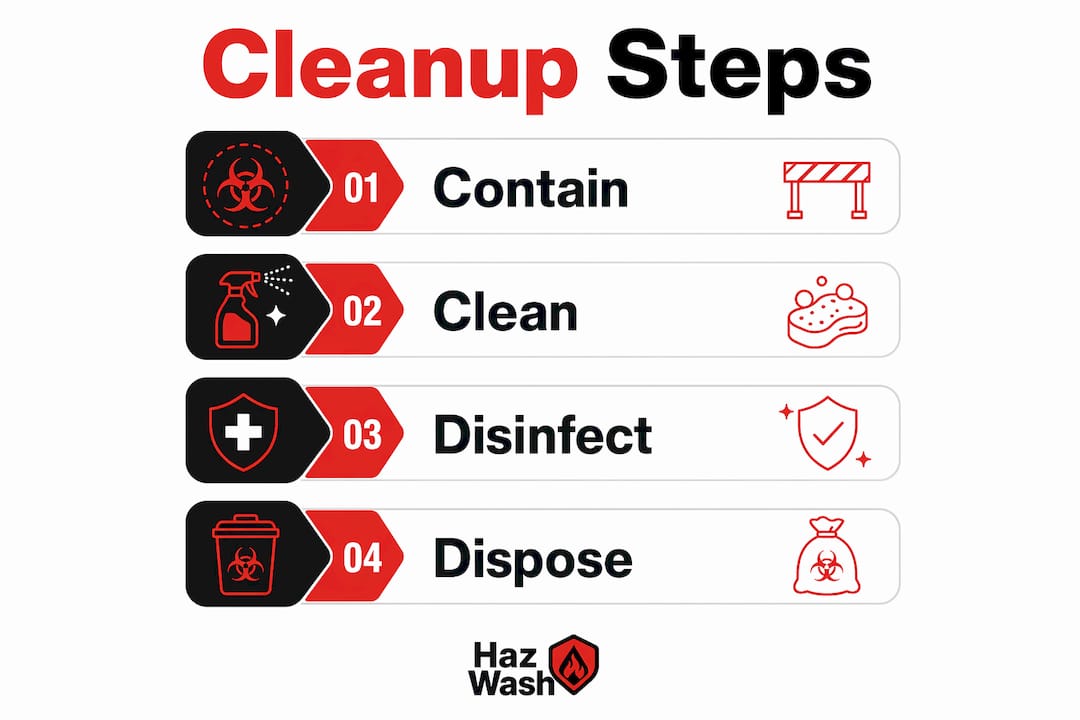
The cleanup process follows specific sequential steps that must be completed in order. Skipping or reversing steps creates new exposure risks and can spread contamination rather than contain it.
Isolate the area. Restrict access immediately. Keep children, pets, and anyone without PPE out of the space until cleanup is complete.
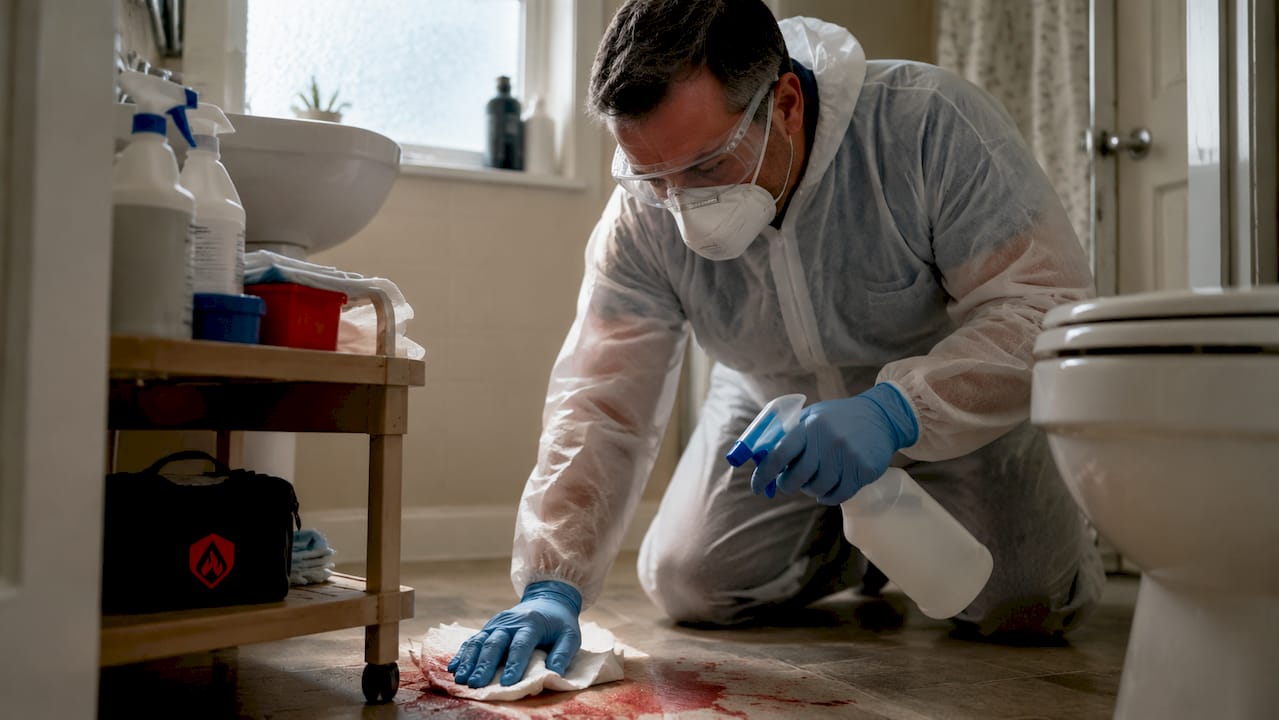
Put on full PPE. This includes nitrile or latex gloves, a fluid-resistant gown, a face mask or respirator, eye protection, and shoe covers. Every item must be in place before you touch anything contaminated.
Remove bulk material. Use absorbent materials such as paper towels or commercial absorbent powder to soak up pooled blood. Place used absorbents directly into a red biohazard bag.
Handle sharps with tools, never hands. Sharps require tongs or dustpans for safe collection. Place them immediately into a puncture-resistant sharps container.
Clean visible contamination. Wipe down surfaces with a clean cloth or disposable towel before applying disinfectant. Disinfectants work less effectively on surfaces with organic material still present.
Apply EPA-registered disinfectant. Saturate the area and allow the required contact time. For a 10% bleach solution, the recommended soak time is 20 minutes before wiping.
Dispose of all contaminated materials. Seal biohazard bags, double-bag if needed, and place in a labeled secondary container.
Remove PPE carefully. Peel gloves off inside-out, remove gown without touching the outer surface, and wash hands thoroughly with soap and water for at least 20 seconds.
Pro Tip: Set a timer when you apply disinfectant. Many DIY attempts fail because the solution dries before the required contact time is reached, leaving pathogens active on the surface.
Which disinfectants and safety equipment are recommended?
Not every cleaning product qualifies for biohazard remediation. EPA-registered disinfectants with a specified wet contact time are required to inactivate HIV, HBV, and HCV effectively. That contact time is typically 10 minutes for most commercial products, though some formulations differ. The disinfectant must remain visibly wet on the surface for the full duration.
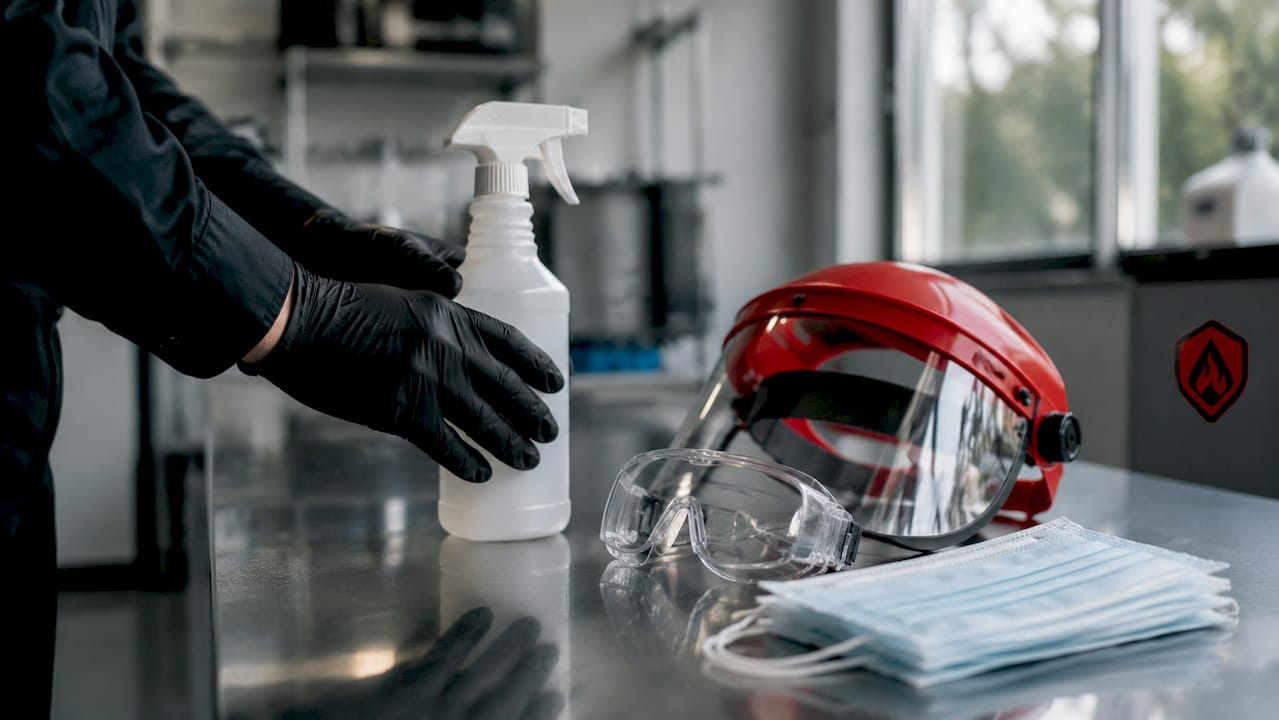
A 1:10 bleach-to-water solution is the most accessible option for home use. It is effective against all three primary bloodborne pathogens when applied correctly. Commercial products like Dispatch Hospital Cleaner Disinfectant and Virex II 256 are EPA-registered alternatives used by professional teams. Always check the product label for the specific contact time and surface compatibility before use.
The table below compares the key PPE items required for bloodborne pathogen safety and their specific function during cleanup.
After cleanup, all reusable tools like mops or buckets must be disinfected with the same EPA-registered solution. Failing to decontaminate cleaning equipment creates a cross-contamination risk for the next use.
Pro Tip: Never mix bleach with ammonia-based cleaners. The combination produces toxic chloramine gas, which is dangerous in enclosed spaces.
How should bloodborne pathogen waste be disposed of safely and legally?
Proper bloodborne pathogen disposal is governed by the OSHA Bloodborne Pathogens Standard, which defines regulated waste handling requirements for any material contaminated with blood or OPIM. Disposing of this waste in a standard trash can is both unsafe and illegal in most jurisdictions.
The correct approach to cleaning biohazard materials for disposal involves several specific requirements:
Red biohazard bags must be used for all soft contaminated materials. These bags must be labeled with the universal biohazard symbol and sealed before removal from the cleanup area.
Puncture-resistant sharps containers are required for needles, broken glass, and any other sharp objects. Standard plastic bags are not an acceptable substitute.
Double-bagging is the practice of placing a sealed biohazard bag inside a second bag and sealing that as well. This secondary containment prevents leaks during transport and is standard practice for regulated waste handling.
Licensed disposal services are required for transport and final disposal of biohazard waste. Standard waste haulers are not permitted to handle regulated biological materials.
For more detail on how these regulations apply to different types of waste, the medical waste compliance guide from Hazwash covers the legal framework in plain language.
When is it necessary to hire professional bloodborne pathogen cleanup services?
Cleanup must only be performed by trained personnel in complex or high-volume incidents. For families, the line between a manageable situation and one requiring professional help is often unclear. These scenarios require professional biohazard remediation:
Large volume spills. Any incident involving significant blood pooling or splatter across multiple surfaces exceeds what standard household PPE and cleaning supplies can safely address.
Porous materials are affected. Carpet, upholstery, mattresses, and drywall absorb blood deeply. Porous materials often require removal and replacement rather than surface cleaning, since pathogens penetrate beyond what disinfectants can reach.
Trauma or unattended death scenes. These scenes involve decomposition byproducts in addition to blood, requiring specialized equipment and OSHA HAZWOPER-certified personnel.
Sharps are present throughout the area. Scattered needles or broken glass across a large space create compounding exposure risks that trained teams handle with mechanical tools and proper containment.
You lack proper PPE or disinfectants. Attempting cleanup without the correct equipment does not reduce risk. It transfers it.
Professional teams bring EPA-registered disinfectants in commercial concentrations, industrial-grade PPE, licensed waste disposal channels, and documentation of compliance. That documentation matters for landlords and property managers facing liability questions. You can learn more about what professional biohazard teams actually do on scene and why their process differs from DIY attempts.
What common mistakes should be avoided during bloodborne pathogen cleanup?
Errors in how to clean bloodborne pathogens are common, and most stem from underestimating the process. These are the mistakes that create the most serious health risks:
Skipping or improvising PPE. Household rubber gloves are not a substitute for nitrile examination gloves. A single glove tear during cleanup creates direct exposure.
Using the wrong disinfectant. Products like Lysol spray or Pine-Sol are not EPA-registered for bloodborne pathogen inactivation. Only products with specific label claims against HIV, HBV, or HCV qualify.
Not allowing full contact time. Disinfectants that dry before the required dwell time do not fully inactivate pathogens. Wiping too soon is one of the most common and least visible errors.
Picking up sharps by hand. This creates a new puncture wound risk and a direct exposure route. Always use tongs, a dustpan, or a mechanical sharps picker.
Disposing of contaminated materials in regular trash. This violates OSHA blood cleanup regulations and exposes waste handlers to uncontrolled biohazard material.
Treating porous surfaces the same as hard surfaces. Spraying disinfectant on carpet does not decontaminate it. Affected porous materials typically need to be removed entirely.
Key takeaways
Bloodborne pathogen cleanup requires a strict sequence of containment, cleaning, disinfection, and regulated disposal, and skipping any step leaves your family exposed to preventable infection risk.
Why families consistently underestimate this risk
I have seen the aftermath of well-intentioned DIY cleanup attempts more times than I can count. A family member grabs paper towels and a bottle of household cleaner, wipes the surface until it looks clean, and believes the job is done. The surface looks fine. The risk is not gone.
What most people do not realize is that the disinfection step is where the actual protection happens, and it is also the step most often done wrong. Contact time is not a technicality. It is the mechanism. A disinfectant that dries in two minutes on a warm surface never had a chance to work. I have watched families go through this process with genuine care and still leave a contaminated surface behind because no one told them to set a timer.
The other thing I want families to understand is that calling a professional is not an admission of failure. It is the right call for any incident involving significant blood volume, porous materials, or a trauma scene. The emergency cleanup guidance we put together for Detroit families covers exactly these situations. Preparation and honest assessment of your own capabilities are the two most protective things you can do.
— David
How Hazwash handles bloodborne pathogen cleanup for Detroit families
Hazwash provides certified biohazard remediation services across Metro Detroit, available 24 hours a day, seven days a week. Every technician is trained to OSHA HAZWOPER and IICRC standards, and every job is completed with EPA-registered disinfectants, proper PPE, and fully licensed biohazard waste disposal. Hazwash handles the documentation as well, giving families and property managers a clear compliance record after every job.
If you are facing a blood spill, trauma scene, or any biohazard incident and are unsure whether it requires professional attention, the answer is almost always yes. Contact Hazwash for immediate biohazard response in Detroit and surrounding areas. You do not have to manage this alone.
FAQ
What are bloodborne pathogens?
Bloodborne pathogens are microorganisms present in human blood and OPIM that can cause disease in humans. The three most significant are HIV, hepatitis B virus (HBV), and hepatitis C virus (HCV).
How long do bloodborne pathogens survive on surfaces?
HBV can survive on dry surfaces for up to seven days. HIV survives for a much shorter period outside the body, but universal precautions apply to all blood regardless of assumed pathogen status.
Can I clean up a blood spill myself?
Small, contained spills on non-porous surfaces can be managed with proper PPE and an EPA-registered disinfectant. Large spills, trauma scenes, or any incident involving porous materials require trained cleanup personnel for safe and compliant remediation.
What disinfectant should I use for bloodborne pathogen cleanup?
A 1:10 bleach-to-water solution is the most accessible option and is effective against HIV, HBV, and HCV when left on the surface for a full 20-minute contact time. EPA-registered commercial disinfectants with label claims against these pathogens are also acceptable.
How is bloodborne pathogen waste disposed of legally?
Contaminated materials must be placed in sealed, labeled red biohazard bags and sharps in puncture-resistant containers. Standard trash disposal is prohibited. A licensed biohazard waste disposal service is required for transport and final disposal under OSHA regulations.