Hazmat waste: What Detroit families need to know in 2026
Hazmat waste: What Detroit families need to know in 2026
Hazmat waste includes chemicals, batteries, and contaminated materials hazardous to health and environment. Biohazard waste involves infectious materials like blood and bodily fluids, often overlapping in trauma scenes. Professional cleanup is essential to ensure safety, legal compliance, and proper disposal, preventing fines and health risks.
Most Detroit families assume hazmat waste means chemical factory spills or industrial accidents. It doesn’t. A blood spill after a traumatic incident in your home, leftover paint thinner in your garage, or contaminated materials from an undiscovered death can all qualify as hazmat or biohazard waste under federal and state regulations. Getting that wrong isn’t just a safety risk. It can expose you to fines up to $25,000 and legal liability. This guide walks you through what hazmat waste actually means, how Michigan law applies to your home, and exactly when you need to call in certified professionals.
Table of Contents
Key Takeaways
Hazmat waste includes common household items and trauma scene residues that can harm health or the environment.
Biohazard vs. hazmat
Biohazard waste is infection risk, while hazmat is chemical danger—sometimes both apply in home incidents.
Legal and safety complianceDetroit families must follow Michigan rules, using certified disposal and pro cleanup to avoid heavy fines.
Professional cleanup benefitsCertified pros handle regulatory paperwork, keep families safe, and prevent costly mistakes.
Defining hazmat waste: Key concepts and distinctions
Hazmat waste, formally called hazardous waste, is any solid waste with properties that make it dangerous or capable of harming human health or the environment, regulated under the EPA’s Resource Conservation and Recovery Act (RCRA). “Solid waste” here is a legal term. It includes liquids, gases, and semi-solids, not just what you put in a trash can.
Under RCRA, hazardous wastes are classified into two main categories: listed wastes and characteristic wastes.
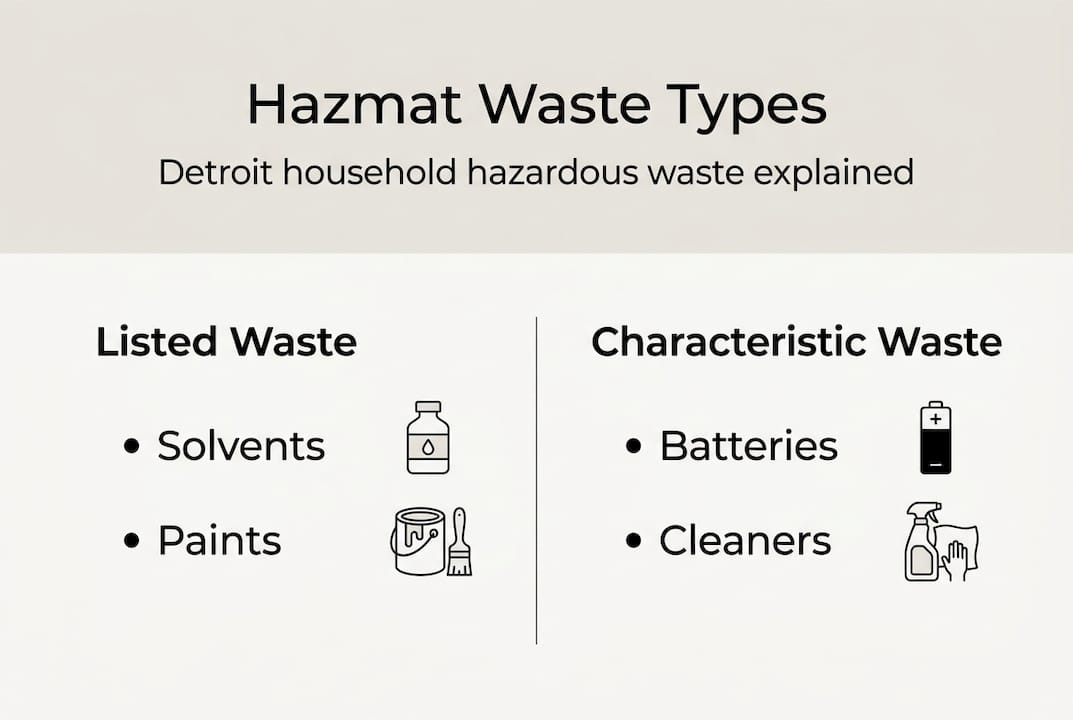
Detroit household examples spent chlorinated solvents, certain pesticides Characteristic waste that exhibits ignitability, corrosivity, reactivity, or toxicity, Paint, batteries, bleach, drain cleaners
Hazmat waste is defined by its chemical properties. Biohazard waste is different. It involves infectious biological materials, such as blood, bodily fluids, tissues, or sharps. Biohazard waste isn’t automatically classified as hazmat unless it also exhibits a chemical hazard. They are two separate regulatory categories, handled by different agencies and different rules.
Why does this matter for Detroit homes specifically? Because many common household items fall into these categories:
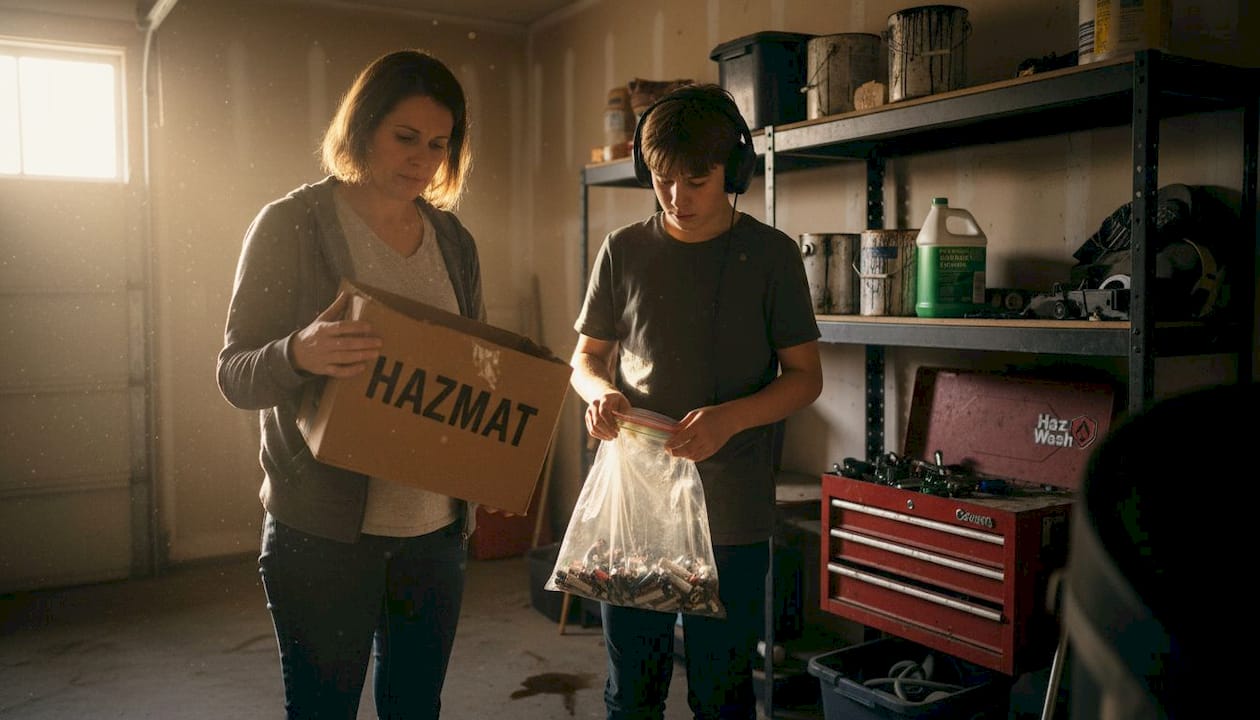
Old paint cans and solvents stored in basements
Batteries (especially lithium-ion and lead-acid)
Pesticides and fertilizers
Materials contaminated by blood or decomposition after a traumatic event
For hazardous waste examples found in Detroit homes, the list is longer than most families expect. Understanding the distinction upfront protects you legally and physically.
With the basic idea of hazmat waste in mind, let’s clarify how the rules apply in real Detroit household scenarios.
Where hazmat and biohazard waste overlap in Detroit homes
Biohazard waste, also called regulated medical waste, is a subset involving infectious materials. It is not inherently hazmat unless it also exhibits chemical hazard properties. But in practice, the two categories frequently overlap inside a Detroit home following a traumatic or hazardous event.
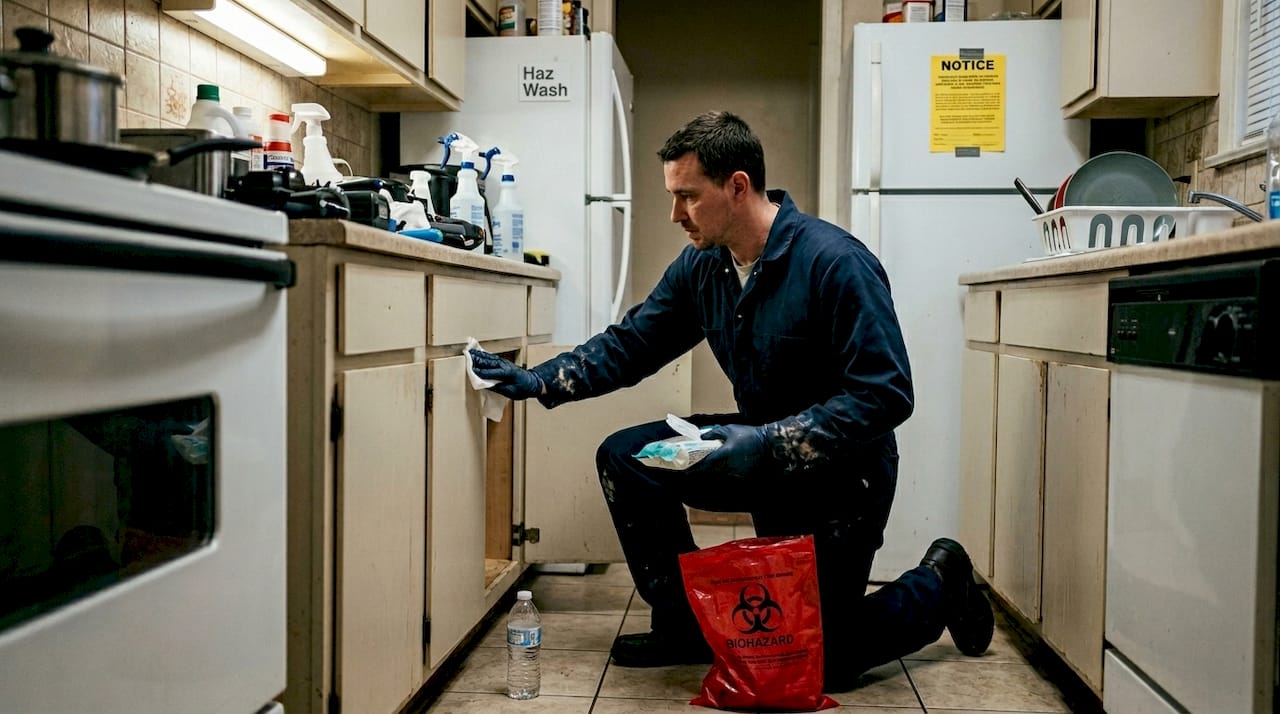
Here’s how they compare:
In Detroit homes, the overlap becomes very real in situations like:
Undiscovered deaths: Decomposition produces both biological contamination and potentially hazardous gases or fluids that may seep into building materials
Violence scenes: Blood contamination mixed with chemical residue from cleaning products creates a dual-category hazard
Hoarding situations: Animal waste, mold, and chemical stockpiles can combine biological and chemical threats in the same space
For biohazard cleanup examples common to Detroit properties, the overlap is especially relevant in multi-unit housing and older homes where hazardous materials may already be present before an incident occurs.
A critical legal distinction: after a trauma event, what Detroit families face is most often biohazard waste requiring professional cleanup, while a chemical spill may additionally require notification to Michigan’s Environment, Great Lakes, and Energy agency (EGLE). These are separate obligations. Mixing them up, or ignoring either, carries real consequences.
Pro Tip: When you’re unsure whether a situation involves hazmat, biohazard, or both, call an IICRC and OSHA-certified team before you touch anything. The wrong move in the first hour can escalate both health risks and legal exposure.
Now that you know what falls under hazmat and biohazard, it’s critical to know how Michigan and Detroit specifically regulate these situations.
Detroit and Michigan hazmat rules: What families must do
Michigan regulates hazardous waste under Part 111 of the Natural Resources and Environmental Protection Act (NREPA), administered by EGLE. For most households, there is a significant legal exemption: households are classified as Very Small Quantity Generators (VSQGs), meaning they generate less than 100 kilograms of hazardous waste per month. Under VSQG household rules, you can dispose of waste at licensed facilities, but biohazard waste still requires certified contractors for proper handling and compliance.
This exemption does not apply to infectious or biohazard materials. Those require certified cleanup regardless of quantity.
If a traumatic or hazardous incident occurs in your Detroit home, here’s what you need to do:
Do not attempt cleanup yourself. Disturbing blood, fluids, or unknown chemicals without proper PPE and training can spread contamination and void your insurance coverage.
Secure the area. Keep family members and pets away from the affected space.
Contact EGLE if a chemical spill is involved. Some chemical releases require immediate notification under Michigan law.
Call a certified biohazard or hazmat remediation company. They handle containment, cleanup, legal disposal, and documentation.
Notify your insurance company. Many policies require professional remediation for coverage to apply.
For property owners, knowing your biohazard risk indicators ahead of time helps you respond faster and more effectively.
Fines for improper biohazard disposal in Detroit can reach $25,000 per violation, enforced through EGLE’s oversight of licensed treatment, storage, and disposal facilities (TSDFs) like US Ecology Detroit. Compliance isn’t optional.
For a full breakdown of steps, the OSHA-compliant cleanup guide for Michigan homes walks through every legal requirement in detail.
Understanding the consequences and your responsibilities shows why professional help matters. Here’s how pros handle things safely and legally.
How professional hazmat and biohazard cleanup works
Certified remediation companies operating in Detroit hold specific credentials that matter legally and practically. Look for IICRC (Institute of Inspection, Cleaning and Restoration Certification), OSHA HAZWOPER (Hazardous Waste Operations and Emergency Response) certification, and state-level licensing. These aren’t just industry badges. They’re legal requirements for handling and disposing of biohazard and hazmat materials in Michigan.
Here’s what a professional cleanup team actually does when they arrive at your property:
Initial assessment: Identify the scope of contamination, classify materials as biohazard, hazmat, or both, and determine required PPE and containment levels.
Containment setup: Seal the affected area to prevent cross-contamination to other parts of the home or building.
Removal and cleaning: Remove all contaminated materials, treat surfaces with EPA-registered disinfectants, and document every step.
Proper disposal: All waste is transported and disposed of through licensed channels, with chain-of-custody documentation.
Post-cleanup verification: ATP testing or air quality sampling confirms the space is safe before clearance.
Pro Tip: Ask for written documentation at every stage. A certified company should provide disposal manifests, clearance reports, and compliance certificates. This paperwork is your legal protection if questions arise later with your insurer or local authorities.
DIY cleanup after a biohazard or hazmat event is not just risky; it’s often illegal and almost always more expensive in the long run. Missed contamination leads to mold, structural damage, and ongoing health risks. Professionals ensure OSHA/EPA/MI compliance and maintain the legal documentation Detroit families need to protect themselves.
Key benefits of hiring certified pros:
Prevents exposure to bloodborne pathogens and toxic chemicals
Avoids fines and legal liability through proper disposal documentation
Restores the property to a safe, habitable condition
Supports insurance claims with compliant paperwork
For specific guidance, the emergency cleanup best practices resource covers what Detroit families should do in the first 24 hours. For documentation specifics, see the cleanup documentation and compliance guide for Michigan properties.
That’s the full picture of the process. Now, here’s an expert’s perspective on what most guides miss.
An expert’s take: What most hazmat waste guides don’t tell Detroit families
Most families who call us think their situation is straightforward. A small blood spill. An animal that died in the wall. A little mold near a hoarded chemical stockpile. These don’t feel like regulatory emergencies. But in our experience, those “simple” situations become complicated fast.
Here’s what surprises most people: insurance companies often require professional biohazard remediation for a claim to be valid. Skip the pros, and you may not just face a cleanup problem. You may lose your coverage entirely.
There’s also the issue of hidden contamination signs that only trained technicians can detect. Blood seeps into subflooring. Decomposition fluids travel through wall cavities. Chemical vapors persist in HVAC systems. You can clean the visible surface and still have a health hazard that shows up months later.
The emotional weight of these situations is real, and it clouds judgment. Families try to handle it themselves to save money or to protect privacy. We understand that. But the regulatory and health stakes in Detroit are too high to risk it. Documentation, legal disposal, and certified clearance are what protect you long-term, not a bleach solution and a trash bag.
Get help with hazmat and biohazard cleanup in Detroit
When you’re facing a hazmat or biohazard situation, fast and certified action is what protects your family and your property.
HazWash LLC provides certified hazmat and biohazard cleanup across Detroit and surrounding areas, 24 hours a day, 7 days a week. Our team holds IICRC, OSHA HAZWOPER, and DOT certifications, covering trauma scenes, chemical contamination, decomposition, hoarding, and more. Every job includes full documentation for insurance, legal, and regulatory compliance. We handle the complexity so you don’t have to. If you’re uncertain about what you’re dealing with, start by reviewing common hazardous incident response types or check your property’s biohazard risk help. Then call us.
Frequently asked questions
What is considered hazmat waste in a typical Detroit home?
Hazmat waste includes any solid waste that is dangerous to human health or the environment, covering items like leftover paint, solvents, batteries, and materials contaminated by bodily fluids after a trauma event. If it’s ignitable, corrosive, reactive, or toxic, it likely qualifies.
How does hazmat waste differ from biohazard waste?
Hazmat waste is defined by chemical danger, while biohazard waste centers on infectious risk like blood or bodily fluids. Hazardous wastes are classified as listed or characteristic; biohazard waste involves infectious materials and is regulated separately under OSHA and state health codes.
Do I need a professional to clean up hazmat or biohazard waste after a traumatic incident?
Yes. Professionals are required by law for biohazard waste and ensure safety, documentation, and compliance. Biohazard waste needs certified handlers for compliance under Michigan law, and skipping pros can void insurance coverage and result in significant fines.
What are the penalties for improper hazmat or biohazard waste disposal in Detroit?
Detroit families face fines up to $25,000 for improper disposal of biohazard or hazardous waste, enforced by EGLE through oversight of licensed disposal facilities.
Are there any household exemptions for hazmat waste rules in Michigan?
Yes, but they are limited. Households as VSQGs can dispose of hazardous waste at licensed facilities, but they must still use certified handlers for any biohazard or infectious materials, regardless of quantity.