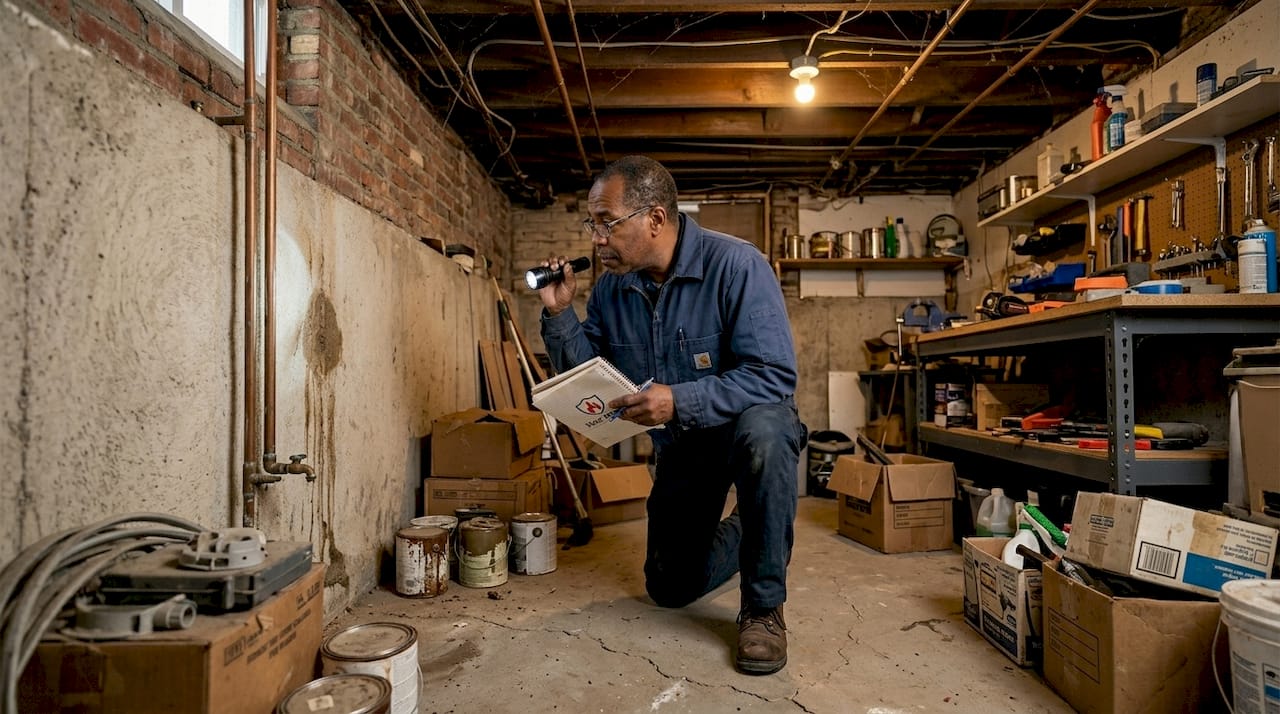
Identifying hazardous contamination: Signs Detroit landlords must know
Identifying hazardous contamination: Signs Detroit landlords must know
TL;DR:
- Detroit properties often have hidden contaminants like lead, asbestos, and VOCs due to industrial legacy.
- Visual signs and odors are indicators but cannot detect subsurface or airborne hazards.
- Professional testing and early detection are crucial to protect tenants and avoid regulatory penalties.
Detroit rental properties carry a burden that landlords in newer cities simply don’t face. Decades of industrial activity, aging housing stock, and legacy contamination mean that hazardous substances are often already present before a new tenant moves in. Lead, asbestos, VOCs, and mold are not rare exceptions here — they are routine risks. Recognizing the signs early protects your tenants, shields you from regulatory penalties, and keeps remediation costs manageable. This guide walks you through the most reliable visual and hidden indicators, compares your testing options, and tells you exactly what to do when something looks wrong.
Table of Contents
- Visual and sensory signs you can’t ignore
- Indoor contamination: Hidden dangers in walls, paint, and air
- Detroit’s most common hazardous contaminants
- When to call in the experts: Testing, regulation, and your next steps
- Why visual signs aren’t enough: The uncomfortable truth for Detroit landlords
- Get expert help for hazardous contamination in your Detroit property
- Frequently asked questions
Key Takeaways
| Point | Details |
|---|---|
| Spot physical signs early | Visible stains, dead vegetation, and chemical odors can point to hazardous contamination requiring further assessment. |
| Don’t overlook indoor hazards | Lead, asbestos, and mold may be present in older Detroit rentals and need prompt landlord disclosure and action. |
| Know Detroit’s top risks | Lead, asbestos, and petroleum are the most common contaminants found in city properties. |
| Testing and regulation matter | Michigan law requires property owners to address and document hazards through professional assessments for liability protection. |
| Visual clues aren’t foolproof | Not all hazardous contamination is visible; professional environmental testing can uncover hidden dangers. |
Visual and sensory signs you can’t ignore
Now that you know why early recognition matters, let’s start with what you can actually see and smell during a routine property walkthrough.
According to geotechnical research on contaminated sites, common visual signs include discolored or stained soil, persistent chemical odors, poor or dead vegetation, evidence of spills or leaking drums, presence of liquids other than groundwater, and stained building materials. These are not subtle. If you see them, treat them as red flags until proven otherwise.
Here is what to look for on your next walkthrough:
- Discolored soil or pavement: Yellow, orange, or black staining near the foundation or yard
- Dead or patchy vegetation: Grass or plants that die in isolated patches without an obvious cause
- Standing liquid or oily sheen: Puddles with unusual color or smell near drains, basement floors, or exterior slabs
- Suspicious containers or drums: Rusted barrels, unmarked containers, or storage tanks left on the property
- Stained walls or flooring: Unexplained dark streaks, rust-colored marks, or chemical residue on surfaces
- Unusual odors: Solvent smells, sulfur, petroleum, or musty chemical odors that don’t resolve with ventilation
Detroit has over 4,000 brownfield sites statewide showing similar visible clues, and many are adjacent to residential rental properties. Knowing your neighborhood’s industrial history adds critical context to what you observe.
Sensory clues matter just as much as visual ones. A strong chemical smell in a basement or crawl space often points to vapor intrusion from subsurface contamination. Refer to our odor investigation checklist for a structured way to document what you detect. You should also review common hazardous incident types so you can match what you observe to likely causes.
Pro Tip: Every time you notice a suspicious sign, photograph it with a timestamp and write a brief note about location, date, and conditions. This documentation can protect you legally if a tenant later claims exposure or if regulators ask when you first became aware of a potential issue.
Indoor contamination: Hidden dangers in walls, paint, and air
While outdoor clues are important, the real risk often hides inside the building itself.

Indoor hazards like lead-based paint, asbestos, mold, and radon require disclosure for landlords and, in many cases, active remediation before leasing. Lead paint is a risk in buildings constructed before 1978. Asbestos is a concern in buildings built before 1981, particularly in insulation, floor tiles, and pipe wrapping. These materials don’t always look dangerous. That’s what makes them so serious.
Here are four must-check indoor signs for Detroit rentals:
- Peeling, chipping, or chalking paint on walls, window frames, or trim in older buildings
- Damaged or deteriorating insulation around pipes, in attics, or on ceiling tiles
- Visible mold growth appearing as black, green, or gray spots near windows, in bathrooms, or along baseboards
- Persistent foggy or condensation-covered windows combined with musty odors, which can indicate poor air circulation and mold-favorable conditions
Your federal disclosure rules require you to inform tenants of known lead-based paint hazards before signing a lease for pre-1978 properties. Failure to disclose is not just a civil liability issue. It can result in federal penalties.
“If you own a pre-1978 Detroit building and see peeling paint or hear tenant complaints about musty rooms, assume lead or mold until proven otherwise.”
For a deeper look at how these indoor risks are classified and assessed, the biohazard risk indicators guide for Michigan property owners covers the key thresholds that trigger mandatory action.
Detroit’s most common hazardous contaminants
With visual and indoor clues in mind, it’s essential to know exactly what kinds of contaminants are most common in Detroit properties.
The EPA’s brownfield data identifies the top substances found at contaminated sites across the country, and Detroit’s industrial legacy puts it squarely in the high-risk category for most of them.
| Contaminant | Common location | Health risk |
|---|---|---|
| Lead | Paint, soil, plumbing | Neurological damage, especially in children |
| Asbestos | Insulation, floor tiles, pipe wrap | Lung disease, mesothelioma |
| Heavy metals | Soil, groundwater | Kidney and liver damage |
| VOCs | Subsurface soil, indoor air | Respiratory issues, cancer risk |
| Petroleum | Underground tanks, soil | Groundwater contamination |
| PAHs | Soil near former industrial sites | Carcinogenic with long-term exposure |
| Arsenic | Soil, older treated wood | Skin, bladder, and lung cancer |
Detroit neighborhoods with elevated risk due to industrial history include:
- East Side near former manufacturing corridors
- Southwest Detroit adjacent to freight and industrial zones
- Delray near the Detroit River pollution corridor
- North End with legacy auto industry contamination
Exposure pathways matter because not all contaminants are absorbed the same way. Michigan EGLE (the Department of Environment, Great Lakes, and Energy) classifies exposure through inhalation, ingestion, and dermal contact. VOCs and petroleum vapors are primarily inhaled. Lead and arsenic are often ingested through dust or soil. Heavy metals can absorb through skin contact with contaminated water. Understanding the pathway helps you prioritize which hazards need the fastest response. Review the full breakdown of biohazard risks in Michigan to see how each substance is classified under state guidelines.
When to call in the experts: Testing, regulation, and your next steps
After you spot a cause for concern, what should you actually do and how do you avoid missteps that could cost thousands?
Visual observation is only the starting point. Professional testing is what confirms or rules out a threat. In Michigan, the type of assessment you need depends on the situation.
| Assessment type | What it covers | When to use it |
|---|---|---|
| Phase I ESA | Historical review, site walkthrough, records search | First step for any property purchase or concern |
| Phase II ESA | Soil, groundwater, and air sampling | When Phase I flags potential contamination |
| BEA (Baseline Environmental Assessment) | Documents existing contamination for liability protection | Required in Michigan under Part 201 regulations before acquiring a contaminated site |
| Vapor intrusion testing | Soil gas and indoor air sampling | When VOC or petroleum contamination is suspected near occupied buildings |
The Michigan Part 201 program governs hazardous substance cleanup statewide. A BEA is specifically designed to protect new property owners from liability for pre-existing contamination, but only if completed before or shortly after acquisition.
Here are three steps for Detroit landlords after noticing contamination signs:
- Stop and document. Photograph all signs, note dates and locations, and avoid disturbing the area.
- Engage a licensed environmental professional. Order a Phase I ESA immediately. If results are concerning, move to Phase II or vapor intrusion testing.
- Notify tenants if required. If testing confirms a hazard, you have legal obligations to disclose and remediate. Consult legal counsel familiar with Michigan landlord-tenant law.
For properties with a history of drug activity, see our guide on how to clean up after drug labs, which outlines specific chemical hazards. If you need to understand what certified hazmat cleaning steps look like before reoccupying a space, that resource covers the full process.
Pro Tip: Vapor intrusion is one of the most commonly overlooked hazards in Detroit rentals. Subsurface VOCs can migrate into occupied buildings without any visible signs. Ignoring it can result in EGLE enforcement actions and significant penalties.
Why visual signs aren’t enough: The uncomfortable truth for Detroit landlords
Having reviewed the full checklist, here’s the hard truth from decades of Detroit properties: visual checks give you only a fraction of the real risk picture.
Groundwater plumes and subsurface contamination migrate undetected without any surface evidence. A property can look clean and smell fine while VOCs seep through foundation cracks into living spaces below. Landlords who rely only on what they can see are making a significant assumption about what they can’t.
Detroit’s industrial legacy means that contamination often lives beneath a property, not just within it. Former dry cleaners, gas stations, and auto shops left behind chemical plumes that still affect neighboring parcels today. You may have inherited a problem that predates your ownership by 40 years.
Waiting for obvious symptoms before acting is a liability trap. By the time a tenant reports health complaints, you may already be on the wrong side of a disclosure obligation. Proactive testing is not an expense. It is risk management. The cost of a Phase I ESA is a fraction of what a single enforcement action or lawsuit can generate. Reviewing biohazard aftermath risks in similar Detroit properties shows how quickly hidden contamination escalates when left unaddressed.
Pro Tip: If your property sits within a half mile of a former industrial site, auto plant, or gas station, treat it as a vapor intrusion candidate regardless of visible signs.
Get expert help for hazardous contamination in your Detroit property
If you found any of the warning signs above or just want peace of mind, here’s how to get help.
Spotting a potential hazard is only the first step. Acting on it correctly is what protects your tenants and your investment. HazWash LLC provides certified biohazard assessment and cleanup services across Detroit and the surrounding region, with 24/7 emergency response and full compliance with OSHA HAZWOPER, IICRC, and DOT standards.
Whether you need a rapid biohazard response in Detroit or want to review biohazard risk indicators specific to Michigan properties, our team is ready to help. Visit HazWash to explore our services or schedule a consultation for your property today.
Frequently asked questions
What is the most common hazardous contaminant in Detroit rental properties?
Lead is the most common contaminant at brownfield sites nationally, followed by asbestos, and Detroit’s older housing stock makes both especially prevalent in rental buildings and surrounding soil.
Do landlords have to test for asbestos or lead before leasing in Detroit?
Testing is strongly advised for pre-1978 buildings (lead) and pre-1981 buildings (asbestos), and federal disclosure rules require landlords to inform tenants of any known hazards before signing a lease.
How can property managers spot vapor intrusion if there are no visual signs?
They can’t, without professional help. Vapor intrusion from subsurface VOCs or petroleum is invisible and requires soil gas or indoor air sampling by a licensed environmental professional to detect.
What happens if hazardous contamination isn’t addressed before leasing?
Ignoring known hazards can result in tenant exposure claims, civil lawsuits, state enforcement actions, and mandatory remediation orders from Michigan EGLE with significant financial penalties.
Who regulates hazardous contamination cleanup in Detroit?
Michigan EGLE enforces cleanup under Part 201 of the Natural Resources and Environmental Protection Act, which sets residential and commercial cleanup criteria for hazardous substances statewide.