Biohazard Class Levels Explained for Safety Compliance
Biohazard Class Levels Explained for Safety Compliance
TL;DR:
Misclassifying biohazard levels is a safety failure that can expose people and facilities to serious harm.
Understanding CDC and NIH biohazard classifications ensures compliant, safe operations across various environments.
Misidentifying a biohazard class is not a paperwork problem. It is a safety failure that can expose workers, clients, and entire facilities to serious harm. Whether you manage a clinical lab, respond to trauma scenes, or oversee a commercial property, understanding the explanation of biohazard classifications is the difference between compliant, safe operations and costly violations. This article breaks down every biohazard class defined by the CDC and NIH, explains the criteria behind each level, and gives you a practical framework for matching the right classification to any situation you encounter.
Table of Contents
3. Biohazard Class 2 (BSL-2): moderate hazard, additional controls
4. Biohazard Class 3 (BSL-3): serious disease, engineered containment
5. Biohazard Class 4 (BSL-4): maximum containment, existential risk
Key takeaways
PointDetailsFour distinct biohazard classesBSL-1 through BSL-4 define risk levels from minimal to life-threatening agents with no known treatment.Classification drives all safety decisionsThe biohazard class you assign determines PPE, facility design, training requirements, and waste disposal protocols.Misclassification carries legal consequencesOSHA fines for bloodborne pathogen violations can reach up to $238,809 per violation under 29 CFR 1910.1030.Training is not optional at any levelAnnual biohazard training is mandated by regulation and must match the specific hazard level workers encounter.Waste handling requires physical testingDetermining regulated medical waste status depends on compression and saturation tests, not just visible contamination.
1. The biohazard class framework: criteria and standards
The CDC and NIH define four Biosafety Levels as the governing framework for biological containment in laboratory and regulated settings. These levels, BSL-1 through BSL-4, are not arbitrary labels. Each one is the product of a structured risk assessment that weighs pathogenicity, route of transmission, infectious dose, treatment availability, and the likelihood of airborne spread.
Three major regulatory systems intersect with this framework:
CDC/NIH Biosafety in Microbiological and Biomedical Laboratories (BMBL): The primary scientific reference for lab-based classifications
OSHA 29 CFR 1910.1030: Governs bloodborne pathogen exposure in workplaces and applies directly to healthcare, cleanup crews, and emergency responders
DOT 49 CFR: Regulates the transport of infectious substances, categorizing them as Category A (life-threatening) or Category B (diagnostic specimens)
The biohazard class assigned to a specific agent or situation dictates every downstream decision. BSL classification shapes facility design, personal protective equipment selection, biohazard handling procedures, training requirements, and emergency response protocols. Getting it right before work begins is the only responsible approach.
Pro Tip: Biohazard safety course requirements differ by job role. A healthcare worker’s annual bloodborne pathogen training does not satisfy the OSHA HAZWOPER certification required for hazmat cleanup crews. Confirm which standard applies to your specific work context before scheduling training.
2. Biohazard Class 1 (BSL-1): low risk, high standards
BSL-1 covers agents that pose minimal threat to healthy adults and are well-characterized in the scientific literature. Non-pathogenic strains of E. coli and Bacillus subtilis are textbook examples. These agents do not consistently cause disease in immunocompetent people and present no special airborne or contact hazard.
That said, BSL-1 is not a license for carelessness. Standard microbiological practices still apply:
Hand washing before and after lab work
No mouth pipetting under any circumstances
Decontamination of work surfaces after every session
Disposal of biological materials in compliant biohazard waste containers
Lab coats and gloves as baseline PPE
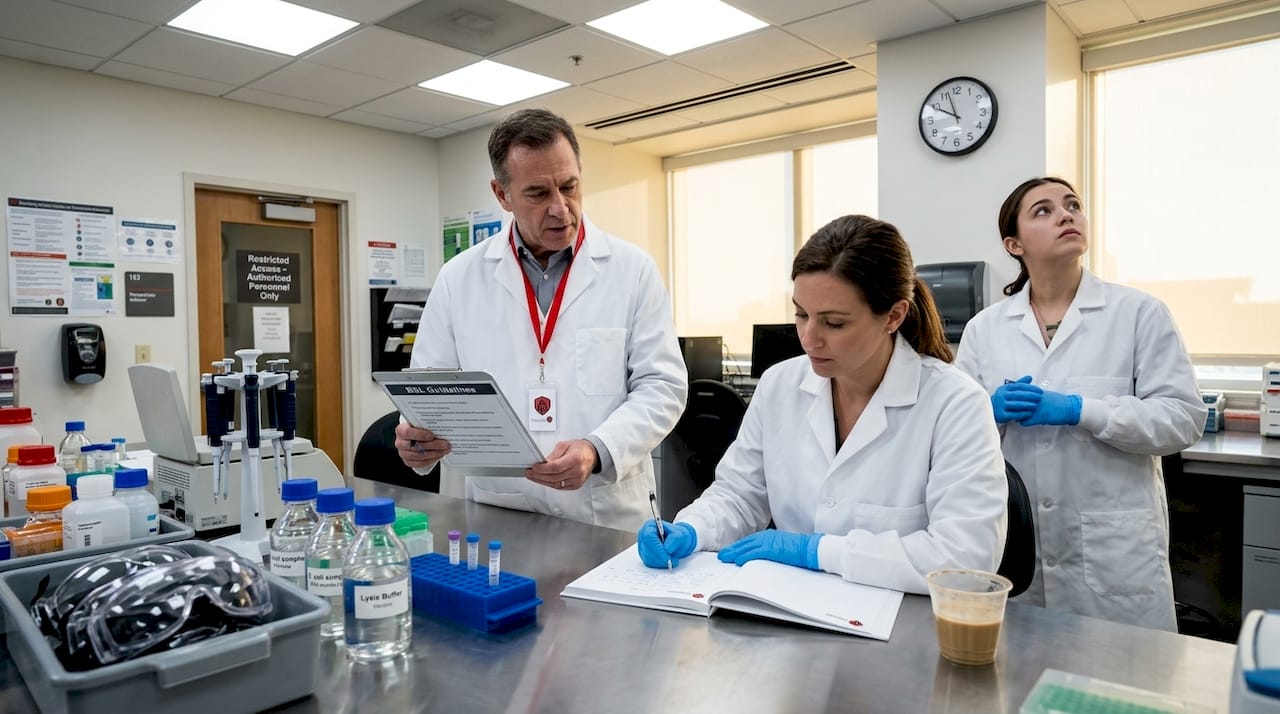
BSL-1 settings include undergraduate teaching labs, basic research facilities, and some environmental testing environments. Workers at this level typically need foundational biohazard training covering standard microbiology practices and waste handling, but they do not require the advanced certifications demanded at higher levels.
The real risk at BSL-1 is complacency. Because the agents are low hazard, some workers skip PPE or skip decontamination steps. That behavior becomes dangerous the moment a higher-risk sample enters the same space, or when waste is not labeled and disposed of correctly.
3. Biohazard Class 2 (BSL-2): moderate hazard, additional controls
BSL-2 applies to agents that can cause human disease but present limited transmission risk in the lab setting. Examples include hepatitis B virus, Salmonella species, Staphylococcus aureus, and Toxoplasma. These are organisms that healthcare workers, emergency responders, and biohazard cleanup professionals encounter regularly.
The shift from BSL-1 to BSL-2 introduces meaningful engineering controls and procedural upgrades:
Biological safety cabinets (BSCs): Required for procedures that may generate aerosols or splashes
Restricted lab access: Only trained, authorized personnel during active work
Autoclave availability: On-site decontamination of biological waste before disposal
Posted hazard signage: Biohazard symbols at entry points with agent information and contact details
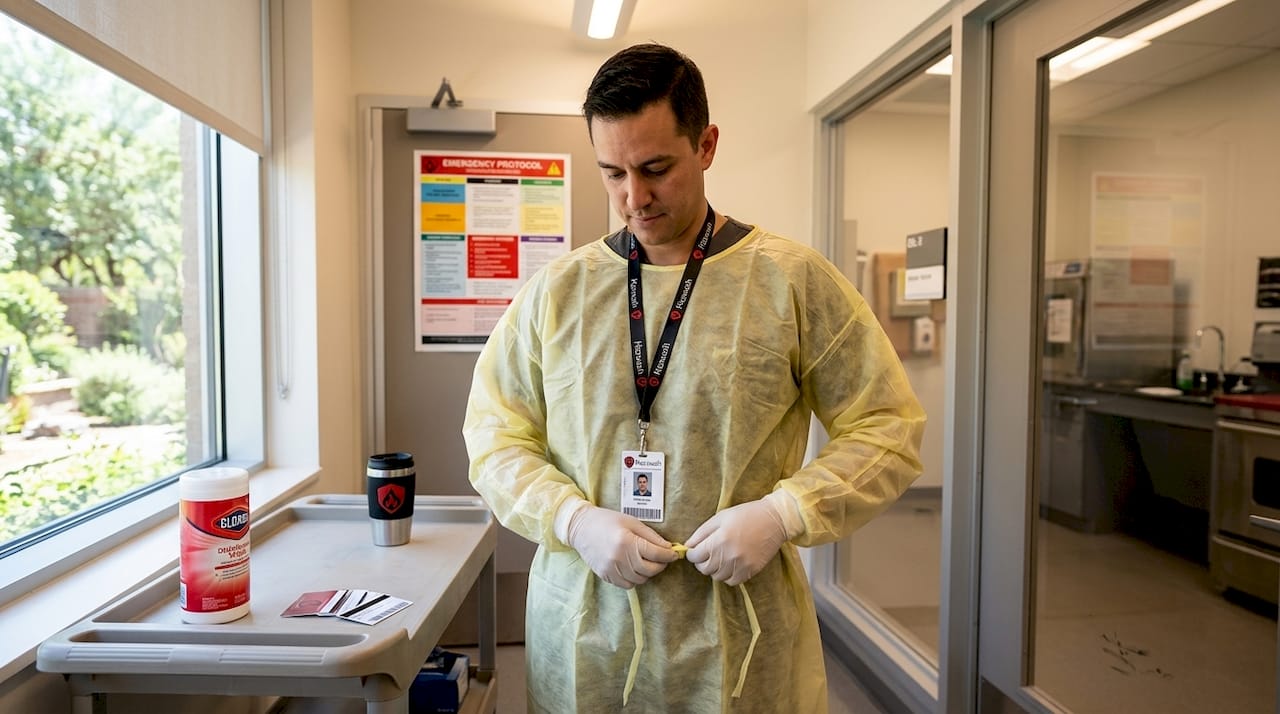
PPE at BSL-2 expands to include face protection when splash risk exists, and fluid-resistant gowns for procedures involving blood or other potentially infectious materials (OPIM). OSHA’s Bloodborne Pathogens Standard mandates written exposure control plans, annual training, and hepatitis B vaccination offers for 5.6 million workers operating at this hazard tier.
One widely misunderstood point: not all bodily fluids qualify as OPIM under OSHA’s standard. Sweat and tears are excluded unless visibly contaminated with blood. Cerebrospinal fluid, semen, and saliva during dental procedures are included. Knowing the distinction prevents both over-reaction and dangerous under-reaction.
Pro Tip: When disposing of BSL-2 waste, apply the compression test. Items that release blood or OPIM when compressed are regulated medical waste. Lightly spotted materials that pass the compression test often do not require the same regulated disposal pathway, which can reduce costs without sacrificing compliance.
4. Biohazard Class 3 (BSL-3): serious disease, engineered containment
BSL-3 is a fundamentally different operational environment. The agents at this level cause serious or potentially lethal disease, primarily through inhalation. Mycobacterium tuberculosis, SARS-CoV-2, Coxiella burnetii (the agent of Q fever), and West Nile virus all fall within this classification. The defining risk is aerosol transmission, which makes facility engineering non-negotiable.
Core engineering controls at BSL-3 include:
Directional inward airflow to contain potential aerosols
HEPA filtration on all exhaust air leaving the lab
Double-door entry with self-closing, self-locking doors
Solid surfaces that allow full decontamination
Dedicated hand-washing sinks near exits
BSL-3 labs require annual certification, and that certification covers both the facility and its personnel. PPE at this level includes respiratory protection (at minimum N95 respirators, often powered air-purifying respirators), solid-front gowns, double gloves, and eye protection. Workers cannot simply complete a general biohazard safety course and enter a BSL-3 space. They need documented role-specific training, fit-tested respiratory protection, and institutional biosafety committee oversight.
Institutional biosafety committees play a distinct role here. They review protocols, assess risk, approve agent use, and coordinate with federal inspection programs. BSL functions as a practical guide for these committees rather than a rigid statute, which means the committee’s judgment carries significant authority in real-world application.
Pro Tip: If you are procuring biohazard class certification for staff working at or near BSL-3 environments, look for programs accredited by ABSA International. ABSA-accredited certifications are portable and recognized across institutional and regulatory settings, which matters when staff transition between facilities.
5. Biohazard Class 4 (BSL-4): maximum containment, existential risk
BSL-4 represents the highest threat category in the biohazard classification system. The agents here are exotic, often with no approved vaccine or treatment, and capable of causing fatal illness through aerosol transmission with very low infectious doses. Ebola virus, Marburg virus, Lassa fever, and smallpox fall into this tier. Category A biological agents like these require coordinated responses that extend well beyond the lab into public health emergency preparedness and national security.
BSL-4 facilities are rare by design. The infrastructure requirements include:
Complete physical isolation: Separate buildings or zones with controlled access
Positive-pressure full-body suits or Class III biosafety cabinets with heavy-duty gloves attached
Shower-out protocols: Personnel must decontaminate before exiting under any circumstances
Dedicated air supply and exhaust systems with HEPA filtration on both intake and exhaust lines
Double-door autoclaves for passing materials into and out of the containment zone
Personnel who work at BSL-4 undergo extensive specialized training, medical surveillance, and psychological fitness assessment. There is no such thing as on-the-job learning at this level. The United States has fewer than a dozen BSL-4 labs, and each operates under federal oversight with strict accountability for every agent stored and every procedure performed.
Pro Tip: For property managers and emergency responders, BSL-4 agents will almost never be encountered in routine work. If you ever suspect exposure to an unknown agent causing severe hemorrhagic symptoms, stop all contact, isolate the area, and call local emergency management. Do not attempt cleanup or classification on your own.
6. Comparing all four biohazard classes side by side
Understanding each level individually is useful. Seeing them side by side reveals the logic of the entire system.
For transport, the DOT framework adds a parallel layer. Category A infectious substances are life-threatening and require triple packaging with a Shipper’s Declaration, typically aligning with BSL-3 and BSL-4 agents. Category B covers diagnostic specimens that present a lower risk and require a pressure differential test but not the Shipper’s Declaration. Misclassifying a Category B specimen as Category A creates unnecessary regulatory burden. Doing the reverse is a serious compliance failure.
The most common practical error is under-classifying a waste stream to avoid costs. Regulated medical waste determination relies on physical tests, not assumptions. When in doubt, apply the compression test and consult your exposure control plan.
Pro Tip: When you are uncertain which biohazard class applies to a specific scene or waste stream, document your reasoning. Regulators understand that field conditions are complex. What they do not forgive is the absence of a documented decision-making process.
My perspective on real-world biohazard classification
I have seen organizations treat biohazard classification as a compliance checkbox. Print the poster, file the plan, move on. That approach fails consistently, and it fails at the worst possible moments.
What I have found working in this space is that the biggest gaps are not at BSL-4 or even BSL-3. They are at BSL-2. Blood spills, sharps exposure, unattended death scenes, hoarding environments with hidden biohazard risks. These are the situations where workers and property owners routinely underestimate what they are dealing with. The agents are common enough that people get comfortable, and comfort is where exposure incidents happen.
The classification framework matters, but it only works if the people applying it have been genuinely trained, not just certificated. There is a difference between a worker who has completed a biohazard safety course and a worker who understands why the compression test exists or why not all bodily fluids are OPIM. That second worker makes better decisions in the field, especially in situations that do not fit neatly into a training scenario.
My strongest recommendation: engage your institutional biosafety committee or a certified biohazard handling professional before any incident, not after. Pre-incident protocol development is where the real value is. Understanding hazardous incident response at that level turns a reactive scramble into a managed, compliant response.
— David
When professional biohazard cleanup is the right call
Understanding biohazard classes is the foundation. Acting on that knowledge safely is a separate skill set that takes certified training, proper equipment, and regulatory accountability to execute correctly.
Hazwash provides certified biohazard cleanup services across Detroit and surrounding Michigan communities, 24 hours a day. The team holds OSHA HAZWOPER, IICRC, and DOT certifications and handles everything from blood spill remediation to unattended death scenes to hoarding cleanup with full regulatory documentation. For property owners, landlords, and families navigating a difficult situation, professional cleanup is not just safer. It creates the documentation trail that protects you from liability. Learn more about Hazwash’s Detroit biohazard cleanup services or review Michigan’s infectious waste regulations to understand your compliance obligations before a situation escalates.
FAQ
What are the four biohazard class levels?
The four levels are BSL-1 (minimal risk), BSL-2 (moderate risk), BSL-3 (high risk via inhalation), and BSL-4 (extreme risk with no treatment), as defined by the CDC and NIH.
What biohazard class is blood considered?
Blood and bloodborne pathogens like hepatitis B typically fall under BSL-2, and OSHA’s Bloodborne Pathogens Standard mandates specific exposure control plans, annual training, and regulated waste disposal for anyone exposed to these materials.
Do I need biohazard class certification for cleanup work?
Yes. Cleanup professionals handling blood, OPIM, or regulated medical waste must meet OSHA HAZWOPER requirements. Training programs vary by role and hazard level, with annual refresher requirements for regulated environments.
How is regulated medical waste classified?
Regulated medical waste is determined using physical tests. Items that release blood or OPIM when compressed qualify as regulated waste, regardless of whether contamination is visible to the eye.
What is the difference between Category A and Category B infectious substances?
Category A substances are life-threatening and require triple packaging and a Shipper’s Declaration for transport. Category B covers lower-risk diagnostic specimens and has less stringent packaging requirements.