Suicide Clean Up: What Families Need to Know
Suicide Clean Up: What Families Need to Know
TL;DR:
Professional suicide cleanup involves removing biohazards, disinfecting thoroughly, and restoring safety with certified expertise. It requires official scene clearance, proper equipment, and scientific verification like ATP testing to ensure safety and compliance. Emotional support and discreet service are integral, while DIY efforts pose significant health, legal, and emotional risks.
Suicide clean up is the professional process of removing biohazardous materials, disinfecting the affected site, and restoring the space to a safe, habitable condition after a suicide event. This work requires certified technicians, specialized equipment, and a level of emotional sensitivity that goes far beyond standard cleaning. Bloodborne pathogens like HIV, Hepatitis B, Hepatitis C, and MRSA can survive on surfaces for days, making improper cleanup a serious health risk for anyone who enters the space. Families facing this situation deserve both technical expertise and compassionate support. Knowing what the process involves helps you make informed decisions during one of the most difficult moments you will ever face.
What does suicide clean up actually require?
Suicide cleanup, known in the industry as trauma scene cleaning or biohazard remediation, is not a task for untrained individuals. Certified professionals follow strict OSHA and EPA guidelines to contain, remove, and verify the elimination of all biological hazards. The work covers blood, bodily fluids, tissue, and any contaminated materials including furniture, flooring, and structural components. Services like those provided by Jenkins Restorations and WrightWay demonstrate that effective trauma scene cleaning combines technical rigor with genuine care for the families involved. The goal is not just a visually clean space. It is a scientifically verified, safe environment where your family can begin to heal.
What legal steps must happen before cleanup begins?
Cleanup cannot legally begin until law enforcement or the coroner officially releases the scene. Unauthorized entry risks contaminating evidence and exposes you to serious legal liability. This is a step many families do not realize exists, and skipping it can create problems that outlast the tragedy itself.
Before any professional team enters the site, the following conditions must be met:
Official scene release: Law enforcement or the coroner must formally clear the location and confirm the investigation is complete.
Documentation review: The cleanup company should receive written confirmation of the scene release to protect both the family and the service provider.
Insurance notification: Notify your homeowner’s or renter’s insurance carrier as early as possible. Many policies cover biohazard remediation costs.
Property access coordination: If the location is a rental, the landlord or property manager must be notified and may need to coordinate access.
Coordination with authorities: Experienced cleanup teams work directly with law enforcement and coroners to confirm clearance before mobilizing.
Attempting cleanup before official clearance is not just legally risky. It can also compromise your own safety and the integrity of any ongoing investigation.
What equipment do professionals use for trauma scene cleaning?
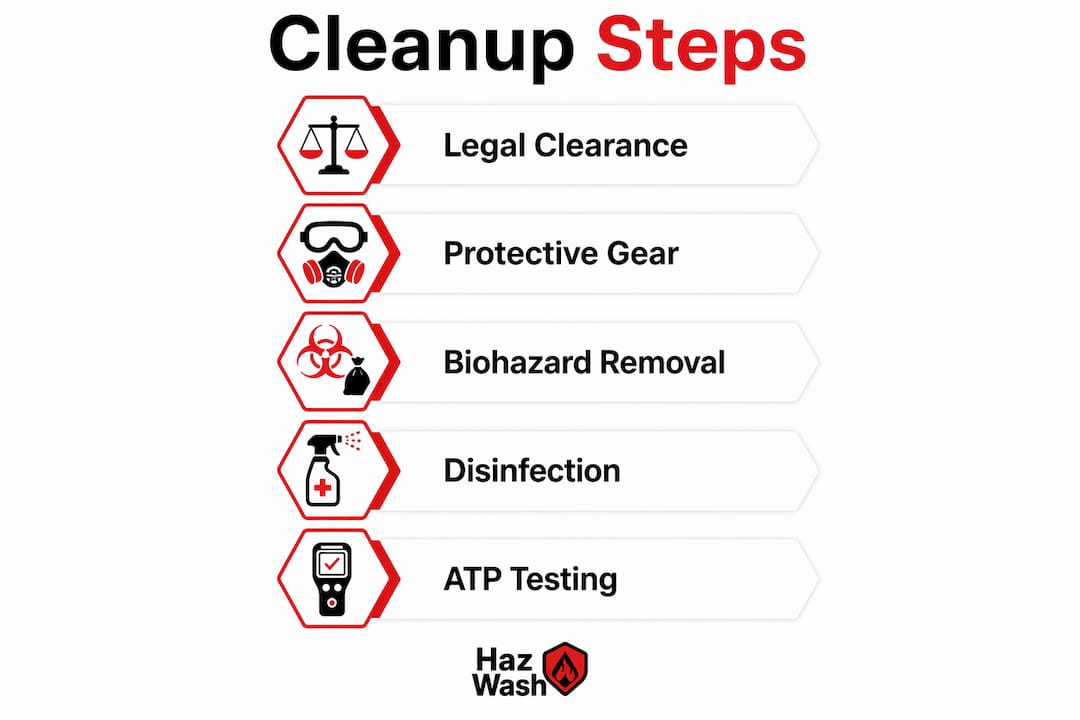
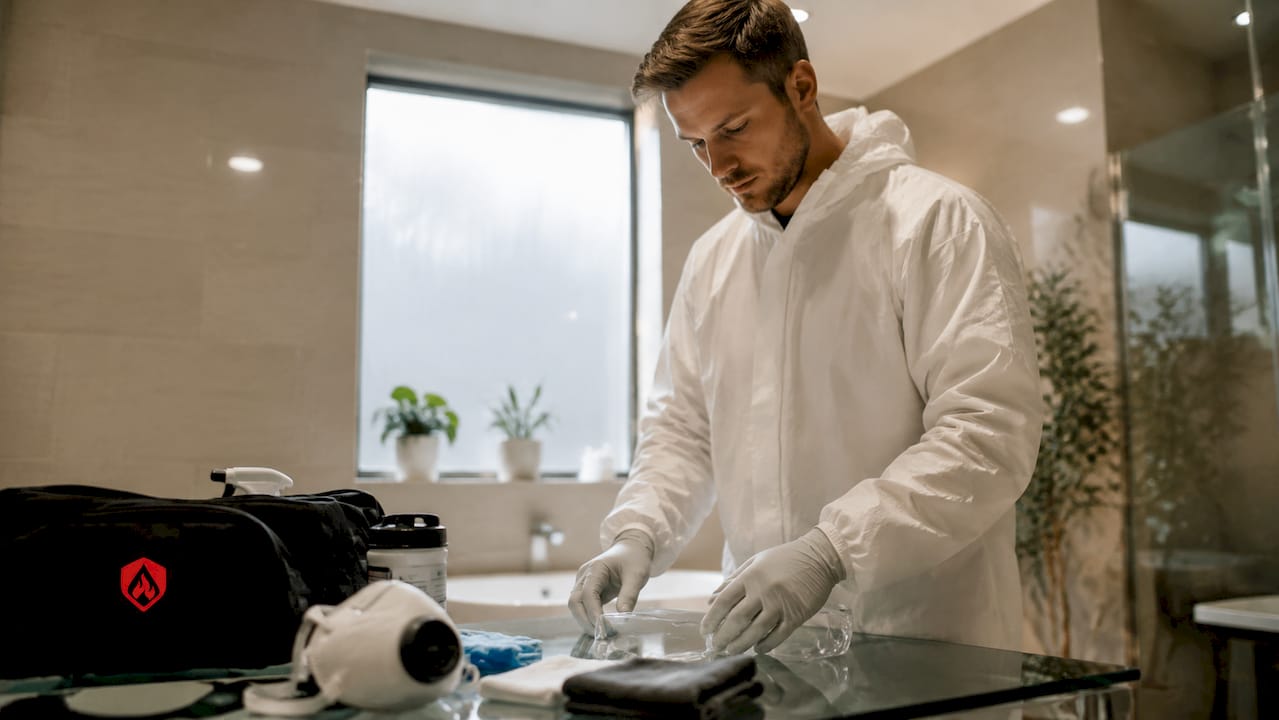
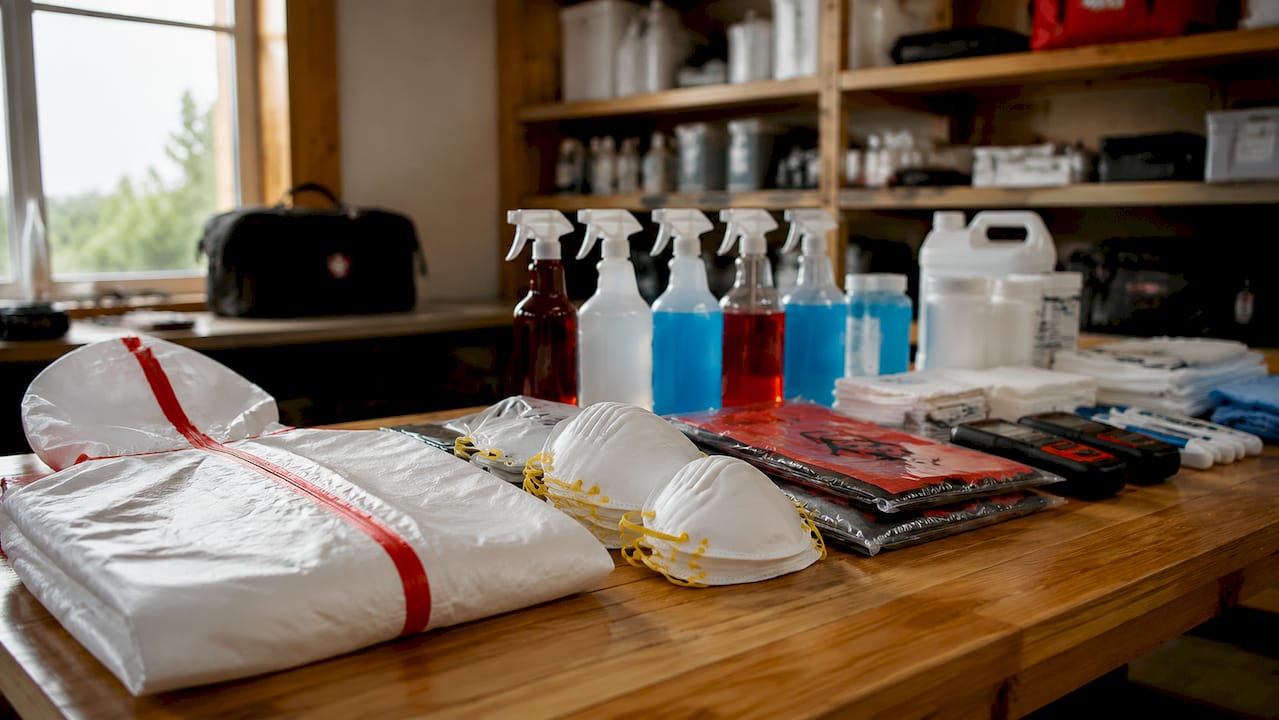
Professional trauma scene cleaning relies on equipment that most people have never encountered. OSHA-compliant protocols require technicians to wear full personal protective equipment including hazmat suits, respirators, and double gloves at all times during the remediation process. This protects the technician and prevents cross-contamination to unaffected areas of the property.
ATP testing provides scientific verification that a site is fully free of contaminants before re-occupancy. This is not a visual check. It is a measurable, documented confirmation that the space is safe.
Pro Tip: Ask your cleanup provider for a written ATP test report after the job is complete. This document protects you legally and gives you objective proof that the remediation met professional standards.
How do professional teams execute the cleanup process?
The death scene cleanup process follows a structured sequence designed to eliminate every trace of biological contamination. Each step builds on the last, and skipping any stage creates gaps that can leave hidden health risks behind.
Site assessment and hazard mapping. Technicians walk the entire property to identify all affected areas, including spaces not immediately visible such as subfloors and wall cavities.
Containment setup. The team establishes negative air pressure within the work zone to prevent airborne pathogens from spreading to unaffected rooms.
Biohazard removal. All contaminated materials are removed, including porous items like carpet, padding, drywall, and upholstered furniture that cannot be fully disinfected.
Deep cleaning and disinfection. Hospital-grade disinfectants registered with the EPA are applied to all surfaces, including structural elements exposed during material removal.
Odor neutralization. Ozone generators or hydroxyl machines treat the air and surfaces to eliminate biological odors that standard cleaning cannot address.
Verification testing. ATP testing confirms that contamination levels meet safe re-occupancy standards. Results are documented and provided to the family.
Waste disposal. All biohazardous materials are bagged, labeled, and transported according to DOT and EPA medical waste regulations.
Structural restoration. Licensed contractors repair or replace drywall, flooring, and other structural components, returning the property to its pre-incident condition.
Pro Tip: Request a scope-of-work document before cleanup begins. A reputable company will outline every step, the materials to be removed, and the testing methods used. This protects you and sets clear expectations.
The full process typically takes one to three days depending on the severity and scope of contamination. Restoration work may extend the timeline further, but the result is a property that is both structurally sound and certified safe.
How do cleanup services support families emotionally?
Trauma cleanup teams provide vital emotional support in addition to technical cleaning, helping families avoid lasting trauma from personal cleanup attempts. The way a company communicates and conducts itself on-site matters as much as the technical work it performs.
Compassionate biohazard removal services address the emotional dimension of this work in several concrete ways:
Discreet arrival. Reputable companies use unmarked vehicles to protect your privacy and prevent neighbors from knowing what occurred.
Respectful communication. Technicians are trained to speak calmly, avoid clinical detachment, and check in with family members throughout the process.
Confidential handling. Personal belongings, photographs, and documents found during cleanup are treated with care and returned to the family whenever possible.
Coordination with support resources. Many professional teams can connect families with grief counselors, social workers, or mental health organizations as part of their service.
Reduced re-exposure. By handling all aspects of the cleanup, professionals spare family members from the psychological harm of direct contact with the scene.
Families who attempt cleanup themselves often underestimate the emotional cost. Seeing the scene repeatedly during a DIY effort can deepen grief and delay recovery. Handing this responsibility to a trained team is not avoidance. It is a protective decision.
What mistakes do non-professionals make during cleanup?
DIY cleanup after a suicide creates risks that are not always obvious until serious harm has already occurred. Biofluids can seep into subfloors, wall cavities, and HVAC systems, meaning that a surface that looks clean may still harbor dangerous pathogens and persistent odors. Standard household cleaners do not eliminate bloodborne pathogens. They spread them.
The legal exposure from unauthorized or improper cleanup is also real. Disposing of biohazardous waste without proper licensing violates federal and state regulations. Property owners who attempt cleanup without certification can face fines and liability claims, particularly if a future occupant becomes ill.
Key takeaways
Professional suicide cleanup requires certified technicians, legal scene clearance, and scientific verification to protect both the physical safety and emotional well-being of every family involved.
What i’ve learned from trauma scene work
Working in this field has taught me that the families who call us are not looking for a cleaning company. They are looking for someone to take a terrible burden off their shoulders. The technical side of this work is demanding, but the human side is what stays with you.
The most common misconception I encounter is that a space looks clean after a basic wipe-down. It does not. Blood penetrates grout, soaks through carpet padding, and wicks into drywall. I have seen cases where a family cleaned a room themselves, moved back in, and then called us months later because of persistent odor and health concerns. By that point, the contamination had spread further and the remediation cost was significantly higher.
The second thing I want families to understand is that asking for help is the right call. Attempting this yourself does not honor the person you lost. It puts you at risk and prolongs your exposure to a scene that should be handled by people trained to do exactly this. Choosing a certified service with documented OSHA HAZWOPER and IICRC credentials is not a luxury. It is the standard you deserve.
Finally, always ask for the ATP test results in writing. Any company that cannot provide them is not doing the job completely. Verification is not optional. It is the only way to know with certainty that your home is safe.
— David
Hazwash is ready to help you right now
When your family needs discreet, certified, and compassionate support after a suicide, Hazwash responds 24 hours a day, 7 days a week. Our team holds OSHA HAZWOPER, IICRC, and DOT certifications, and we follow every federal and state protocol for biohazard removal and medical waste disposal in Detroit and the surrounding metro area.
We arrive in unmarked vehicles, communicate with care, and document every step of the process so you have the records you need for insurance and peace of mind. From the first call to final restoration, our suicide cleanup service is built around your safety and your dignity. You do not have to face this alone. Contact Hazwash now for immediate, confidential assistance from a team that understands what is at stake.
FAQ
What is suicide clean up?
Suicide clean up is the professional removal of biohazardous materials, disinfection of the affected area, and restoration of the property following a suicide. It requires certified technicians, EPA-registered disinfectants, and documented verification that the space is safe for re-occupancy.
Can a family member clean the scene themselves?
Attempting cleanup without certification is dangerous and potentially illegal. Bloodborne pathogens like HIV, Hepatitis B, and MRSA require certified methods to eliminate, and improper disposal of biohazardous waste violates federal and state regulations.
How long does professional trauma scene cleaning take?
Most trauma scene cleaning jobs take one to three days depending on the extent of contamination. Structural restoration work such as drywall or flooring replacement may extend the timeline, but the property is not cleared for re-occupancy until ATP testing confirms full decontamination.
Does homeowner’s insurance cover biohazard removal services?
Many homeowner’s and renter’s insurance policies cover biohazard removal services following a traumatic event. Contact your insurance carrier as early as possible and ask your cleanup provider for formal documentation to support your claim.
When can cleanup begin after a suicide?
Cleanup cannot begin until law enforcement or the coroner officially releases the scene. Starting before official clearance risks legal liability and may compromise an active investigation.