Professional Odor Removal Service for Your Home
Professional Odor Removal Service for Your Home
TL;DR:
Professional odor removal permanently eliminates persistent smells by locating and treating their physical sources with advanced deodorization technology. It involves multi-stage processes like source identification, physical removal, advanced deodorization, and verification, which DIY methods cannot fully achieve. Certified experts using appropriate techniques deliver lasting results, especially for complex contamination from smoke, mold, pet urine, or biohazards.
A professional odor removal service is the certified process of permanently eliminating persistent odors by locating and removing their physical sources, then neutralizing residual compounds with advanced deodorization technology. Unlike air fresheners or store-bought sprays, professional deodorization addresses the contamination itself, not just the smell. Common sources treated include cigarette and fire smoke, mold, pet urine, sewage backups, and biohazard contamination. Tools like ozone generators, thermal foggers, hydroxyl generators, and enzyme treatments are deployed based on the specific odor type. If a smell keeps returning despite your best efforts, the source is still present, and that is exactly what certified odor elimination experts are trained to find and fix.
What does a professional odor removal service actually do?
Professional odor removal is a technical multi-stage process involving diagnostic tools, source elimination, advanced deodorization, and verification to confirm permanent results. Each stage builds on the last, and skipping any one of them is why odors return.
The process typically follows this sequence:
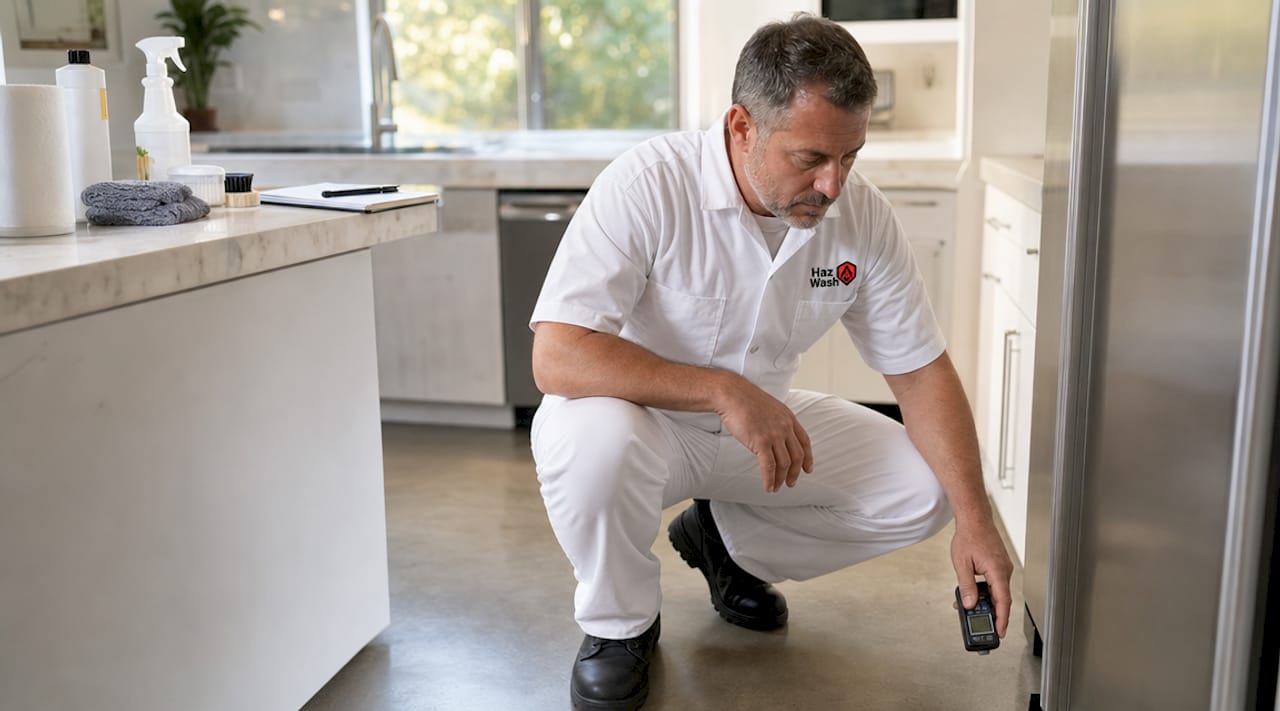
Source identification. Technicians use moisture meters and thermal imaging cameras to locate odor-generating contamination hidden inside walls, under flooring, or within HVAC systems. You cannot treat what you cannot find.
Physical removal or cleaning. Contaminated materials such as carpet padding, insulation, drywall, or subfloor sections are removed or deep-cleaned. Ozone generators alone are insufficient without removing odor sources first. A temporary improvement followed by odor return is a sign this step was skipped.
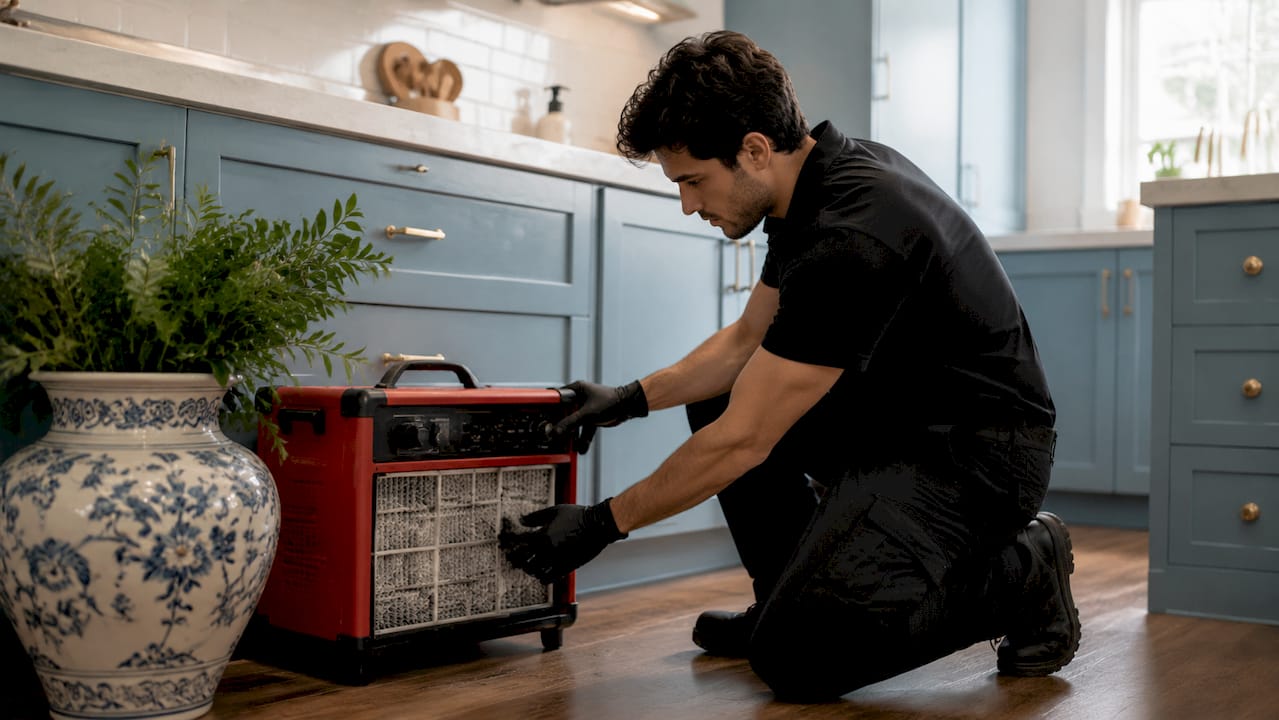
Advanced deodorization. Depending on the odor type, technicians deploy thermal foggers, hydroxyl generators, ozone treatment, or enzyme applications. Thermal fogging replicates smoke behavior to push deodorizing agents deep into walls, fabrics, and HVAC ductwork, making it especially effective for fire and smoke damage. Hydroxyl generators create radicals that break down odor-causing organic compounds and are safe for occupied spaces, including healthcare environments.
Antimicrobial application. After deodorization, antimicrobial agents are applied to prevent microbial regrowth that would reintroduce odors.
Verification and follow-up. Reputable providers document results and conduct follow-up assessments to confirm the odor is gone, not just reduced.
Pro Tip: Ask any service provider to explain exactly which deodorization technology they plan to use and why. If they cannot answer that question specifically, they are likely relying on masking agents rather than true source elimination.
What are the most common odor sources and how are they treated differently?
Not all odors respond to the same treatment. The source chemistry determines the method, and using the wrong approach wastes time and money. Here is how the four most common persistent odor categories differ in treatment:
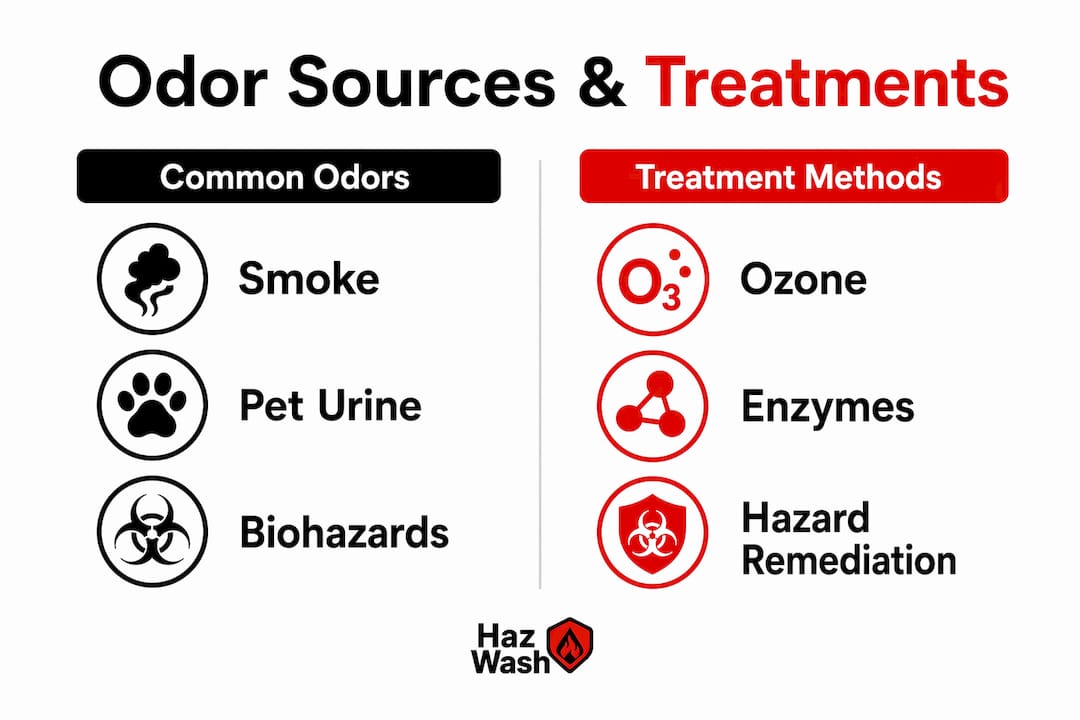
Odor SourcePrimary CauseTreatment MethodSmoke (fire or cigarette)Soot particles and chemical compounds embedded in porous surfacesThermal fogging, ozone treatment, HVAC cleaningMoldMicrobial volatile organic compounds (VOCs) from fungal growthMold remediation followed by deodorization and antimicrobial treatmentPet urineUric acid crystals that reactivate with humidityEnzyme treatments that digest organic material at the sourceBiohazard or sewageBiological pathogens and decomposition compoundsCertified biohazard cleanup, disinfection, and specialized deodorization
Smoke odors are among the most stubborn because soot and chemical residue penetrate drywall, insulation, and wood framing. Surface cleaning alone does not reach these deposits. Mold odors are directly tied to active microbial growth, which means deodorization without mold remediation is a temporary fix at best.
Pet urine presents a specific challenge. Enzyme treatments consume the organic material causing bio-odors and continue working until the uric acid source is fully digested. Standard carpet cleaning does not reach urine that has soaked through padding into the subfloor, which is why pet odors often return after DIY attempts.
Biohazard and sewage odors carry the highest health risk. Mold and biohazard odors can worsen respiratory problems and other health conditions if not properly remediated. These situations require OSHA HAZWOPER-certified technicians, not general cleaning services.
DIY odor removal vs. professional deodorization: what actually works
DIY treatments like baking soda and vinegar can neutralize light, surface-level household odors. Baking soda on carpets absorbs surface odors over several hours, and vinegar neutralizes garbage disposal smells within about an hour. These methods work for fresh, minor odors with no structural contamination.
The problem starts when the odor has a physical source embedded in your home’s structure. Masking agents only cover up odors and do not solve the underlying contamination. Odors are symptoms of physical contaminants trapped in walls, subfloors, or building materials. Spraying an air freshener over a mold or sewage odor is the equivalent of painting over rust.
Here is where DIY methods fall short:
They cannot reach contamination inside walls, under flooring, or within HVAC systems.
They do not neutralize uric acid crystals, soot compounds, or microbial VOCs at a molecular level.
They provide no documentation, which matters for insurance claims or rental disputes.
Repeated use of masking products can delay professional treatment, allowing contamination to spread.
Untreated persistent odors after property damage threaten health and indoor air quality. Prolonged exposure to VOCs from mold or biohazard contamination has documented links to respiratory irritation, headaches, and worsening asthma symptoms. This is not a cosmetic issue.
Pro Tip: If an odor returns within a week of cleaning, the source is still present. That is the point at which professional assessment becomes necessary, not optional. Check out common odor removal mistakes after fire or flood damage to avoid making the problem worse.
How to choose the right odor removal service
Selecting a qualified provider requires more than a quick internet search. The right service depends on the odor type, the severity of contamination, and the provider’s certifications and methods.
Follow this process when evaluating providers:
Verify certifications. Look for IICRC (Institute of Inspection, Cleaning and Restoration Certification) certification as a baseline. For biohazard or sewage odors, OSHA HAZWOPER certification is required for safe handling of hazardous materials.
Confirm they identify the source first. Any provider who quotes a price before inspecting the property is skipping the diagnostic step. Source identification is non-negotiable.
Ask about their deodorization technology. Thermal fogging, hydroxyl generators, and enzyme treatments are legitimate professional tools. Ozone-only treatments without source removal are not a complete solution.
Request documentation. Reputable providers supply written reports of findings, methods used, and results. This documentation supports insurance claims and protects you legally as a landlord or homeowner.
Check insurance coverage. Professional odor removal is often covered by homeowner’s insurance as part of approved remediation for fire, mold, or sewage damage. Contact your insurer before assuming you pay out of pocket.
Treatment timelines vary significantly based on severity. A single-room smoke odor treatment may take four to eight hours. Whole-home remediation after a fire or sewage backup can take two to four days. Biohazard-related odor removal timelines depend on the extent of contamination and required safety protocols.
Odor ScenarioTypical Treatment DurationInsurance Coverage Likely?Single-room smoke odor4 to 8 hoursYes, if fire-relatedWhole-home fire damage2 to 4 daysYesPet urine (multiple rooms)1 to 2 daysRarelySewage or biohazard1 to 3 daysYes, if damage-related
For rental properties, landlord response protocols for biohazard odors carry additional legal weight. Documented professional remediation protects both landlords and tenants from liability.
Key takeaways
Professional odor removal requires source elimination, not masking, and certified technicians using IICRC and OSHA HAZWOPER credentials deliver the only permanent solution for persistent household odors.
Why I stopped recommending air fresheners after property damage
After working in biohazard and hazardous cleanup for years, the single most common mistake I see homeowners make is reaching for a spray can after a flood, fire, or sewage backup. It feels productive. The smell improves immediately. Then it comes back, usually worse, because the source has had more time to spread.
The uncomfortable truth is that persistent odors after property damage are almost always a sign of active contamination. Mold grows. Uric acid crystals reactivate with humidity. Soot compounds continue off-gassing from walls. Every week without professional intervention is a week the problem gets harder and more expensive to fix.
What I have seen work, consistently, is early professional assessment. Not necessarily full remediation on day one, but a certified inspection that identifies what you are actually dealing with. That single step changes everything because it replaces guesswork with a documented plan. Homeowners who call for an assessment within 48 to 72 hours of a damage event almost always face lower remediation costs and faster recovery than those who wait.
The health angle matters too. Odors from mold, sewage, and biohazard contamination are not just unpleasant. They are indicators of VOCs and pathogens in your breathing air. Treating that as a comfort issue rather than a health issue is a costly mistake. If you are unsure whether a smell signals something more serious, the odor investigation checklist from Hazwash is a practical starting point for documenting what you are experiencing before calling for help.
— David
Hazwash can restore your home to fresh and safe
When persistent odors point to something more serious than a surface smell, Hazwash is available 24 hours a day, 7 days a week to respond. The team holds IICRC, OSHA HAZWOPER, and DOT certifications and handles the full range of odor sources including smoke, mold, pet contamination, sewage, and biohazard incidents across Detroit and surrounding areas.
Every job includes a documented inspection, source-focused remediation, and a clear record of methods and results that supports insurance claims and protects your property rights. Hazwash also guides clients through the insurance process to help offset costs wherever coverage applies. For situations involving biological contamination, the specialized biohazard cleanup team brings the training and equipment that general cleaning services simply cannot match. Call Hazwash today and get a certified assessment from odor elimination experts who treat the source, not just the symptom.
FAQ
What is a professional odor removal service?
A professional odor removal service is a certified process that locates and eliminates the physical source of persistent odors, then applies advanced deodorization technology such as thermal fogging, hydroxyl generators, or enzyme treatments to neutralize residual compounds permanently.
How long does professional odor removal take?
Treatment duration ranges from four to eight hours for a single-room smoke odor to two to four days for whole-home fire or sewage damage remediation, depending on the severity and extent of contamination.
Can homeowner’s insurance cover odor removal costs?
Professional odor removal is often covered by homeowner’s insurance when it is part of an approved remediation claim for fire, mold, or sewage damage. Contact your insurer before assuming the cost is out of pocket.
Why do odors return after DIY cleaning?
Odors return because DIY methods address surface smells without removing the contamination source. Uric acid crystals, soot compounds, and microbial VOCs embedded in walls, subfloors, or padding continue to off-gas until the source is physically removed or chemically neutralized.
When should I call a professional instead of handling odors myself?
Call a professional when an odor returns within a week of cleaning, when it follows water damage, fire, sewage backup, or suspected mold growth, or when it is linked to any biological contamination. These situations require certified assessment and source-focused remediation, not masking agents.