Odor Removal Services: What Actually Works
Odor Removal Services: What Actually Works
TL;DR:
Professional odor removal services focus on identifying and completely eliminating the source of persistent household odors using specialized inspections and targeted treatments. They require verifying the results through post-remediation checks and often involve physical removal of contaminated materials to ensure long-term freshness. Homeowners should maintain proper cleaning, moisture control, and filtration practices to prevent odors from returning after professional intervention.
Odor removal services are professional treatments designed to permanently eliminate persistent household odors by locating and removing their underlying sources, not covering them up. Pet urine, cigarette smoke, mold, and sewage each leave behind biochemical residues that air fresheners cannot touch. Certified technicians use enzymatic cleaners, thermal fogging, hydroxyl generators, HVAC decontamination, and post-remediation verification to confirm the odor is gone at the molecular level. If you are dealing with a smell that keeps coming back, the problem is almost always an unaddressed source, not an insufficient product.
How do odor removal services identify and remove odor sources?
Effective odor removal starts with identifying and removing the odor source instead of masking odors. This is the single most important step in the entire process, and it is the one most homeowners skip when attempting DIY fixes.
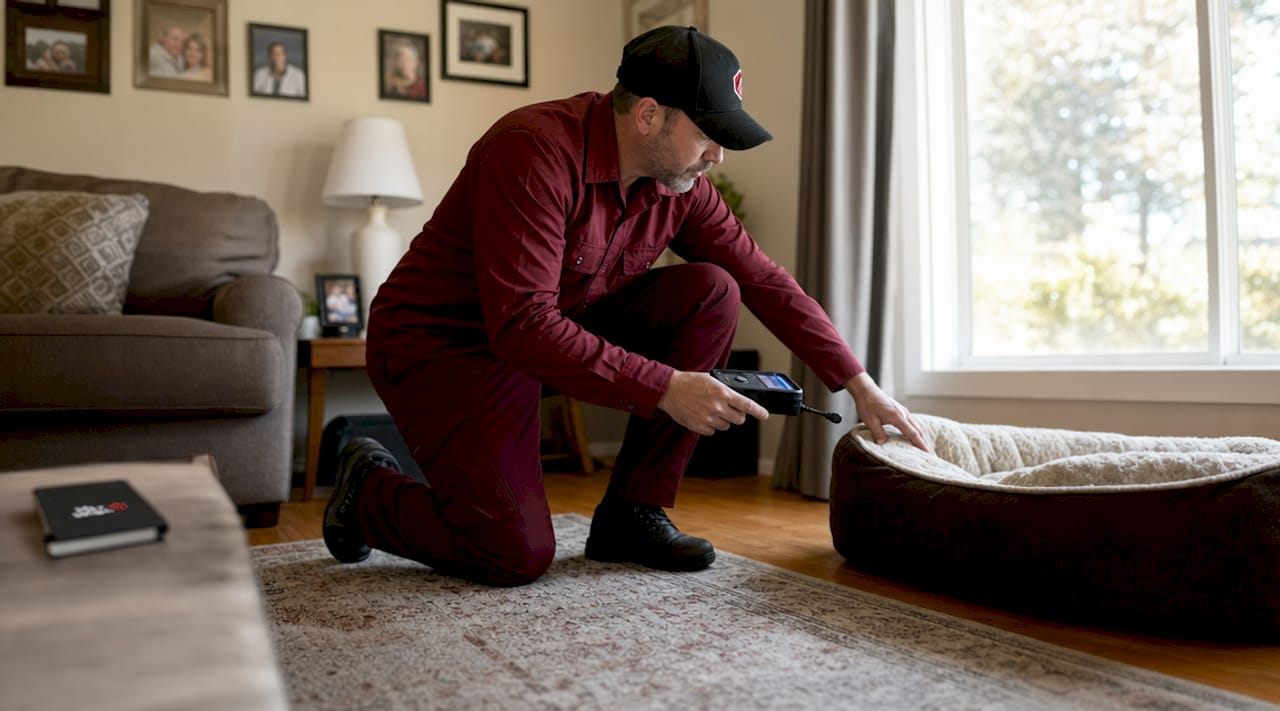
Professional technicians use a structured inspection process to locate every contributing source. This includes:
Moisture meters and thermal imaging cameras to detect hidden water damage behind walls and under flooring
UV lights to reveal dried pet urine deposits invisible to the naked eye
Air sampling equipment to identify mold spores and volatile organic compounds (VOCs) circulating through the home
HVAC inspection to check ducts, coils, and air handlers that can harbor smoke residue, mold, and biological material
Common odor sources found during professional inspections include subfloor pet urine saturation, mold colonies inside wall cavities, smoke residue embedded in drywall and insulation, and sewage contamination from slow or failed drain lines. Any one of these can make a home smell despite repeated surface cleaning.
Deodorization alone is insufficient when biological activity persists. Porous materials like drywall, carpet padding, and wood subfloor absorb odor compounds deeply. If those materials are not removed or fully restored, the smell returns. This is why professional odor elimination always begins with a thorough physical inspection rather than a spray bottle.
Pro Tip: Before calling a professional, document every location where the odor is strongest, including inside closets, near vents, and under sinks. This odor map helps technicians prioritize inspection areas and reduces overall service time. You can use a structured odor investigation checklist to organize your findings.
What are the best treatment methods for pet stains, smoke, and mold?
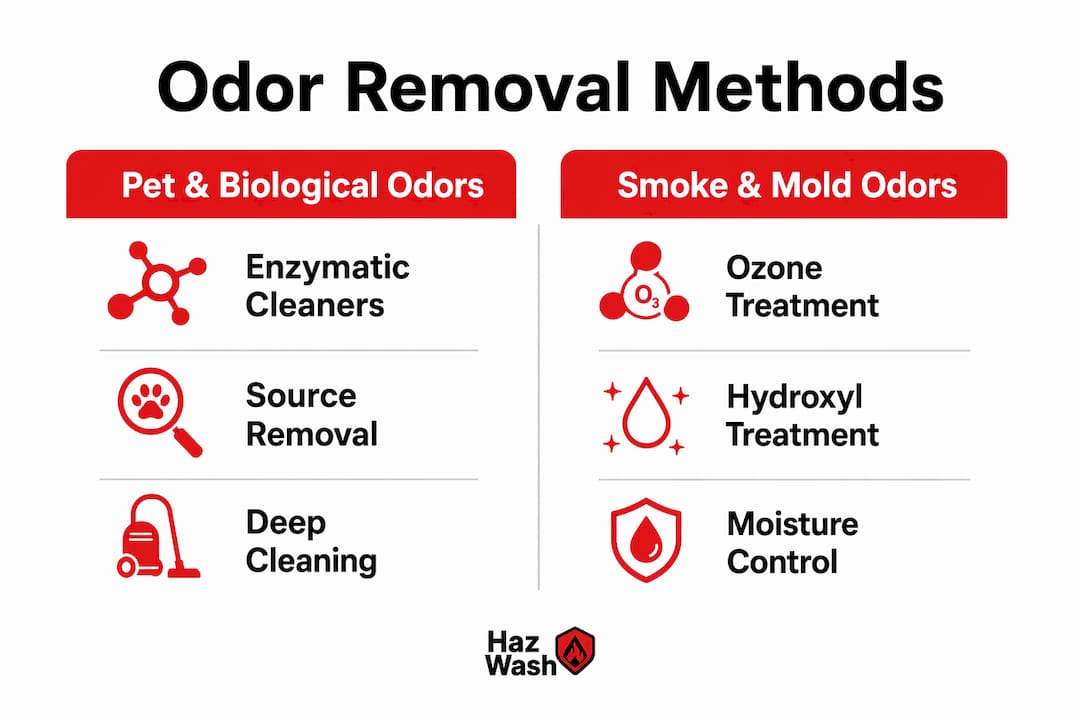
Treatment selection depends entirely on the odor type and the materials affected. Professionals do not apply a single solution to every job. The best odor removal outcomes come from matching the chemistry of the treatment to the chemistry of the contamination.
Enzymatic cleaners for pet and biological odors
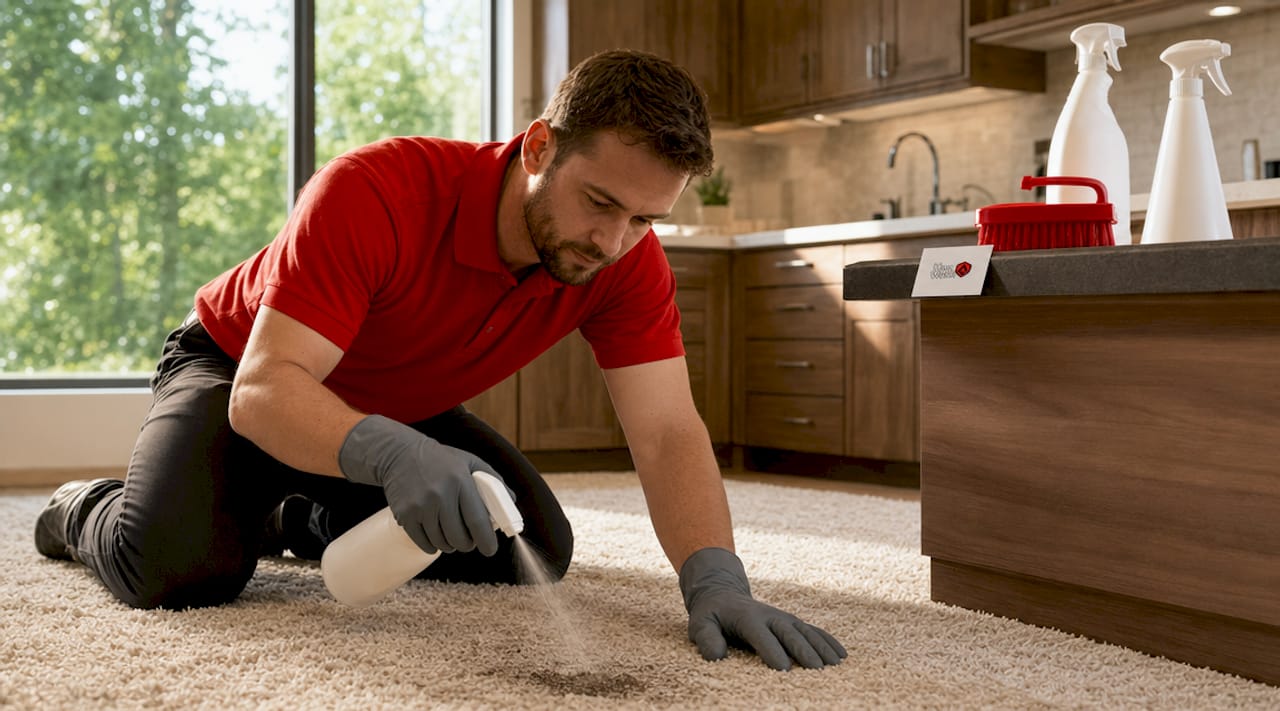
Enzymatic cleaners are the most effective for pet stains because they break down the underlying organic materials causing the odor, including uric acid crystals that standard cleaners leave behind. These products contain live bacterial cultures that consume the biological residue at the molecular level. For severe pet urine saturation, professionals often remove carpet and padding entirely, treat the subfloor with enzymatic solution, and allow full dwell time before reinstalling new materials. Surface cleaning alone will not resolve deep subfloor contamination. Learn more about how certified teams tackle strong pet urine odors in residential settings.
Smoke odor: ozone vs. hydroxyl treatment
Smoke odor remediation requires a different approach. Thermal fogging uses a heated solvent to penetrate the same surfaces that smoke did, neutralizing odor compounds on contact. For broader decontamination, professionals choose between ozone generators and hydroxyl generators.
Ozone treatment requires empty properties due to health risks, since ozone is a lung irritant. Hydroxyl generators produce hydroxyl radicals that break down odor molecules safely, making them the preferred choice for homes with residents, pets, or plants still present.
Mold odor and IICRC S520 standards
Mold odor cannot be resolved with spray treatments alone. Mold odor elimination requires correction of moisture sources and physical removal of mold-damaged materials, as defined by the ANSI/IICRC S520 standard. Painting over mold or applying antimicrobial sprays without removing the affected material is not remediation. It is concealment, and the odor will return within weeks.
Pro Tip: Air purifiers with at least 200g of activated carbon filter the volatile organic compounds responsible for smoke and chemical odors far more effectively than HEPA filters alone. HEPA captures particles; carbon absorbs gases. You need both for smoke-affected spaces.
Why is verification and follow-up critical after odor treatment?
Completing a treatment is not the same as completing the job. Post-Remediation Verification (PRV) is the process that confirms the odor source has been fully controlled and that conditions will not allow it to return.
PRV includes three core components:
Visual inspection to confirm no visible mold growth, staining, or moisture damage remains
Moisture readings using calibrated meters to verify all structural materials are within acceptable dryness thresholds
Environmental sampling including air and surface tests to confirm contaminant levels are within normal limits
Documentation from PRV also provides defensible proof of clearance for insurance claims, tenant disputes, and property sales. Without it, you have no way to confirm the problem is resolved.
Smoke odors present a particular challenge during follow-up. Cold temperatures can cause materials to retain smoke compounds that re-emit when temperature rises, making PRV after seasonal changes especially important. A home that smells clean in January may develop noticeable smoke odor by April as the HVAC system runs more frequently and temperatures climb.
“Odor recurrence after treatment is almost always a sign that either the source was not fully removed or moisture was not adequately controlled. A single callback is a signal to re-inspect, not re-treat.”
When multiple treatments are needed, professionals manage expectations by explaining that porous materials like concrete, brick, and old wood can require two or three treatment cycles. This is not a failure of the process. It reflects the physical reality of how deeply odor compounds penetrate over time. Seasonal factors and hidden odors in abandoned properties can complicate timelines further, particularly in Detroit’s climate where temperature swings are significant.
How can homeowners maintain a fresh home after professional odor treatment?
Professional odor elimination creates a clean baseline. Keeping it that way requires consistent habits that address the most common sources of odor recurrence.
Routine cleaning, moisture control, and ventilation are the three pillars of long-term odor prevention. Specific practices that make a measurable difference include:
Wash pet bedding weekly using hot water and an enzymatic laundry additive to prevent uric acid buildup
Clean appliance drip pans and drain lines monthly, since standing water in refrigerators, dishwashers, and HVAC condensate pans is a primary mold source
Run bathroom exhaust fans for 20 minutes after showers to prevent moisture accumulation that feeds mold growth in grout and drywall
Replace HVAC filters every 60 to 90 days and schedule annual duct cleaning if anyone in the home smokes or you have multiple pets
Use an air purifier with activated carbon in rooms where odors have previously been treated, running it continuously rather than intermittently
Inspect under sinks and around toilet bases quarterly for slow leaks that create hidden moisture and mold conditions
When odors return despite these measures, that is a signal to schedule a professional re-inspection rather than apply more consumer products. Persistent odors that resist routine cleaning often indicate a larger biohazard problem that requires certified intervention.
Key takeaways
Professional odor removal services work by eliminating the source of the odor, verifying the result, and controlling the conditions that allow odors to return.
What most homeowners get wrong about odor removal
I have seen the same pattern repeat in home after home. A family spends weeks trying every consumer product on the shelf, the smell fades for a few days, and then it comes back stronger. The frustration is real, and it is completely understandable. But the products are not failing. The strategy is.
The most common mistake is treating odor as an air quality problem when it is actually a materials problem. Sprays, plug-ins, and even consumer-grade ozone machines address what is in the air. They do not address what is in the subfloor, the wall cavity, or the HVAC duct. Until those materials are cleaned, removed, or sealed with an appropriate encapsulant, the odor source keeps releasing compounds into the air.
The second mistake is skipping the HVAC system. I have seen smoke odor treatments that worked perfectly on every surface in a home, only to have the smell return the first time the furnace ran. Ductwork carries odor compounds throughout the entire structure. Any treatment plan that does not include the HVAC system is incomplete by definition.
The third mistake is assuming one treatment is always enough. Concrete slabs, old hardwood, and brick can hold odor compounds for years. Professionals who are honest with their clients will tell you upfront that severe contamination may require multiple treatment cycles. That transparency is a sign of a qualified provider, not an upsell.
My advice: ask any odor removal company you hire to explain their verification process before the job starts. If they cannot describe a clear PRV protocol, keep looking.
— David
Hazwash provides certified odor removal and biohazard cleanup in Detroit
When odors in your home point to something more serious than routine cleaning can address, Hazwash is ready to help.
Hazwash provides specialized biohazard cleanup for Detroit homeowners and renters dealing with pet contamination, smoke damage, mold, sewage, and biological incidents. The team holds OSHA HAZWOPER, IICRC, and DOT certifications and uses advanced equipment including hydroxyl generators, air scrubbers, and moisture verification tools. Every job includes documented post-remediation verification so you have proof the problem is resolved. Hazwash operates 24/7 for emergency response and handles every job with discretion and care. Contact Hazwash today for a consultation and a clear plan to restore your home.
FAQ
What do odor removal services actually do?
Odor removal services locate and eliminate the physical source of persistent odors using inspection tools, targeted chemical treatments, and post-remediation verification. The goal is permanent elimination, not temporary masking.
How long does professional odor elimination take?
Most residential odor treatments take one to three days depending on the severity and number of affected materials. Severe smoke or mold contamination involving structural materials may require multiple treatment cycles over one to two weeks.
Are ozone treatments safe for my family and pets?
Ozone generators require complete vacancy during treatment because ozone is a lung irritant. Hydroxyl generators are the safer alternative for homes where full vacancy is not possible, as they work safely around people and animals.
Can professional odor treatment remove smoke smell permanently?
Smoke odor can return after treatment if chemical residues remain in porous materials or if HVAC systems were not included in the treatment scope. Post-remediation verification and HVAC cleaning are both required for lasting results.
When should I call a professional instead of handling odors myself?
Call a professional when an odor persists after thorough cleaning, when it originates from a biological source like sewage or animal remains, or when it is linked to visible mold growth. These situations involve health risks that consumer products cannot safely address.