Cleaning Up Dead Bodies: A Safe Remediation Guide
Cleaning Up Dead Bodies: A Safe Remediation Guide
TL;DR:
- Professional biohazard cleanup is essential after death scenes, as law enforcement does not handle remediation. Delays in hiring licensed technicians increase health risks and property damage, especially with porous materials affected by decomposition. Certified specialists use specialized equipment and verify safety through documented testing before reentry.
Cleaning up dead bodies is a specialized form of biohazard remediation that requires certified professionals, EPA-registered disinfectants, and regulated waste disposal protocols. This is not a task for ordinary cleaning crews or grieving family members. The process involves containing bloodborne pathogens, removing contaminated structural materials, and verifying biological safety before anyone re-enters the space. This guide explains who is legally responsible for cleanup, what equipment is required, how the process works step by step, and how to confirm the area is safe.
Who cleans up dead bodies after a scene is released?
The answer surprises most families: police, EMS, and coroners do not clean up after a death. First responders have no mandate to clean or disinfect a scene. Their legal role ends with investigation, scene security, and body removal. Once the scene is released, the property owner or family becomes responsible for remediation.
This distinction matters enormously. Misconceptions about police cleaning scenes cause families to delay hiring professionals, which increases health hazards and property damage with every passing hour. Decomposition accelerates contamination of porous materials like carpet, drywall, and subflooring. Delays also raise remediation costs significantly.
The people who clean up dead bodies professionally are licensed biohazard remediation technicians. They operate under OSHA HAZWOPER regulations, follow EPA guidelines for disinfection, and hold certifications from bodies like the IICRC. They are trained to handle bloodborne pathogens under OSHA’s Bloodborne Pathogens Standard (29 CFR 1910.1030).
“Families often face emotional confusion during cleanup and may not understand the urgency of hiring licensed professionals immediately after scene release.” This delay is one of the most common and preventable mistakes in death scene management.
Key facts about first responder limitations:
- Police, EMS, and coroners remove the body and collect evidence only.
- They are not equipped or authorized to decontaminate biological hazards.
- Scene release transfers cleanup responsibility to the property owner.
- Standard janitorial services lack the licensing to legally handle biohazard waste.
- Licensed biohazard companies carry the proper insurance and documentation for legal compliance.
What equipment is required for dead body cleaning?
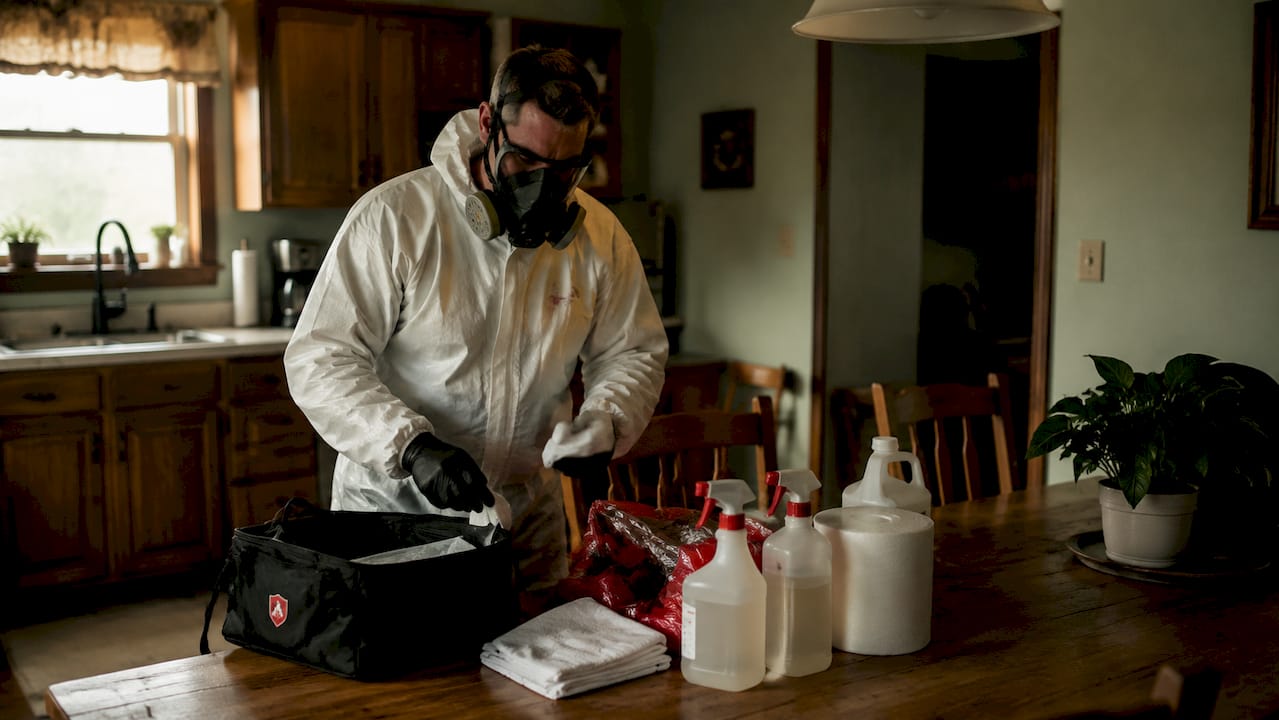
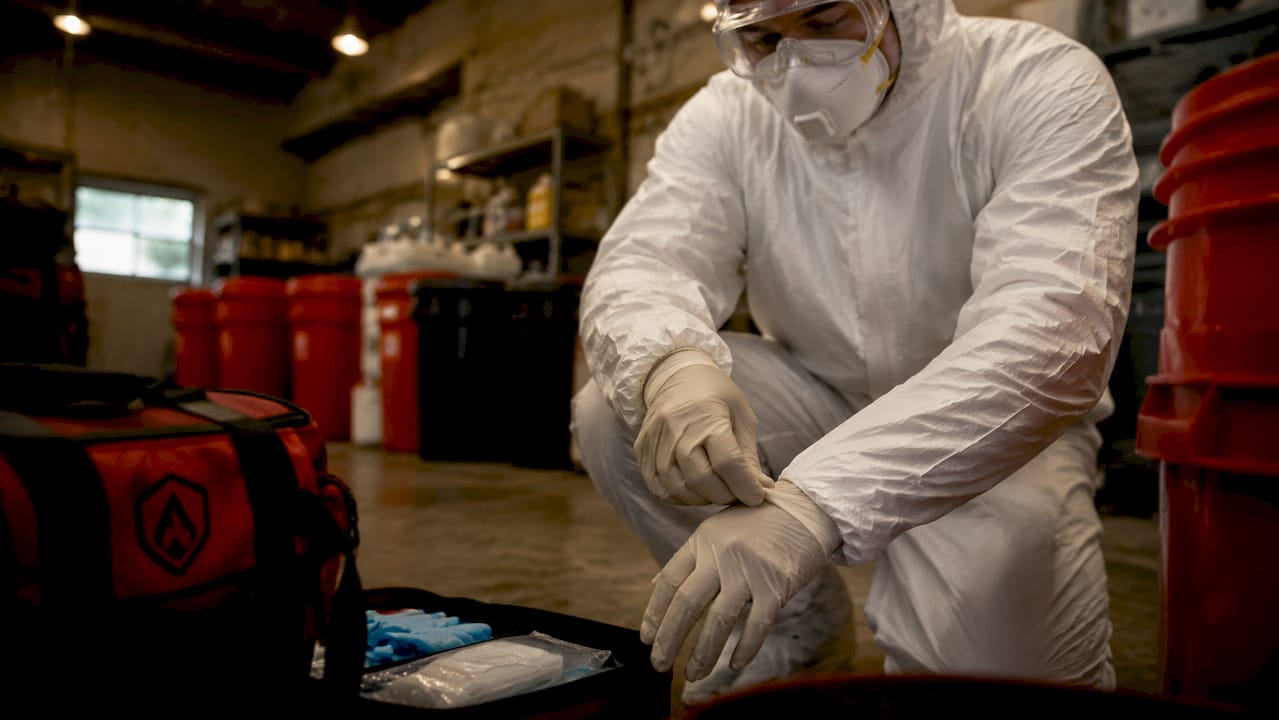
Specialized biohazard cleanup requires a specific set of tools and protective gear that standard cleaning companies do not carry. Using the wrong materials does not just fail to clean the scene. It spreads contamination and exposes workers to serious health risks.
| Equipment Category | Specific Items |
|---|---|
| Personal Protective Equipment | Tyvek suits, N95 or P100 respirators, nitrile gloves, boot covers, eye protection |
| Disinfection Agents | EPA-registered hospital-grade disinfectants, enzymatic cleaners, sporicides |
| Containment Materials | 6-mil plastic sheeting, biohazard tape, negative air pressure machines |
| Removal Tools | Shovels, scrapers, wet/dry vacuums rated for biohazard use |
| Waste Disposal | UN-certified biohazard bags, regulated medical waste containers, licensed transport |
| Verification Tools | ATP meters, surface swab test kits |
Biohazard cleanup requires PPE, EPA-registered disinfectants, containment procedures, and licensed waste disposal. Standard cleaners cannot safely or legally perform this work. Attempting it without proper gear puts workers at direct risk of hepatitis B, hepatitis C, and HIV exposure through contact with contaminated surfaces.
Pro Tip: Before any cleanup begins, confirm your contractor holds current OSHA HAZWOPER certification and carries liability insurance specifically covering biohazard remediation. Ask for documentation before they enter the property.
Preparation steps before cleanup begins include shutting off HVAC systems to prevent airborne contamination, photographing the scene for insurance documentation, and establishing a clean zone outside the affected area for equipment staging.
Step-by-step procedures for cleaning up dead bodies
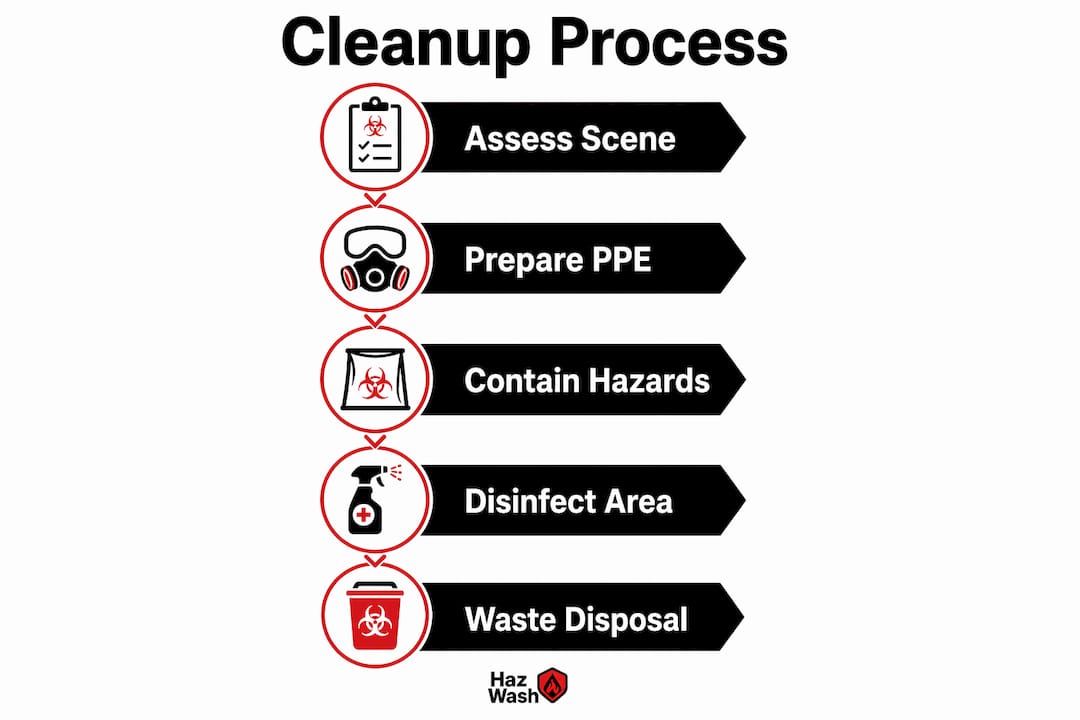
Effective biohazard cleanup follows a multi-phase process: initial containment, complete removal of contaminated materials, disinfection, odor elimination, and verified clearance testing. Skipping any phase leaves biological hazards behind.
-
Initial scene assessment. Technicians evaluate the extent of contamination, identify affected surfaces, and determine whether structural materials require removal. This phase sets the scope and timeline for the entire job.
-
Containment zone setup. Isolating the affected area before removal begins is the highest priority. Plastic sheeting seals doorways and vents. Negative air pressure machines prevent contaminated air from migrating to clean areas of the building.
-
Removal of contaminated materials. Porous materials like carpet, drywall, and subflooring contaminated by body fluids must be physically removed. This is not optional. Disinfectants cannot penetrate deep into porous surfaces, so the material itself must go. All removed items are sealed in UN-certified biohazard bags and transported by licensed medical waste carriers.
-
Multi-pass disinfection. Technicians apply EPA-registered hospital-grade disinfectants in multiple passes to all affected hard surfaces. Each pass requires adequate dwell time, which is the period the disinfectant must remain wet on the surface to kill pathogens. A single application is never sufficient for confirmed biohazard scenes.
-
Odor neutralization. Decomposition odors are neutralized using ozone generators, hydroxyl generators, and thermal fogging. These tools do not mask odors. They chemically break down the organic compounds causing them. This step is critical for restoring habitability, especially in unattended death cases.
-
Verification testing. Technicians use ATP testing and swab tests to confirm surfaces are biologically safe. ATP meters measure adenosine triphosphate, a molecule present in all living cells. A low ATP reading confirms biological contamination has been reduced to safe levels.
Pro Tip: Request ATP test results in writing before signing off on any biohazard cleanup job. Reputable companies provide this documentation as a standard part of their clearance process.
Timeline expectations vary significantly. Fresh scenes typically require 4–8 hours to remediate. Complex decomposition cases, where the body went undiscovered for days or weeks, can require 3–7 days of work. Structural damage from prolonged exposure may extend the timeline further.
| Scene Type | Typical Cleanup Duration |
|---|---|
| Fresh scene, limited contamination | 4–8 hours |
| Moderate decomposition, soft surfaces affected | 1–2 days |
| Advanced decomposition, structural damage | 3–7 days |
Common risks and mistakes in dead body cleanup
The most dangerous mistake families make is attempting to clean a death scene themselves. Bloodborne pathogens including hepatitis B, hepatitis C, and HIV can survive on surfaces for days. Exposure does not require direct contact with visible fluids. Microscopic contamination on seemingly clean surfaces poses the same risk.
Common errors and risks include:
- Premature entry before the scene is released by law enforcement, which can compromise an active investigation.
- Using household cleaners like bleach solutions that are not EPA-registered for biohazard use and cannot neutralize all pathogens present.
- Improper waste disposal by placing contaminated materials in regular trash. This violates federal and state medical waste regulations and carries serious legal penalties.
- Ignoring HVAC systems, which can spread aerosolized contaminants throughout the entire building during cleanup.
- Failing to verify credentials of the cleanup company, which exposes property owners to liability if the work is incomplete or non-compliant.
Families often face emotional confusion during cleanup and may not understand the urgency of hiring licensed professionals immediately after scene release. Grief impairs judgment. Having a trusted contact or resource ready before a crisis occurs removes the burden of making critical decisions under extreme emotional stress.
Verify that any biohazard cleanup company you hire holds OSHA HAZWOPER certification, IICRC credentials, and a current DOT license for regulated medical waste transport. Ask for proof before work begins.
How do you confirm the cleanup is complete and safe?
Completion of a biohazard cleanup is not a judgment call. It is a verified, documented outcome. A reputable company provides written clearance before the property is considered safe for reentry.
Confirmation steps include:
- ATP surface testing at multiple points in the affected area, with results documented in writing.
- Visual inspection by a certified technician confirming no visible contamination remains.
- Odor clearance confirmation verifying that decomposition odors have been fully neutralized, not masked.
- Clearance certificate issued by the licensed cleanup company, which serves as legal documentation for insurance claims and property records.
- Follow-up restoration assessment to determine whether structural repairs such as drywall replacement or flooring installation are needed before the space is habitable.
Insurance companies and property managers require this documentation. For landlords and property managers in particular, a clearance certificate from a licensed company like Hazwash protects against future liability claims related to the remediation. Learn more about medical waste compliance and what proper documentation should include.
Key takeaways
Safe dead body cleanup requires licensed biohazard professionals, EPA-registered disinfectants, and verified clearance testing before any space is considered safe for reentry.
| Point | Details |
|---|---|
| First responders do not clean scenes | Police, EMS, and coroners remove the body only; cleanup responsibility falls to the property owner. |
| Licensed professionals are legally required | Only OSHA HAZWOPER-certified technicians can legally handle and dispose of biohazard waste. |
| Multi-phase process is non-negotiable | Containment, removal, disinfection, odor elimination, and ATP verification must all be completed. |
| Timelines vary by scene severity | Fresh scenes take 4–8 hours; advanced decomposition cases can require 3–7 days of remediation. |
| Documentation protects property owners | Clearance certificates from licensed companies are required for insurance claims and legal compliance. |
What i’ve learned after years of responding to death scenes
The hardest part of this work is not the physical cleanup. It is watching families stand at the door of a loved one’s home, not knowing what to do next, and realizing no one told them what happens after the coroner leaves.
Most people assume the system handles it. They expect that someone official will come back and restore the space. That assumption costs them time, money, and sometimes their health. The gap between body removal and professional remediation is real, and families fall into it every day.
What I tell families is this: the moment the scene is released, the clock starts. Biological contamination does not wait. Every hour of delay in an unattended death case means deeper penetration into flooring, walls, and structural materials. What might have been a one-day job becomes a three-day structural remediation.
The other thing families consistently underestimate is the emotional weight of attempting cleanup themselves. Even with the right protective gear, which most people do not have, the psychological toll of cleaning a space where someone you loved died is severe. Certified professionals are trained to handle this work with discretion and care. That is not a luxury. It is a form of protection for the people left behind.
My honest recommendation: do not wait to find a licensed biohazard company until you need one. Identify a certified local provider now. Confirm their OSHA HAZWOPER credentials, their IICRC certification, and their DOT transport license. Keep the number accessible. When the moment comes, you will not have the bandwidth to research it.
— David
Hazwash provides certified dead body cleanup in metro detroit
When a death occurs, Hazwash responds 24/7 with a certified biohazard remediation team trained in trauma scene restoration, regulated waste removal, and full decontamination. Every technician holds OSHA HAZWOPER, IICRC, and DOT certifications. Every job is documented for insurance and legal compliance.
Hazwash serves families, landlords, and property managers throughout Detroit and surrounding areas. The team handles every phase of the process, from initial containment through ATP-verified clearance, with discretion and care. You should not have to manage this alone. Learn why specialized cleanup teams are the legally and medically necessary choice for any death scene remediation. Contact Hazwash now for immediate, confidential assistance.
FAQ
Who is responsible for cleaning up after a death?
Property owners or next of kin are responsible for cleanup once law enforcement releases the scene. First responders remove the body but have no legal mandate to clean or disinfect.
Can families clean up a death scene themselves?
Families should not attempt this without professional training and proper equipment. Bloodborne pathogens can survive on surfaces for days, and improper disposal of contaminated materials violates federal medical waste regulations.
How long does professional dead body cleanup take?
Fresh scenes typically require 4–8 hours to remediate. Advanced decomposition cases involving structural damage can take 3–7 days depending on contamination depth.
What certifications should a biohazard cleanup company hold?
Look for OSHA HAZWOPER certification, IICRC credentials, and a current DOT license for regulated medical waste transport. Ask for documentation before any work begins.
How do you know when a biohazard cleanup is complete?
Cleanup is confirmed through ATP surface testing and written clearance certificates from the licensed company. These documents verify biological contamination has been reduced to safe levels and protect property owners legally.