Rat Feces Clean Up: Safe Steps for Every Home
Rat Feces Clean Up: Safe Steps for Every Home
TL;DR:
Finding rat droppings in your home poses serious health risks from diseases like hantavirus, salmonellosis, and leptospirosis. Proper wet cleaning with disinfectants, PPE, and thorough surface disinfection are essential, and professional help should be sought for extensive contamination or vulnerable populations. DIY cleanup requires careful adherence to safety steps, but certified biohazard teams provide the most effective and safe remediation for severe or complex rat infestations.
Finding rat droppings in your home is unsettling. It’s also a genuine health hazard that demands careful action. Rat feces can carry serious diseases including salmonellosis and leptospirosis, and disturbing them the wrong way puts you and your family at real risk. This guide walks you through a safe, step-by-step rat feces clean up process so you can act confidently without making the situation worse. You’ll also learn exactly when calling in certified professionals is the right call.
Table of Contents
Key takeaways
What to prepare before you start cleaning
Getting your setup right before you touch anything is not optional. The wrong approach can spread contamination further and expose you to exactly the pathogens you are trying to avoid.
Personal protective equipment
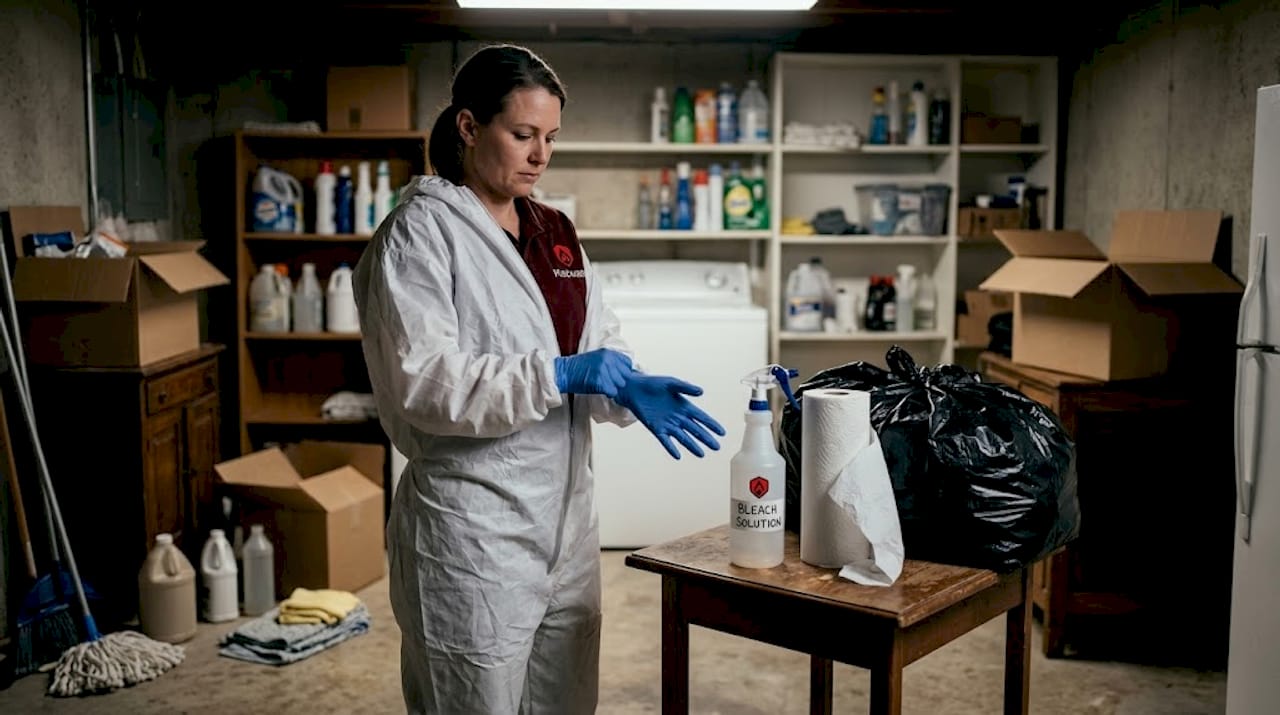
You need three things before entering a contaminated area:
Gloves: Thick rubber or nitrile gloves. Single-use disposable gloves work well and eliminate cross-contamination risk.
Respirator: An N95 is the minimum standard. If you are dealing with heavy contamination, a P100 respirator provides a higher level of protection.
Eye protection: Safety goggles or glasses. Splashing disinfectant and airborne particles can both reach your eyes.
Do not skip any of these. Even what looks like a small amount of rodent waste can carry a significant pathogen load.
Ventilation and disinfectants
Open windows and doors for at least 30 minutes before you start cleaning. This reduces the concentration of any airborne particles already present. Do not point a fan directly at the droppings. Moving air across dry waste is exactly what you want to avoid.
For your disinfectant, mix a bleach solution using 1.5 cups of household bleach per gallon of water. This creates roughly a 10% solution strong enough to neutralize bacteria and viruses on contact. Alternatively, any EPA-registered disinfectant labeled for use against rodent-borne pathogens will work.
Disinfectant optionDilution ratioBest useHousehold bleach solution1.5 cups per 1 gallon of waterHard surfaces, concrete, tileEPA-registered sprayPer product labelMulti-surface, carpetsCommercial disinfectant wipesReady to useSmall, isolated areas only
Gather your supplies before you begin: paper towels, heavy-duty trash bags, a spray bottle for your bleach solution, and a bucket if you are cleaning floors.
Pro Tip: Prepare a second pair of gloves and set them outside the contaminated area. If you need to leave the space mid-cleanup to grab supplies, you can avoid contaminating surfaces in the rest of your home.
Step-by-step wet cleaning process
This is where most homeowners go wrong. The instinct is to sweep or vacuum. Both methods will aerosolize virus-containing particles that become dangerous when inhaled. Wet cleaning immobilizes the waste before you ever touch it.
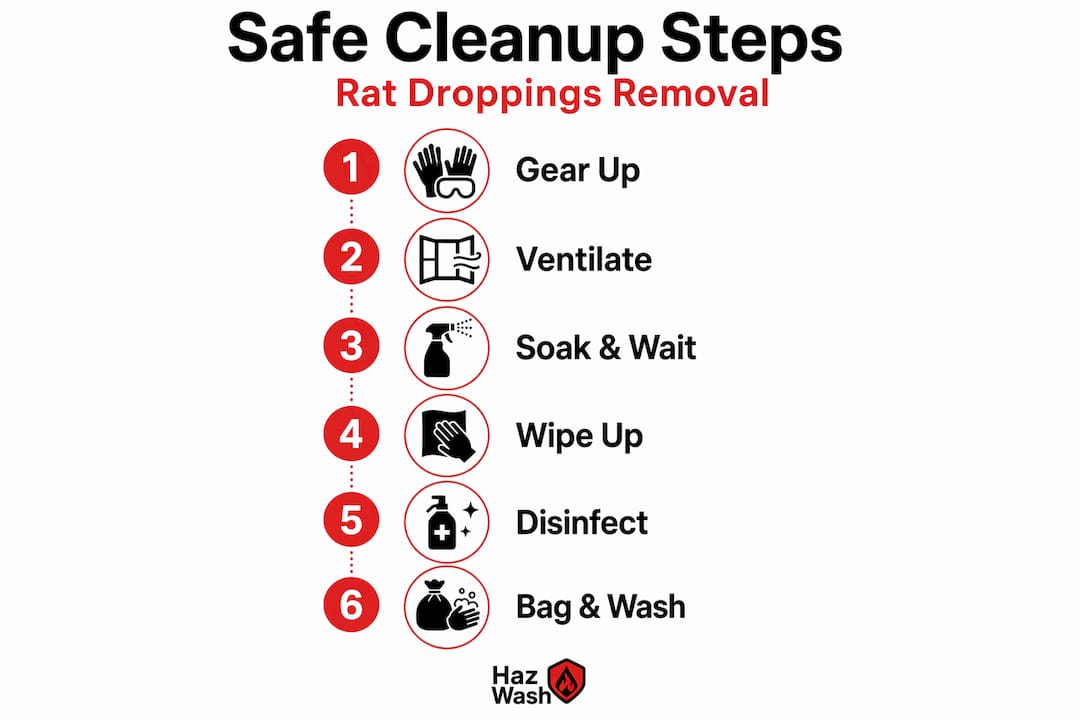
Follow these steps exactly:
Spray the droppings generously. Saturate each dropping and the surrounding area with your bleach solution or EPA-registered disinfectant. Do not be conservative here. The goal is to fully wet the waste so it cannot become airborne.
Wait 5 to 10 minutes. This dwell time is not optional. The disinfectant needs sustained contact with the material to kill pathogens effectively. Set a timer if you need to.
Lift and wipe with paper towels. Use paper towels to carefully pick up the saturated droppings. Work from the outer edges of the contaminated area toward the center. Do not scrub or rub. A gentle lifting motion prevents you from grinding particles into the surface or into the air.
Bag the waste immediately. Place the used paper towels and droppings directly into a plastic bag. Seal it tightly. Then place that sealed bag inside a second plastic bag and seal that one too. Double-bagging prevents leaks and cross-contamination during handling and disposal.
Re-spray the surface. After the physical waste is removed, spray the area again with disinfectant and let it sit for another 5 minutes before wiping clean.
Dispose of bags in an outdoor trash bin. Do not leave bagged waste inside your home, even briefly.
Handling carpet contamination
Carpet is more complicated because the fibers trap particles. Moisten the droppings carefully with your disinfectant spray and allow the dwell time before attempting removal. Use paper towels to lift the softened waste. Do not rub it into the carpet. After removing the bulk of the material, apply disinfectant shampoo or carpet cleaner and work it gently into the affected area. A second application is worth the extra time.
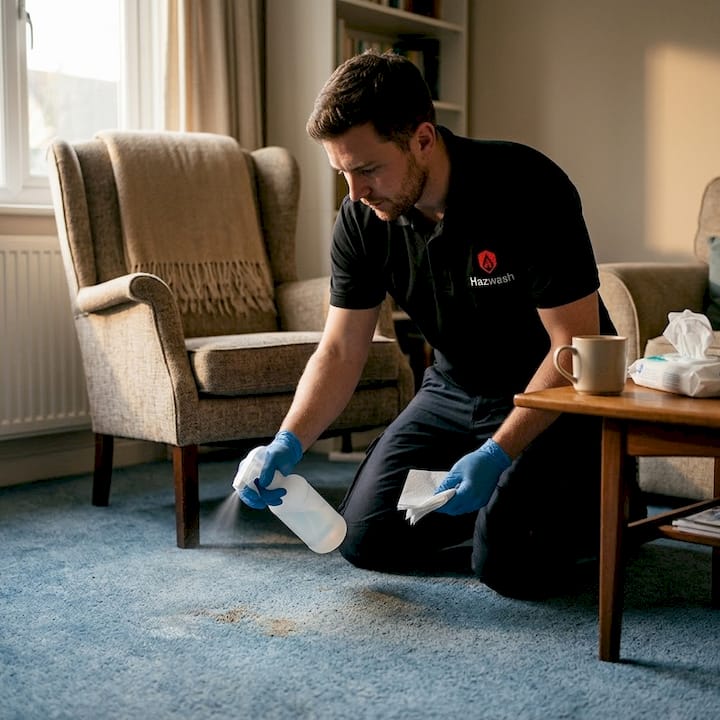
Pro Tip: Standard steam cleaners can actually make things worse on carpets. High-pressure steam may aerosolize droplets before the heat has time to neutralize them. Stick to chemical disinfectants and manual removal for carpeted areas.
Disinfecting surfaces after removal
Removing the visible droppings is only part of the job. Rat urine, which is often invisible, covers a much wider area than the droppings themselves. Thorough surface disinfection is what actually reduces your pathogen exposure to a safe level.
After physical removal, disinfectants must stay wet on the surface for the full contact time listed on the product label. Most EPA-registered products require between 3 and 10 minutes. Wiping too soon means the disinfectant never had time to work. This is one of the most common mistakes people make when cleaning rodent waste.
For hard surfaces like wood, tile, and concrete, follow this checklist:
Apply disinfectant and allow full contact time before wiping.
Wipe in one direction rather than back and forth to avoid spreading residual contamination.
Dispose of all cleaning cloths and paper towels as contaminated waste.
Wash the area with warm soapy water after disinfecting for a secondary layer of cleaning.
Discard any food items, open packages, or exposed dishes that rats may have contacted. Do not try to salvage them.
After you finish the entire cleanup, remove your gloves carefully by peeling them inside out. Wash your hands with soap and water for at least 20 seconds even if you were wearing gloves. Launder any clothing you wore during cleanup in hot water. This post-cleanup hygiene step matters as much as the cleaning itself.
Surface typeRecommended approachNotesHard floors (tile, wood)Bleach solution, then soapy water rinseWipe in one direction onlyCarpetDisinfectant spray plus shampooNo rubbing or steam cleaningInsulation or drywallDo not attempt DIYCall a certified biohazard teamHVAC vents and ductsDo not attempt DIYRequires containment and HEPA equipment
When to call a professional instead
There are situations where DIY rat feces clean up is not enough. Knowing the boundary protects you and your household from incomplete remediation that leaves pathogens behind.
Consider professional biohazard cleanup when any of the following apply:
Contamination covers multiple rooms or large areas. When droppings are spread across a significant portion of your home, the risk of cross-contamination during DIY cleanup is high.
The infestation reached your HVAC system. Contaminated HVAC spaces require specialized containment and HEPA filtration that standard household equipment cannot provide.
Rat waste has saturated insulation or wall cavities. These materials harbor contamination that surface cleaning cannot address.
Children, elderly individuals, or immunocompromised people live in the home. Vulnerable populations face a disproportionate health risk from even low-level exposure.
You are unsure whether the infestation is fully resolved. Cleaning active contamination without eliminating the source only creates an ongoing cycle of risk.
“Professional biohazard teams use industrial HEPA vacuums rated to capture 99.97% of particles down to 0.3 microns. That level of filtration is simply not achievable with household vacuums, and it is what separates surface cleaning from genuine decontamination.”
If you are weighing your options, Hazwash has a helpful resource on when to hire professionals for rodent contamination that outlines exactly what separates manageable DIY situations from those that require certified intervention.
My honest take on rat feces cleanup
I’ve seen the same mistake over and over again: people get through a cleanup and feel good about what they did, but they never truly addressed the source of the infestation. The droppings are gone, the area smells clean, and then two weeks later the problem is back. Cleaning without pest control is like patching a leak without turning off the water.
The other thing I want to be direct about is the wet cleaning requirement. I understand it feels awkward and time-consuming compared to just grabbing a broom. But airborne rodent waste is genuinely dangerous, and hantavirus in particular has a fatality rate that should give anyone pause. The inconvenience of wet cleaning is worth it every single time.
My practical advice: do not panic, but do not underestimate the job either. A small, contained area of droppings can be addressed safely at home if you follow the steps in this guide. A larger contamination or anything touching your HVAC is not a DIY situation. That is not about lacking capability. It is about having the right equipment and training to do the job without creating new exposure risks in the process.
Read more about unattended animal feces risks if you want a clear picture of what happens when rodent contamination is left too long before action is taken.
— David
Professional rat feces cleanup from Hazwash
When the contamination goes beyond what a bucket of bleach can address, Hazwash is ready to help. Our certified team responds 24/7 to rodent contamination calls throughout Detroit and the surrounding areas.
Hazwash uses hospital-grade disinfectants and industrial HEPA equipment to fully decontaminate spaces affected by rat and mouse waste. Whether the issue is a single room or a whole-property infestation involving HVAC systems, our OSHA HAZWOPER and IICRC certified specialists handle the job with safety, discretion, and full regulatory compliance. You should not have to guess whether your home is truly clean. Our biohazard cleanup services take the risk and uncertainty off your hands completely. Contact Hazwash today for a confidential assessment and get your home restored to a safe, healthy condition. Visit Hazwash to learn more about our rodent remediation services.
FAQ
What is the safest way to clean up rat droppings?
The safest method is to wet the droppings thoroughly with a bleach solution or EPA-registered disinfectant, let it sit for 5 to 10 minutes, then lift the saturated material with paper towels. Never sweep or vacuum dry droppings, as this aerosolizes dangerous particles.
Can rat feces make you sick if you breathe near them?
Yes. Disturbing dry rat droppings can release airborne particles carrying viruses like hantavirus, as well as bacteria linked to salmonellosis and leptospirosis. Wearing an N95 respirator during cleanup significantly reduces your inhalation risk.
How do I dispose of rat feces after cleanup?
Place all contaminated paper towels, droppings, and materials in a sealed plastic bag. Put that bag inside a second sealed bag and dispose of it in an outdoor trash bin. Do not leave bagged waste inside your home.
When should I hire a professional for rat feces cleanup?
Hire a certified biohazard professional when contamination covers multiple areas, involves HVAC systems or insulation, or when children, elderly, or immunocompromised individuals live in the home. Professional teams have HEPA equipment and containment protocols that DIY methods cannot replicate.
Is bleach enough to disinfect surfaces after removing rat droppings?
A 10% bleach solution mixed at 1.5 cups per gallon of water is effective on most hard surfaces when applied with a full 5-minute contact time. For porous materials like carpet or insulation, bleach alone is not sufficient and a certified cleanup service is recommended.