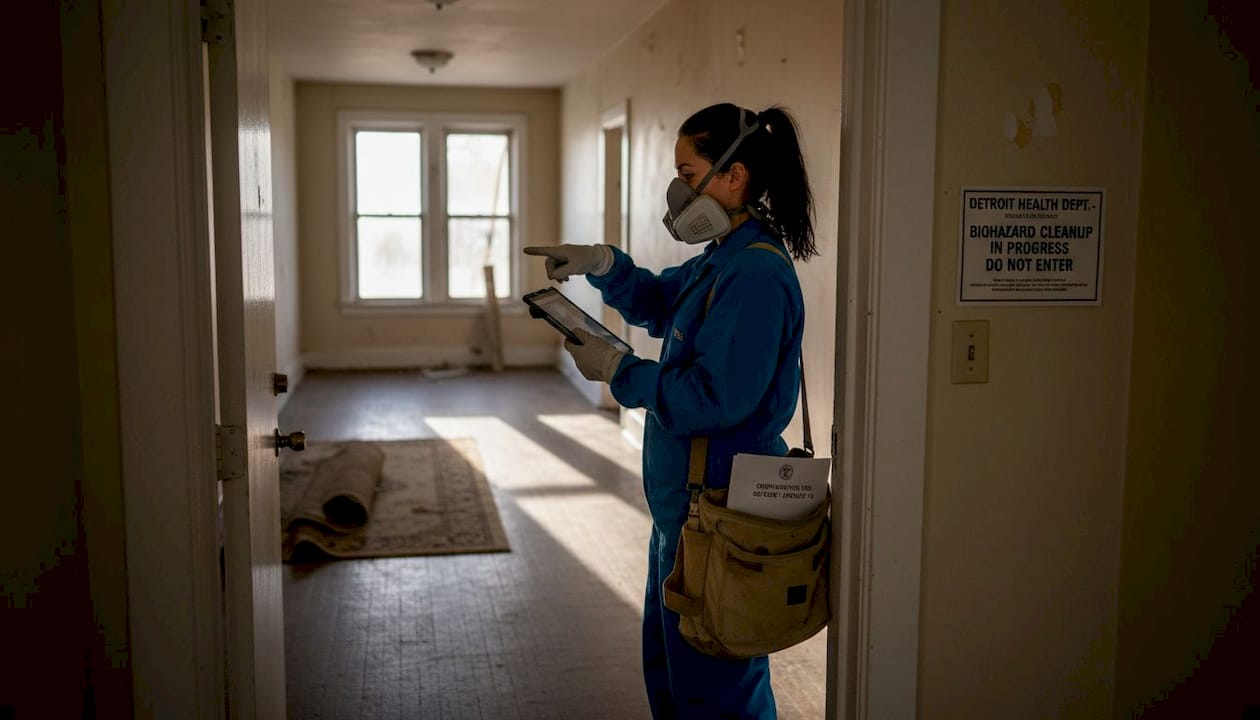
Biohazard cleaning for Detroit landlords: step-by-step guide
Biohazard cleaning for Detroit landlords: step-by-step guide
You get the call no landlord wants. A tenant has vacated, and what they left behind is not just a mess. There is blood on the floor, drug paraphernalia in the bathroom, and a smell that tells you something serious happened. In Detroit, this is not just a cleaning problem. It is a legal one. Michigan law requires specific handling, storage, and disposal of biohazard materials, and failing to comply can result in fines, liability claims, and properties that sit vacant for months. This guide walks you through every step, from identifying the situation to getting a clearance certificate that protects you.
Table of Contents
- Understanding biohazard situations in Detroit rentals
- Preparing for safe and compliant biohazard cleanup
- The step-by-step biohazard cleaning process for Detroit rentals
- Verifying cleanup and restoring the rental property
- Our take: Why local expertise and compliance matter most for Detroit landlords
- Need help? Detroit’s certified biohazard cleaning pros are ready
- Frequently asked questions
Key Takeaways
| Point | Details |
|---|---|
| Know legal requirements | Detroit landlords must follow Michigan waste and notification rules for all biohazard situations. |
| Hire certified experts | Only local, certified cleaning firms ensure compliance, safety, and future rental security. |
| Document everything | Always keep before/after photos, clearance certificates, and disposal records for liability protection. |
| Don’t risk DIY cleanup | Handling biohazards without proper training can be dangerous, noncompliant, and costly in the long run. |
Understanding biohazard situations in Detroit rentals
Not every difficult cleanup qualifies as a biohazard event. But many situations in Detroit rentals do, and landlords often underestimate how broadly the category applies.
Common biohazard scenarios in Detroit rental properties include:
- Unattended deaths, where decomposition has affected floors, walls, or subflooring
- Drug use and manufacturing, including meth residue, sharps, and chemical contamination
- Hoarding situations involving human or animal waste, rotting food, and mold
- Sewage backups and black water events that introduce dangerous pathogens
- Blood spills from violence, accidents, or medical emergencies
- Feces and urine contamination from tenants or animals
Michigan’s biohazard waste regulations are clear: sharps, blood, and bodily fluids must follow segregation, secure storage, and licensed disposal protocols. Ignoring these rules puts you at risk of EGLE (Environment, Great Lakes, and Energy) enforcement action, which can include fines and mandatory recleaning orders.
The health risks are equally serious. Bloodborne pathogens like hepatitis B and HIV can survive on surfaces for days. Decomposition fluids soak into porous materials and create long-term odor and pathogen problems. Unattended deaths and hoarding create edge cases that often require professional support and compliance, especially when contamination is not visible to the naked eye.
As a landlord, you are legally responsible for providing a safe and habitable property. That responsibility does not pause because a tenant caused the problem. You still own the building, and you are the one who must act.
“Biohazard situations in rental properties are not optional cleanups. They are legal obligations under Michigan law, and the timeline to act is shorter than most landlords expect.”
Pro Tip: Before anyone enters the affected space, take timestamped photos from the doorway. Document everything before cleanup begins. This protects you legally and supports any insurance claim you file.
For more context on what crime scene cleanup in Detroit involves legally and practically, review the full process before you make any decisions.
Preparing for safe and compliant biohazard cleanup
With a strong understanding of biohazard types and your legal risks, the next step is preparing for a compliant and effective cleanup.
Before any remediation begins, complete these steps:
- Secure the area. Lock the unit and restrict access to anyone without proper personal protective equipment (PPE).
- Document with photos and video. Capture every affected surface, room, and item before anything is moved.
- Notify local authorities if required. Michigan Public Health Code, Part 138)/documents/mcl/pdf/mcl-368-1978-12-138.pdf) requires landlords to notify health departments for unattended deaths and to work with licensed, certified haulers for biohazard disposal.
- Contact your insurance provider. Many policies cover biohazard remediation. Report the incident promptly.
- Hire a certified biohazard contractor. Look for Michigan-specific credentials including an EGLE Waste Generator ID, OSHA HAZWOPER certification, and EPA compliance documentation.
| Preparation step | Documents or actions needed | What to expect |
|---|---|---|
| Secure the unit | Lock change, access log | Prevent unauthorized entry |
| Notify health department | Incident report, death certificate | Compliance confirmation |
| Hire certified contractor | EGLE ID, OSHA cert, insurance | Verified legal cleanup |
| File insurance claim | Photos, contractor estimate | Partial or full cost coverage |
| Collect disposal records | Manifest from hauler | Proof of legal disposal |
Unattended death cleanups are among the most intensive. They often require 20 to 60 hours of labor and can involve removing subflooring, drywall, and insulation if fluids have penetrated building materials. Budget and timeline expectations should reflect that reality.
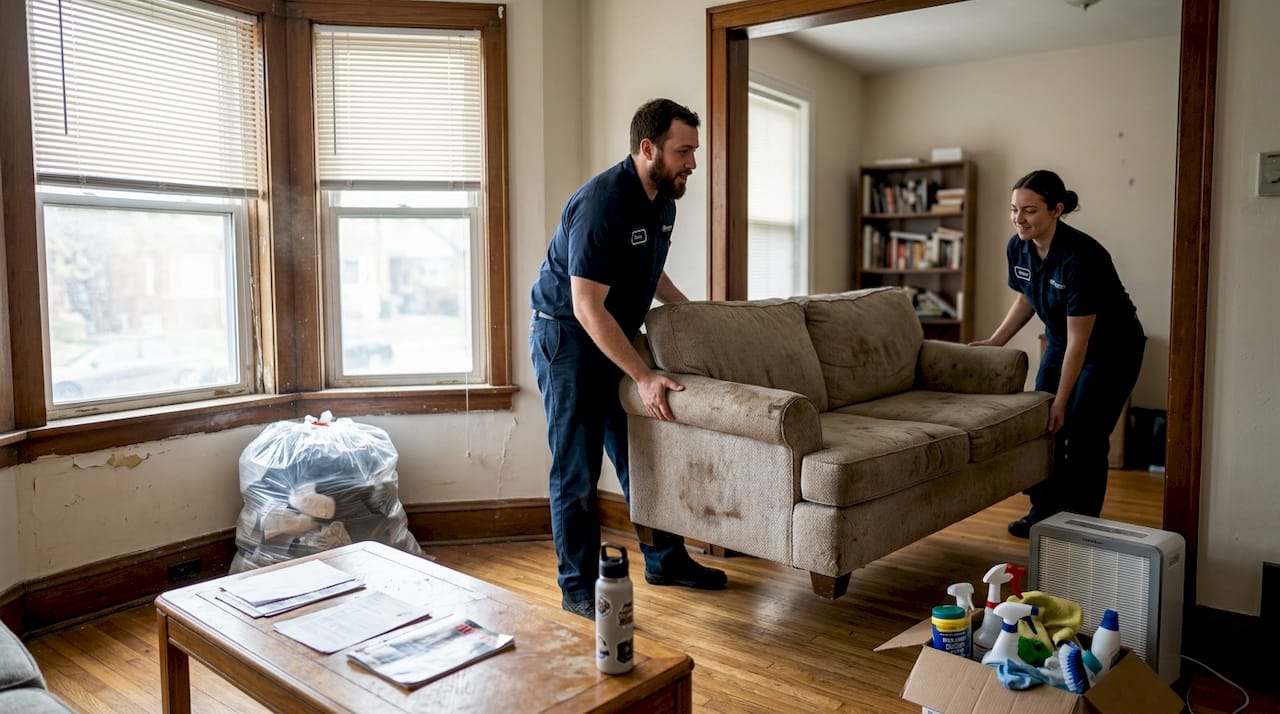
A Detroit biohazard cleaning company with local credentials will know exactly which notifications are required and which disposal facilities are licensed to accept Michigan biohazard waste. Do not assume a national franchise has that local knowledge.
For situations involving hoarding cleanup or feces and urine contamination, the preparation phase may also include pest control coordination and structural assessments.
Pro Tip: Ask any contractor you consider hiring to show you their EGLE Waste Generator ID and current OSHA HAZWOPER certification before signing anything. A legitimate firm will provide this without hesitation.
The step-by-step biohazard cleaning process for Detroit rentals
After proper prep, here is how a compliant Detroit biohazard cleaning unfolds, step by step.
- Site assessment. Certified technicians evaluate the full extent of contamination, including hidden areas like subfloors, wall cavities, and HVAC systems.
- Hazard segregation. All biohazardous materials are separated from general waste per EGLE requirements. Nothing is mixed.
- Initial removal. Contaminated items, including furniture, flooring, and personal belongings, are bagged in certified biohazard containers.
- Deep cleaning and disinfection. Surfaces are treated with EPA-registered disinfectants. This step targets pathogens that survive standard cleaning products.
- Demolition if required. Biohazard removal often requires secure storage, labeled disposal, and demolition when contamination reaches floors or walls. Subfloor removal is common in unattended death cases.
- Odor remediation. Ozone treatment, hydroxyl generators, or enzyme-based products are used to eliminate odors at the molecular level.
- Secure waste storage and transport. All biohazard waste is stored in labeled, sealed containers and transported by a licensed hauler with a proper waste manifest.
- Final verification. The site is inspected and cleared before any documentation is issued.
Black water events like sewage backups can require extensive demolition for safety, especially when contaminated water has traveled through walls or under flooring.
| Factor | DIY cleanup | Professional biohazard remediation |
|---|---|---|
| Pathogen elimination | Unlikely to be complete | Verified with EPA-grade products |
| Michigan law compliance | High risk of violation | Fully compliant with EGLE rules |
| Insurance acceptance | Rarely accepted | Documented and insurable |
| Cost (long-term) | Higher due to recleaning | Predictable, one-time remediation |
| Time to reoccupy | Unknown | Cleared with official certificate |
Safety reminder: Never attempt biohazard removal without proper training, PPE, and licensed disposal access. Exposure to bloodborne pathogens, decomposition gases, or drug residue can cause serious illness or death.
For trauma cleanup in Detroit or situations involving violence and blood spills, the process above applies fully. Professional Detroit odor removal is often the final step that determines whether a unit is truly rentable again.
Verifying cleanup and restoring the rental property
Once cleanup is complete, verification and documentation are crucial for long-term protection.
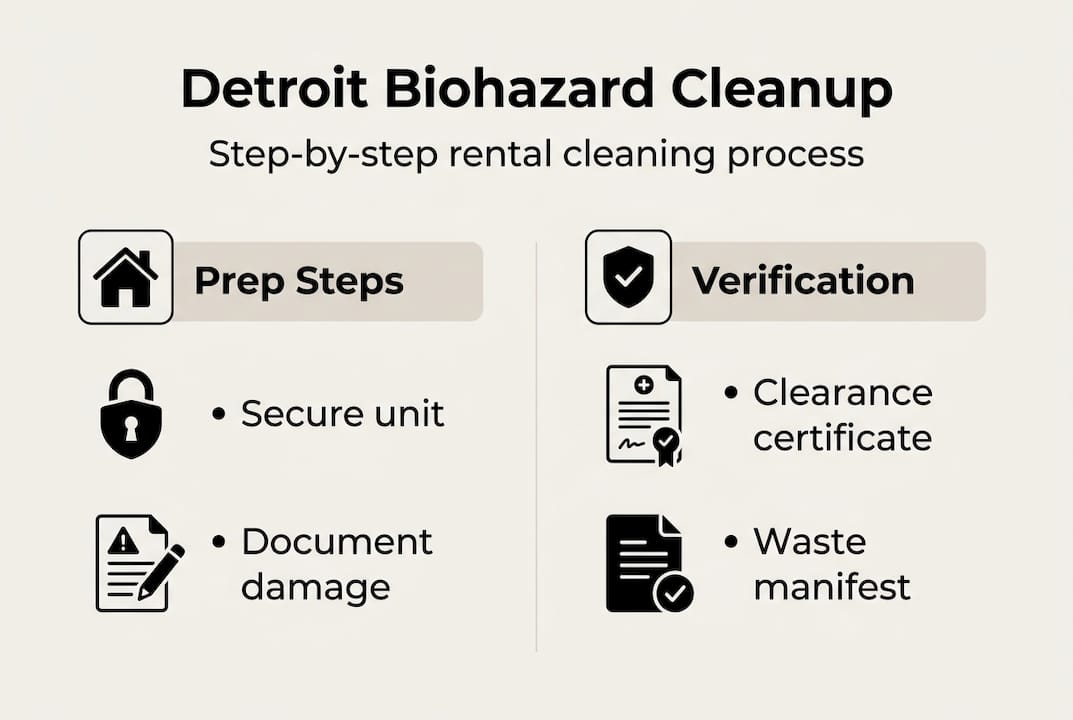
Do not assume the job is done because the visible contamination is gone. A thorough verification process protects you from future liability and gives you the documentation you need for insurers, health departments, and prospective tenants.
Use this inspection checklist after cleanup:
- Visual inspection. No staining, residue, or visible contamination on any surface.
- Odor check. No lingering biological or chemical odors. A professional odor test may be warranted.
- Certification paperwork. Contractor provides a signed clearance certificate confirming the site meets Michigan standards.
- Before and after photos. Confirm the contractor has documented both states of the property.
- Waste disposal manifest. Confirm all biohazard waste was transported and disposed of legally.
- Structural integrity check. If demolition occurred, confirm repairs meet local building codes.
Proper documentation)/documents/mcl/pdf/mcl-368-1978-12-138.pdf) protects landlords from future liability and demonstrates compliance with Michigan law. Keep copies of everything in a dedicated file for the property.
When communicating with tenants or prospective renters, you are not required to disclose every detail of what occurred. However, you should be prepared to show compliance documentation if asked by a health inspector or attorney.
Reoccupancy guidance: a unit is generally safe to relist once a clearance certificate is issued, all repairs are complete, and no odor or visible contamination remains. Do not rush this step. A unit relisted too early can trigger complaints, inspections, and legal exposure.
For resources on hazardous waste compliance in Detroit, review local guidance before making any reoccupancy decisions.
Pro Tip: Ask your cleanup contractor for an official clearance certificate on company letterhead, signed by a certified technician. This document is your primary legal protection if the situation is ever questioned.
Our take: Why local expertise and compliance matter most for Detroit landlords
With the standard process covered, here is an experienced perspective every Detroit landlord should consider.
National biohazard franchises advertise fast response and standardized processes. But Detroit landlords operate under Michigan-specific regulations that a company headquartered in another state may simply not know. EGLE Waste Generator IDs, Wayne County disposal requirements, and Detroit health department notification protocols are not generic knowledge. They require local experience.
We have seen properties cleaned by out-of-state contractors that passed a visual inspection but failed EGLE review because the waste manifests were incomplete or the disposal facility was not licensed in Michigan. That means recleaning, more cost, and more vacancy time.
Cheap or DIY options carry the same risk. Incomplete decontamination is not just a health hazard. It is a liability that follows the property through every future lease.
Properties cleaned by locally certified teams rent faster. Tenants and inspectors respond to documentation. A proper clearance certificate from a Michigan-credentialed firm signals that the property is safe, legally handled, and professionally restored.
Always confirm your contractor is current with Detroit and Michigan biohazard training before work begins. For complex situations, Detroit hoarding cleanup experts with local credentials are the only reliable choice.
Need help? Detroit’s certified biohazard cleaning pros are ready
If you are dealing with a biohazard situation in your Detroit rental property, acting quickly and correctly is the only path that protects your investment and your tenants.
HazWash LLC specializes in Michigan regulations, city permitting, and discreet, landlord-focused biohazard remediation across Detroit and surrounding areas. Our certified technicians hold OSHA HAZWOPER, IICRC, and DOT credentials, and we carry full EGLE compliance documentation for every job. Whether you need Detroit hoarding cleanup or emergency trauma cleanup in Detroit, we respond 24/7. Contact us today for a confidential consultation or an on-site assessment of your property.
Frequently asked questions
What qualifies as a biohazard that must be professionally cleaned in Detroit rentals?
Any situation involving blood, bodily fluids, sharps, drug residue, animal or human waste, or sewage backups usually requires professional biohazard cleaning per Michigan law. Biohazard waste must be handled by licensed haulers and disposed of in compliance with state regulations.
What paperwork should landlords collect after a biohazard cleaning?
Request a clearance certificate, before and after photos, and a waste disposal manifest to prove legal compliance. Documentation protects landlords)/documents/mcl/pdf/mcl-368-1978-12-138.pdf) from future liability under the Michigan Public Health Code.
How quickly must a biohazard situation in a Detroit rental be addressed?
Immediate action is best to prevent tenant exposure and meet legal requirements. Unattended deaths)/documents/mcl/pdf/mcl-368-1978-12-138.pdf) require notification to local health departments and must be addressed within days, not weeks.
Can a landlord in Detroit handle biohazard cleaning themselves to save money?
DIY cleanup is risky, may not meet state regulations, and can result in fines or mandatory recleaning orders. Improper disposal risks EGLE enforcement action, making professional services the safer and more cost-effective choice long-term.