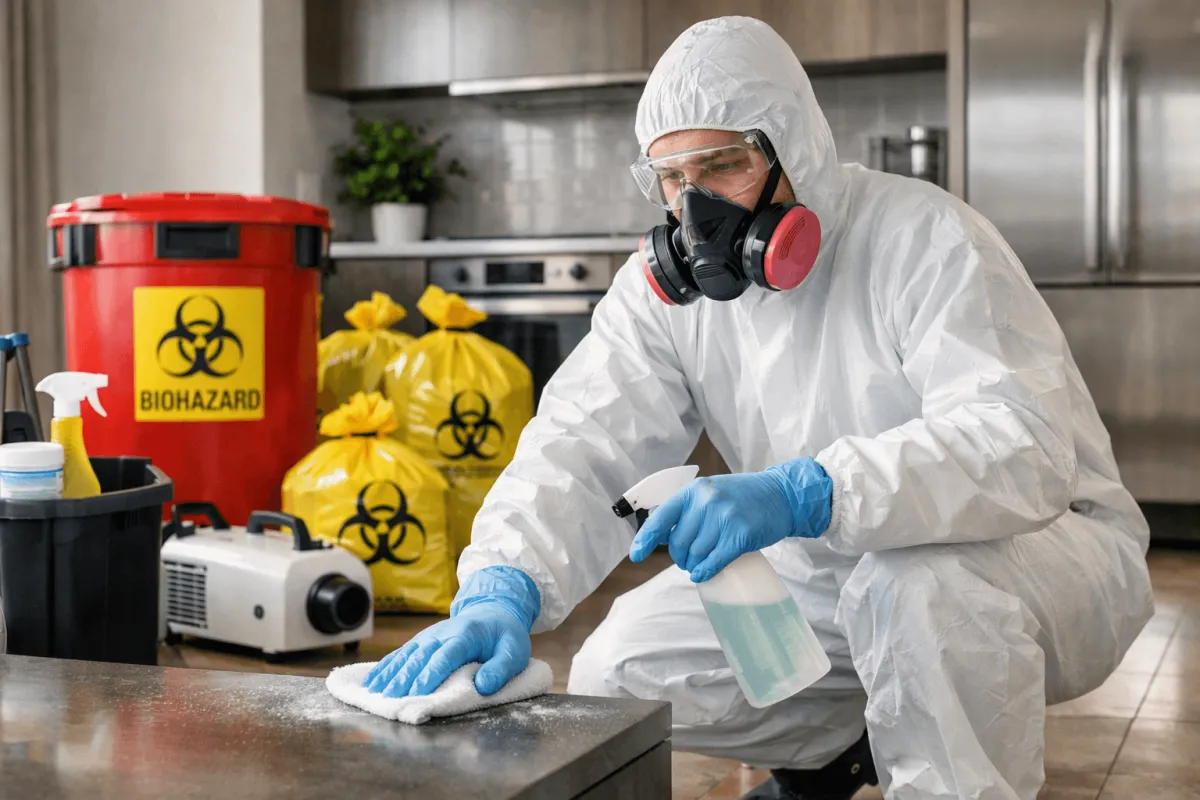
What Happens After a Biohazard Incident? A Guide to Cleanup, Odor Removal, and Waste Disposal
A biohazard incident can leave a property owner facing several problems at once: visible contamination, affected flooring or furnishings, persistent odor, and materials that cannot simply go into household trash. The right response depends on what happened, how far contamination travelled, and which surfaces can be cleaned versus removed.
At HazWash, we approach these situations as remediation projects rather than ordinary cleaning jobs. Our Metro Detroit work includes blood, trauma, death, odor, and hazardous-material cleanup, with discreet response and documented waste handling.
The Visible Area Is Only the Starting Point
Blood or other potentially infectious material can affect porous and nonporous surfaces differently. OSHA requires contaminated work surfaces to be cleaned and decontaminated after contact with blood or other potentially infectious materials, and its Bloodborne Pathogens Standard defines certain blood-contaminated items as regulated waste.
That is why our professional blood clean up Detroit, MI service begins by identifying where contamination actually reached. A hard surface may be suitable for cleaning and disinfection, while carpet, padding, subflooring, drywall, or other porous materials may need closer evaluation.
The aim is to understand what can be retained responsibly and what cannot.
Trauma Cleanup Is About Control, Not Cosmetic Cleaning
A traumatic event can involve blood, body fluids, sharps, damaged materials, and emotionally difficult circumstances. Our trauma cleanup service in Detroit, MI, is structured around controlling the affected area, removing contamination, decontaminating suitable surfaces, and handling waste appropriately.
Privacy matters too. HazWash provides discreet service across Metro Detroit, including unmarked response, because families, landlords, and property managers may be dealing with a situation they do not want made public.
For families seeking suicide cleanup services in Detroit, MI, the property needs careful attention without asking relatives or occupants to sort through contaminated materials themselves.
Odor Can Tell You Something About the Property
A strong odor is not always separate from the original incident. Organic contamination can penetrate materials, and an odor that returns after basic cleaning may point to a source remaining in flooring, cabinetry, drywall, insulation, or other porous areas.
Our odor removal service in Detroit, MI, therefore starts with source identification. If contaminated material remains, deodorizing the air alone does not address why the smell is returning.
For broader odor problems, the same principle applies to an odor removal service: determine whether the source can be cleaned, treated, isolated, or needs removal before choosing the treatment method.
Where Chlorine Dioxide Fits
Some odor problems remain after contaminated material has been removed and the space has been cleaned. In appropriate cases, we use professional oxidizing treatments as part of the odor-remediation strategy.
Our chlorine dioxide odor removal process uses ClO₂ gas because it can move into porous and difficult-to-reach areas where surface sprays may not reach. HazWash seals and prepares the treatment environment, calculates the application, and ventilates and clears the space before re-entry.
This is not a DIY step. The treatment requires controlled application, an unoccupied space, and proper handling.
Waste Disposal Is Part of the Cleanup
Once contaminated material is removed, the job is not finished simply because it has left the room. Packaging, transportation, disposal, and documentation matter.
HazWash maintains DOT/RCRA waste-handling credentials and publishes guidance on hazardous waste disposal Detroit requirements. You can also check our EGLE Waste Generator ID, USDOT and MC numbers, HAZWOPER 40, Bloodborne Pathogen, and IICRC odor/trauma credentials.
This compliance side matters when a property owner, landlord, or business needs a clear record of how affected materials were handled.
What Should a Property Owner Do First?
Avoid disturbing the affected area more than necessary. Moving contaminated furniture, pulling up flooring, or attempting aggressive cleaning can enlarge the work area and expose people who are not equipped for biohazard handling.
Instead, restrict access and contact a qualified cleanup provider. OSHA treats occupational exposure to blood and other potentially infectious material as a recognized workplace hazard, including for workers performing cleanup.
At HazWash, we assess the property, explain what needs attention, and determine which parts of the job require removal, decontamination, odor treatment, or regulated disposal.
Cleanup Should Solve the Whole Problem
A biohazard incident is rarely just a stain. The real question is whether contamination has been removed, affected materials handled correctly, odors addressed at their source, and the property documented and returned to a usable condition.
If you are dealing with blood, trauma, an unattended death, persistent odor, or another biohazard situation in Metro Detroit, contact HazWash for a discreet assessment. We provide 24/7/365 emergency response and can explain the next step based on the conditions at your property.
