The Complete Cleanup Process After a Traumatic or Biohazard Event in Detroit
After a traumatic or biohazard event, the property may look like one problem but contain several different cleanup decisions. The affected area has to be assessed, access controlled, materials evaluated, contamination removed, surfaces decontaminated, odors addressed, and waste handled correctly.
At HazWash, we use a documented, compliance-focused process for homes, rentals, businesses, and other properties across Metro Detroit. The exact scope changes with every scene, but the purpose remains the same: deal with the conditions that are actually present instead of applying a generic cleaning routine.
Start With the Scene, Not the Stain
The first useful question is not “What cleaner removes this?” It is “What was affected?”
Blood and other potentially infectious materials may reach flooring seams, furniture, wall surfaces, subfloors, or nearby contents. OSHA requires appropriate decontamination of contaminated work surfaces and sets worker-protection requirements for occupational exposure to blood and other potentially infectious materials.
Our blood clean up in Detroit, MI begins with the affected area and the materials within it. We look at what can be cleaned and retained, what needs targeted removal, and what should remain undisturbed until the cleanup plan is clear.
Containment Helps Keep the Job From Growing
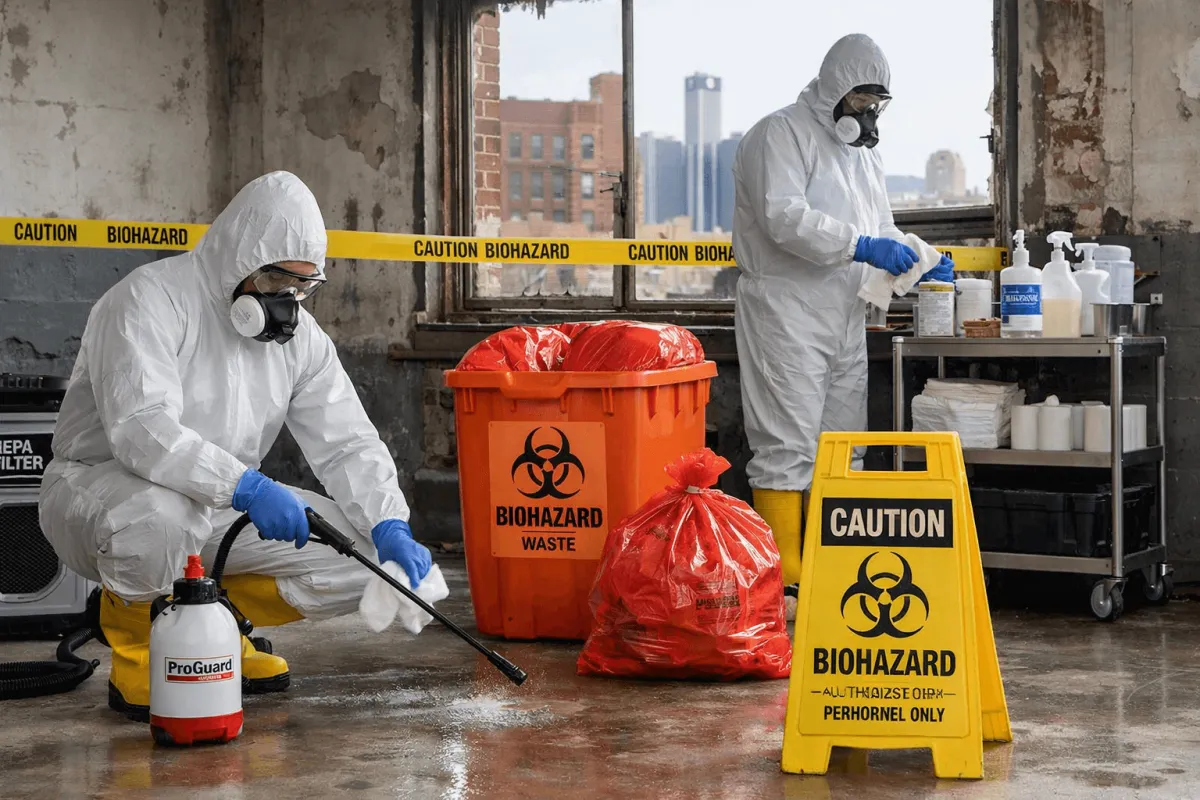
A cleanup can become harder when contaminated materials are carried through unaffected parts of the property. Access control, protective equipment, work zones, and careful material handling help reduce unnecessary exposure. OSHA’s Bloodborne Pathogens Standard specifically addresses protective measures for workers with occupational exposure.
This is particularly relevant when someone calls us for suicide cleanup services in Detroit, MI or another trauma-related event. We keep the response discreet and limit the work area according to the conditions we find rather than treating the entire property as equally affected.
Our trauma cleanup service in Detroit, MI, also includes documentation and appropriate handling of contaminated waste, not simply surface cleaning.
Materials Need Different Decisions
A sealed hard surface and a saturated porous material cannot always be treated the same way. Some surfaces may be cleaned and disinfected appropriately; others may hold contamination below the visible surface.
This is where professional judgment matters. Removing everything can create needless demolition, while leaving deeply affected material in place can leave a source behind.
For property owners, this is also where hazardous waste disposal in Detroit becomes part of the remediation plan. Once contaminated materials are removed, they need the correct packaging, transport, and disposal pathway rather than being mixed casually with ordinary debris. We have DOT/RCRA waste-handling credentials and transportation authority on our site.
Odor Treatment Comes After Source Control
One of the biggest mistakes in difficult cleanup situations is treating odor before dealing with the source.
Our odor removal service approach is diagnostic first. If odor is coming from contaminated carpet padding, a cabinet base, subflooring, drywall, or another material, covering the smell does not solve the underlying problem.
That is why an odor removal service in Detroit, MI may involve tracing where the odor is strongest, identifying affected materials, and deciding whether cleaning, targeted removal, or professional treatment is appropriate.
When a Gas-Based Treatment Makes Sense
After source removal and cleaning, some persistent odors can remain in porous or hard-to-reach areas. HazWash uses chlorine dioxide in selected odor-remediation situations because ClO₂ is a gas that can reach areas surface applications may miss.
Our chlorine dioxide odor removal process requires preparation, controlled dosing, vacancy during treatment, ventilation, and clearance before re-entry. We assess the property first because not every odor problem calls for the same method.
Verification Matters Before the Job Is Closed
A cleanup should end with more than “it looks better.”
We review the treated area, confirm the agreed scope has been completed, and document the work performed. HazWash’s published process includes an on-site assessment, remediation plan, cleanup, odor remediation where needed, and a final walkthrough.
For landlords, property managers, or businesses, documentation can be especially important because another person may need to understand what was removed, treated, transported, or disposed of.
Why DIY Cleanup Can Create New Problems
Cleaning a small household spill is different from responding to a scene involving significant blood, body fluids, sharps, decomposition, or unknown hazardous material.
OSHA recognizes cleanup work involving blood and other potentially infectious materials as an occupational exposure concern. Without appropriate protective equipment, containment, waste handling, and decontamination procedures, cleanup can expose workers or move contamination into new areas.
If you are unsure about the extent of a scene, restricting access is a better first move than pulling up flooring or moving affected belongings through the property.
A Complete Process Is About What Happens Behind the Finish
The clean appearance at the end matters, but the hidden work is what distinguishes biohazard remediation from ordinary cleaning: assessment, containment, material decisions, decontamination, odor control, waste handling, and documentation.
HazWash provides 24/7/365 biohazard and trauma response throughout Metro Detroit. If your property has been affected by blood, trauma, an unattended death, hazardous materials, or persistent odor, contact us for a discreet assessment and a cleanup plan based on the actual conditions at the scene.
